
When talking about the military and political heavyweights of World War II Japan, Tojo Hideki’s name inevitably comes up. He was one of the most powerful generals in Japan and also one of the most controversial figures of that era. Some see him as a strict, iron-fisted leader; others blame him as an accomplice to war; many criticize him for bearing the heavy responsibility for the devastation brought by the conflict.
Today, let’s take a more relaxed look at Tojo Hideki’s life story — how he rose to the center of power, and how he played a key role in the war.
1. Who Was Tojo Hideki?
Born in 1884 into a samurai family, Tojo received a strict military education from an early age. He excelled at the Japanese Army Officer Academy and gradually became a core figure in the army. Tojo was not only a military talent but also a strong nationalist. Over time, his military career and political status steadily climbed until he became both the Prime Minister and Army Minister of Japan.
2. The Pinnacle of Power: Prime Minister and War Decision-Maker
In December 1941, Tojo became Japan’s Prime Minister amid the outbreak of World War II. His most famous decision was approving the attack on Pearl Harbor, which pushed the U.S. to enter the Pacific War. This move drastically changed the course of the war and made Tojo a pivotal figure in the conflict.
Tojo represented the military-political fusion: under his leadership, the military and government acted in strong unity. Many crucial military operations required his approval. He admired the samurai spirit, emphasizing force and national honor, and pursued aggressive foreign policies to realize Japan’s “Greater East Asia Co-Prosperity Sphere” dream.
3. The Quagmire of War and Challenges
At first, Tojo led Japan to a series of victories in Southeast Asia and the Pacific. However, the tide soon turned as American forces began their counteroffensive. Despite his efforts to mobilize resources and strengthen the military, Japan fell into dire straits.
Especially in 1944, after the U.S. seized the Philippines and Mariana Islands, Tojo faced immense pressure. Japan’s economy was exhausted, public morale and military spirits plummeted, and defeat became inevitable. Yet, Tojo stubbornly insisted on continuing the fight, refusing to surrender — showing his resolute nature but costing Japan dearly.
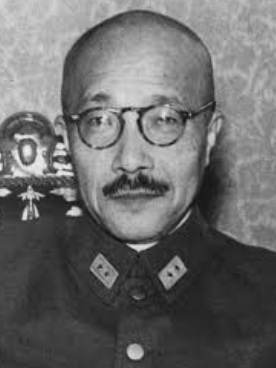
4. Responsibility and Fate: The Cost of War
In 1944, Tojo was forced to resign as Prime Minister but did not entirely leave the military-political scene. After the war ended, as one of the top commanders responsible for the conflict, Tojo was arrested by the Allies and tried at the International Military Tribunal for the Far East.
He was found responsible for instigating aggressive war and various wartime atrocities. In 1948, Tojo was sentenced to death by hanging, becoming one of the first Class-A war criminals executed after WWII. His fate symbolized the tragic cost of that era’s war.
5. Controversies and Legacy
Tojo’s life remains highly controversial. On one hand, he symbolizes Japan’s militarism, extreme nationalism, and military government of that time. On the other, some view him as a product of the system and the era — a man whose personal will was closely tied to his country’s destiny.
His wartime decisions brought profound suffering, yet his place in Japanese history remains complicated. Some regard him as a hero, others as a criminal. This complex judgment reflects the multifaceted nature of war and the diverse ways history can be interpreted.

6. Conclusion
From an ordinary soldier to Prime Minister, Tojo Hideki’s story is a classic example of the intertwining of power and responsibility. He pushed war aggressively to expand the nation’s territory, but ultimately died because of defeat. His experience reminds us that history is not just about individual success or failure, but about the clash of many forces in the currents of time.
To truly understand Tojo Hideki, we must look not only at his actions but also at how Japan at that time headed toward war, and the profound impact the conflict had on the nation and its people. Only then can we get a fuller picture of the story behind this legendary general.
