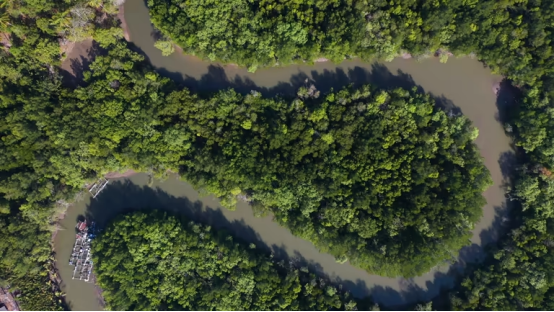
The Amazon River is the lifeblood of South America, a colossal waterway that holds more water than the next seven largest rivers combined. In an age of megastructures and seemingly impossible engineering feats, a startling fact remains: there is not a single bridge crossing its main stem. This isn’t due to a lack of ambition but a profound respect for the river’s overwhelming power and the unique environment it inhabits. Spanning the Amazon is a multifaceted problem where the challenges are as deep and shifting as the river itself.
To understand why the Amazon remains unbridged, we must look beyond simple construction and delve into a complex web of geological instability, extreme hydrological cycles, economic impracticality, and profound ecological considerations. This guide breaks down the core reasons behind this unique engineering anomaly.
The Sheer Scale of the Amazon: A River Without End
The primary obstacle is the river’s sheer, unimaginable scale, which changes dramatically throughout the year. The Amazon is not a single, static channel but a dynamic, sprawling system that constantly reshapes the landscape.
A River of Superlatives: Width, Depth, and Discharge
During the dry season, the Amazon can be anywhere from 2 to 6 miles wide. However, in the wet season, from November to June, the river swells to an astonishing degree. Its width can expand to over 30 miles, and the water level can rise by 30 to 50 feet. This seasonal flooding inundates vast areas of rainforest, creating a maze of temporary lakes and channels. Any bridge would need to span this immense floodplain, not just the main channel, requiring miles of elevated viaducts.
The Dynamic and Shifting Riverbed
The Amazon basin is composed primarily of soft, sedimentary rock and unconsolidated sediment known as alluvial soil. The riverbed is not solid rock but a constantly shifting mass of sand and silt. The powerful current continuously erodes the banks and carves new paths. This makes it incredibly difficult to anchor the deep, stable foundations (pilings) required for a massive bridge. An engineer’s worst nightmare is building a billion-dollar structure on a foundation that could literally be washed away.
Engineering Nightmares: The Technical Hurdles
Beyond the scale, the specific technical challenges presented by the Amazon’s environment push the limits of modern civil engineering. The combination of soft ground, powerful currents, and floating debris creates a uniquely hostile environment for construction.
Unstable Foundations and Deep Pilings
To secure a bridge, engineers would need to sink support pilings hundreds of feet deep to bypass the soft sediment and reach stable bedrock. This is a monumental and expensive task, especially in a remote location with a powerful current. The water is often murky and filled with debris, including entire trees, which would complicate and endanger the underwater construction process.
Extreme Seasonal Flooding
The massive variance in water level means that bridge piers would need to be incredibly tall and robust to withstand the pressure of the floodwaters and the impact of large debris. The design must account for the highest possible flood level while also allowing for massive commercial and naval vessels to pass underneath, requiring an enormous vertical clearance.
Navigational Demands
The Amazon is a major shipping artery for countries like Brazil, Peru, and Colombia. Any bridge must not impede this vital river traffic. This necessitates long spans between support piers, further increasing the complexity and cost of the structure. A design with many piers would create a dangerous obstacle course for ships navigating the strong currents.
The Economic Equation: Cost vs. Need
Perhaps the most practical reason for the absence of a bridge is the lack of economic justification. The Amazon rainforest is vast and sparsely populated. There are very few major roads or large cities located directly opposite each other on the river’s main stem that would require a high-capacity connection.
Lack of Concentrated Population Centers
Most of the Amazon basin’s population lives in a few concentrated cities, such as Manaus and Belém, which are situated on tributaries or near the coast. The primary mode of transport between riverside communities is, and has always been, the river itself. A complex and reliable network of ferries, barges, and boats serves the region’s logistical needs effectively and at a much lower cost than building and maintaining a bridge.
Prohibitive Costs and Logistical Challenges
The cost of constructing a bridge capable of withstanding the Amazon’s forces would be astronomical, likely running into the billions of dollars. Furthermore, building the necessary road infrastructure through dense, protected rainforest to connect to the bridge would add immense cost and cause significant environmental damage. For now, the cost-benefit analysis simply doesn’t add up.
Amazon vs. Other Great Rivers: A Bridge Challenge Comparison
While other major rivers like the Yangtze, Mississippi, and Nile are crossed by numerous bridges, the Amazon presents a unique combination of challenges that sets it apart.
| Feature | Amazon River | Yangtze River (China) | Mississippi River (USA) |
|---|---|---|---|
| Seasonal Water Level Rise | Extreme (30-50 feet) | Significant, but managed by dams (e.g., Three Gorges) | Moderate, managed by levees and locks |
| Riverbed Composition | Highly unstable alluvial soil and sediment | Generally more stable, with accessible bedrock | Mixed, but generally more stable than the Amazon |
| Surrounding Infrastructure | Extremely limited; dense, protected rainforest | Highly developed; connects major economic hubs | Extensive road and rail networks |
| Primary Obstacle | Combination of all factors: scale, geology, and lack of economic need | Primarily engineering scale and navigational clearance | Navigational clearance and flood management |
Expert Advice: An Engineer’s Checklist for an Amazon Bridge
If a decision were made to build an Amazon bridge, regardless of cost, engineers would face a daunting task. The project would require unprecedented solutions and technologies. Here is a simplified checklist of the critical considerations:
- Geotechnical Survey: Conduct the most extensive riverbed survey in history to find a “least unstable” crossing point with the shallowest possible bedrock. This could take years.
- Foundation Technology: Develop new deep-piling techniques capable of penetrating hundreds of feet of soft sediment in a high-flow environment.
- Hydrodynamic Modeling: Create advanced computer models to simulate the river’s flow, debris impact, and scouring patterns around the bridge piers during a 100-year flood event.
- Material Science: Use advanced composites and high-strength, corrosion-resistant concrete and steel to withstand the tropical climate and immense physical forces.
- Modular Construction: Prefabricate large sections of the bridge off-site and transport them by barge to minimize construction time and environmental impact on the river.
- Ecological Integration: Design the access roads and construction footprint to create minimal disruption to wildlife corridors and the surrounding rainforest ecosystem.
Frequently Asked Questions (FAQ)
- Are there any bridges in the entire Amazon basin?
- Yes, but not over the main Amazon River itself. The most notable example is the Ponte Rio Negro bridge in Brazil, which spans the Rio Negro, a major tributary, near the city of Manaus. While an impressive engineering feat, the Rio Negro is more stable and has different characteristics than the main Amazon River channel it flows into.
- How do people and goods cross the Amazon River now?
- The primary method of crossing is by water. A vast and constant network of vessels, from small personal motorboats to large, multi-deck passenger ferries and massive industrial barges, handles all transportation needs. For many riverside communities, the river functions as the main highway.
- Could future technology make an Amazon bridge possible?
- Technically, with an unlimited budget and time, it is likely possible to build a bridge today. However, advances in material science, robotics for underwater construction, and lighter, stronger bridge designs could significantly reduce the cost and risk in the future. The larger question will likely remain one of economic and environmental justification rather than pure technical feasibility.
- What would be the environmental impact of building an Amazon bridge?
- The impact would be substantial. Construction would disrupt the river’s delicate ecosystem. More significantly, the roads required to connect to the bridge would lead to deforestation, habitat fragmentation, and potentially open up pristine areas of the rainforest to illegal logging, mining, and settlement.
