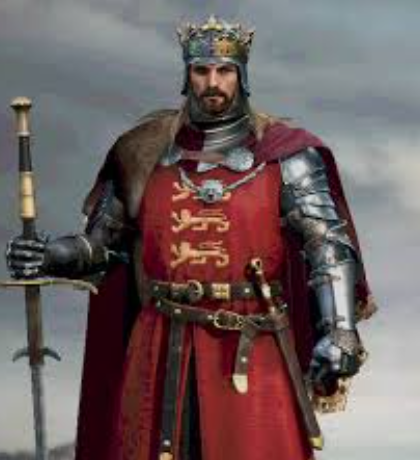
When it comes to legendary figures of medieval Europe, “Richard the Lionheart” is a name you can’t avoid. He was not only the King of England but also one of the most dazzling knights of the Crusades. Clad in armor, wielding a sword, and riding a warhorse, his image embodies the spirit of chivalry. Today, let’s talk about the story of this king — full of battles, romance, and historical controversies.
1. Noble Youth: Destined for the Battlefield
Richard I was born in 1157, the third son of King Henry II of England and the famous Eleanor of Aquitaine. From a young age, he inherited his mother’s courage and his father’s ambition. He rarely stayed calmly at court, often traveling with his mother across French territories, where he absorbed knightly culture and war skills. In that era of chivalry, Richard not only learned poetry and music but more importantly impressed everyone with his horseback riding and swordsmanship. By 16, he was already leading troops independently, quelling rebellions and fighting neighboring states. His youth was almost entirely spent on horseback.
2. Crowned King: The Battlefield as His Stage
In 1189, after his father’s death, Richard ascended the throne of England. Yet, his interest in royal duties was far less than his passion for warfare. Soon after becoming king, he set his sights on the Middle East — the scene of the Third Crusade.
Why go? Two main reasons:
Religious mission — to reclaim Jerusalem from Muslim control.
Knightly honor — to become a hero admired across Europe.
He poured a great deal of the royal treasury into equipping his army, even selling royal lands to raise funds. To Richard, the crown was important, but holding a sword and riding the battlefield was his true purpose.
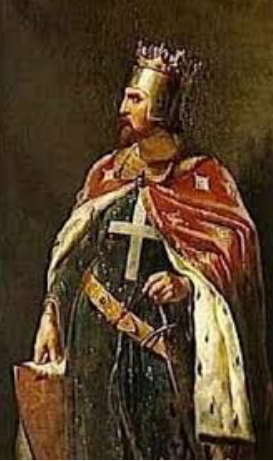
3. The Crusade: Lionheart’s Moment of Glory
At the end of 1189, Richard led his army to the East. He was accompanied by King Philip II of France, though their relationship was tense — one a knightly star, the other a shrewd ruler, their personalities clashed.
On the Mediterranean journey, Richard showed decisiveness and toughness. Passing through Sicily and Cyprus, he took strategic locations without hesitation. The Cyprus campaign secured supplies and laid a strong foundation for the Crusade.
At the Holy Land, Richard faced the renowned Muslim general Saladin in a series of legendary battles. Though enemies, both respected each other’s bravery and talent.
The most famous was the Battle of Arsuf, where Richard’s calm command and powerful cavalry charge defeated Saladin’s forces. This victory greatly boosted Crusader morale and cemented Richard’s “Lionheart” fame across Europe and the Middle East.
4. A Hero Yet Human: The Failure to Capture Jerusalem
Though victorious in many battles, Richard failed to take Jerusalem itself. The reasons were pragmatic: shortages of food and fodder, disunity among European allies, and harsh weather. Eventually, he negotiated with Saladin to allow Christian pilgrims safe passage to Jerusalem, while the city remained under Muslim control.
This decision split opinions — some saw him as practical, avoiding needless slaughter; others thought he lacked resolve, failing his religious mission. Regardless, his Crusade performance made him one of the most admired knight-kings of his time.
5. Troubles on the Journey Home
After the Crusade, Richard began his journey home, but fate played a cruel joke — he was captured by the Duke of Austria and held for ransom. The huge ransom nearly emptied England’s treasury and sparked public discontent.
Once freed, Richard didn’t settle down. He resumed fighting Philip II of France, continuing battles in France. The battlefield remained his true arena, though fate didn’t grant him much time.
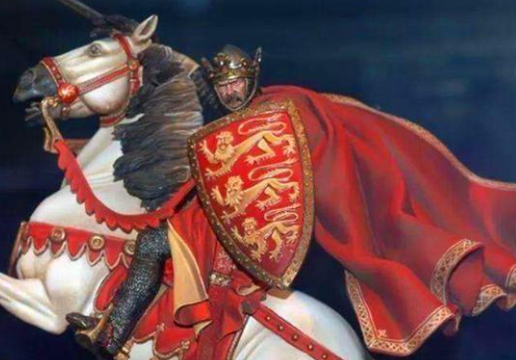
6. The Legendary End
In 1199, while fighting in France, Richard was struck in the shoulder by a crossbow bolt. Due to limited medical care, the wound became infected and he died at just 41 years old.
His death shocked Europe. Knights lost a true battlefield leader, and the people remembered him as a fearless, romantic, sometimes impulsive “Lionheart.”
7. The Embodiment of Chivalry
Why call him “Lionheart”? Not just for his fierce fighting, but because he embodied the chivalric ideals of the Middle Ages:
Courage: fearless against foes, charging head-on.
Honor: keeping promises as precious as gold.
Romance: loving poetry and music, contrasting with war’s harshness.
Leadership: inspiring loyalty and sacrifice from his men.
Though not the most politically savvy king, his name shines brightly in knightly culture and Crusade history.
Summary
Richard the Lionheart was a rare medieval king who perfectly combined personal charisma and battlefield prowess. His legend is full of blood and glory, as well as controversy and regret.
Perhaps that’s why he feels so real — a passionate knightly king who lived and died embodying the “spirit of chivalry.”
