
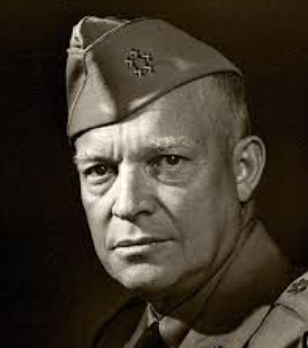
When you hear the name Eisenhower, most people immediately think of the Supreme Commander of the Allied Forces in World War II who later became President of the United States. That gentle-looking, bespectacled general—who wasn’t one to seek the spotlight—was the mastermind behind organizing the incredibly complex “D-Day” Normandy invasion with impressive precision.
But do you know what made him truly remarkable? It wasn’t charging into battle himself or crafting brilliant battlefield tactics. It was knowing how to lead a team, coordinate resources effectively, and enable others to achieve victory.
He Was Not the Strongest General, But the Strongest Coordinator
In the military world, some generals become famous for leading charges or daring raids. Eisenhower was different—more like a project manager for a massive operation. He never claimed to be the best tactician, but he could unite a group of strong-willed top generals behind a single goal—a feat in itself.
Just imagine having under your command a fiery and rebellious general like Patton, a proud British commander like Montgomery, plus constant political pressure from Churchill and Roosevelt. Coordinating these diverse personalities and melding multinational forces into a unified fighting alliance was almost harder than the battles themselves.
But Eisenhower pulled it off. He didn’t rely on orders alone, but on communication, listening, compromise, and coordination. He often said: “No one wins a war alone. True victory comes from teamwork.”
He Didn’t Seek Credit But Knew How to Let Others Shine
Eisenhower had what some call the “anti-general” trait: he never took credit for himself. In letters to his wife during the later war years, he described himself as “not a hero, just a man chosen to organize heroes.”
For example, after the Normandy landings, Patton’s Third Army performed brilliantly, and the media praised them widely. Eisenhower didn’t interrupt or claim credit as their commander; instead, he quietly ensured they had the necessary resources and logistics.
As president, he kept the same style—letting subordinates face the media and public inquiries while he focused on decision-making behind the scenes. He believed that a real leader isn’t the one who shouts slogans upfront, but the one who helps every team member perform at their best.
He Believed “Stability Trumps All Heroism”
During WWII, many Americans admired battlefield “heroes” and hoped for aggressive generals like Patton to rise. But Roosevelt insisted on Eisenhower because he was steady and not swayed by emotions.
Eisenhower always stressed that war wasn’t won by rash impulses but through steady, careful steps. When planning the Normandy invasion, he considered every detail thoroughly—even drafting a “failure letter” beforehand to accept responsibility if things went wrong. Fortunately, the sun shone bright that day, and he never had to send that letter. This willingness to take responsibility perfectly reflected his leadership.
His Leadership Philosophy Remains Relevant Today
Eisenhower’s style still works well in modern workplaces and organizations. His key principles included:
Trust and Empowerment: Don’t do everything yourself; give your team room to excel.
Coordination and Consensus: Differences of opinion are natural; the key is how to reach unified action.
Low Profile, No Credit Stealing: Let subordinates take the spotlight while you hold the big picture steady.
Preparedness: Always plan for the worst, take responsibility, and keep morale stable.
Lead by Example: Whether in the military or politics, he was punctual, disciplined, and avoided privileges, earning respect from all.
“Victory is not a one-man show” was not just humility; it was the core of his leadership belief.
Summary
Eisenhower’s success wasn’t because he was smarter or a better fighter than others, but because he understood that a leader’s true job is to bring out the best in everyone and achieve victory together. His actions show us that a great general doesn’t have to lead the charge personally but must know how to build and guide a winning team.
Whether in business, teams, or nations today, Eisenhower’s blend of balance and responsibility offers a leadership model well worth studying and reflecting upon.
