The history of modern Africa is inextricably linked to a series of high-stakes diplomatic maneuvers, grassroots resistance movements, and the lingering shadows of imperial cartography. To understand the contemporary socio-political landscape of the continent, one must look back to the late 19th century, a period characterized by the “Scramble for Africa,” and follow the thread through the tumultuous years of decolonization to the border conflicts of the 21st century. This pillar page provides an in-depth synthesis of these pivotal eras, offering a rigorous analysis of the forces that built and, in some cases, destabilized African nations.
The Berlin Conference of 1884: A Continent Partitioned in Silence
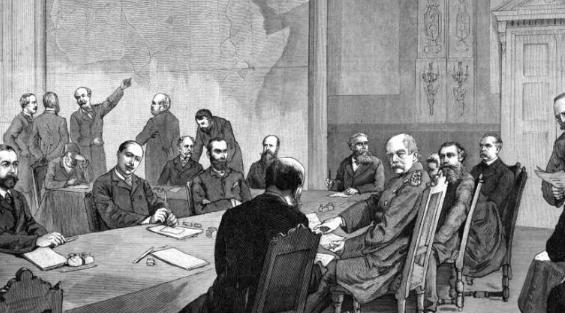
The Berlin Conference, also known as the Congo Conference or West Africa Conference, represents one of the most controversial events in world history. Organized by Otto von Bismarck, the first Chancellor of Germany, the conference aimed to regulate European colonization and trade in Africa. Between November 15, 1884, and February 26, 1885, representatives from 14 nations gathered in Berlin to decide the fate of a continent they had largely never visited.
The Absence of African Voices
Perhaps the most striking aspect of the Berlin Conference was the total exclusion of African leadership. While European diplomats debated the navigation rights of the Congo and Niger rivers, no African kings, chiefs, or representatives were invited to the table. The sovereignty of hundreds of ethnic groups and established kingdoms was ignored in favor of European strategic and economic interests. This lack of representation set a precedent for a century of top-down administrative rule that disregarded indigenous social structures.
The Principle of Effective Occupation
One of the most significant outcomes of the conference was the establishment of the “Principle of Effective Occupation.” This rule dictated that a European power could only claim sovereignty over an African territory if it possessed the land through treaties with local leaders, flew its flag there, and established an administration to govern the area and maintain order. This principle accelerated the “Scramble,” as nations rushed to establish a physical presence on the ground to prevent rivals from claiming the same territory.
- Germany: Acquired territories in East Africa, Southwest Africa, and Cameroon to assert its status as a global power.
- Belgium: King Leopold II secured the Congo Free State as his personal possession, leading to one of the most brutal regimes in colonial history.
- Great Britain: Focused on a “Cape to Cairo” axis, securing strategic trade routes and resource-rich regions.
- France: Claimed vast swathes of West and North Africa, aiming to create a continuous colonial empire.

The Mechanics of Colonial Exploitation: Economic and Social Impacts
The colonization that followed the Berlin Conference was not merely a political occupation but an exhaustive economic project. The primary goal was the extraction of raw materials—rubber, gold, diamonds, and ivory—to fuel the Industrial Revolution in Europe. To achieve this, colonial administrations implemented systems that fundamentally altered African societies and economies.
Forced Labor and Cash Crop Economies
Colonial powers shifted African agriculture from subsistence farming to the production of cash crops for export. This transition often relied on forced labor or “taxation in kind,” where locals were required to work on plantations or in mines to pay colonial taxes. This system disrupted local food security and created a dependency on global market prices that persists in many African economies today.
| Colonial Power | Primary Administrative Style | Key Economic Focus |
|---|---|---|
| Great Britain | Indirect Rule (Using local chiefs) | Mining, Cocoa, Tea, Cotton |
| France | Assimilation (Direct Rule) | Groundnuts, Coffee, Rubber |
| Belgium | Direct Extraction (Company Rule) | Rubber, Copper, Diamonds |
| Portugal | Direct Rule (Settler Colonialism) | Cotton, Sugar, Forced Labor |
The Erasure of Indigenous Identity
Beyond economics, colonial rule sought to reshape the African mind. Through the introduction of European languages, legal systems, and religions, colonial powers marginalized indigenous knowledge. The “civilizing mission” was used as a moral justification for the suppression of local cultures, creating a dual identity crisis for many Africans that would later become a central theme in the independence movements.

The Rise of African Nationalism and the Heroes of Independence
The post-World War II era saw a surge in nationalist sentiment across Africa. Veterans returning from the war, having fought for “freedom” in Europe, began to demand the same for their own homelands. This period produced a generation of visionary leaders who utilized Pan-Africanist ideologies to unite diverse ethnic groups against a common colonial enemy.
Kwame Nkrumah and the Vision of a United Africa
Kwame Nkrumah of Ghana became a beacon of hope as he led the Gold Coast to independence in 1957. Nkrumah argued that “independence is only the beginning” and championed the idea of a United States of Africa. His leadership inspired movements across the continent, proving that European imperial power was not invincible. He emphasized economic self-reliance and the total liberation of the African continent from foreign rule.
Patrice Lumumba and the Tragedy of the Congo
In the Belgian Congo, Patrice Lumumba emerged as a charismatic and uncompromising leader. His speech at the 1960 independence ceremony, where he confronted the Belgian King regarding the atrocities of colonial rule, marked him as a threat to Western interests. Lumumba sought to keep the Congo’s vast mineral wealth for its people, a stance that led to his rapid downfall amidst Cold War tensions.
Thomas Sankara: The “Upright Man”
Though appearing later in the timeline, Thomas Sankara of Burkina Faso remains a quintessential hero of African sovereignty. He focused on internal development, women’s rights, and environmental conservation. Sankara famously rejected foreign aid, stating that “he who feeds you, controls you.” His assassination in 1987 remains a poignant reminder of the internal and external forces arrayed against radical African self-determination.

The Shadow of Betrayal: Neo-Colonialism and Internal Subversion
The path to independence was frequently marred by betrayal. As European powers realized they could no longer maintain direct control, many shifted to “neo-colonialism”—a system where economic and political influence is maintained through indirect means, often involving the subversion of local governments.
The Role of Western Intelligence
During the Cold War, the United States and the Soviet Union viewed Africa as a strategic chessboard. This led to significant interference in African sovereignty. The most notable example is the assassination of Patrice Lumumba, which involved the complicity of Belgian authorities and the CIA. By removing leaders who prioritized national interests over foreign profits, colonial powers ensured that their economic grip remained firm.
The Rise of Client Dictators
In place of visionary nationalists, “client” leaders were often installed or supported. Mobutu Sese Seko, who took power in the Congo (renamed Zaire) after Lumumba’s death, became the archetype of the neo-colonial dictator. Supported by the West for his anti-communist stance, Mobutu oversaw decades of kleptocracy, enriching himself while the nation’s infrastructure crumbled. This pattern of internal betrayal created a legacy of corruption and instability that many African nations are still working to overcome.

Colonial Legacies: The Artificial Construction of African Borders
The borders of modern Africa are largely the result of lines drawn on maps during the Berlin Conference and subsequent bilateral agreements between European powers. These “paper borders” were drawn with little to no regard for the ethnic, linguistic, or historical realities of the people living on the land.
Ethnic Fragmentation and Forced Union
The arbitrary nature of colonial borders had two primary effects: the fragmentation of single ethnic groups into multiple different countries, and the forced union of historically antagonistic groups within a single state. For example, the Somali people were divided between Ethiopia, Djibouti, Kenya, and Somalia. Conversely, in Nigeria, hundreds of distinct groups were lumped together under a single administrative unit, leading to long-term challenges in national integration and internal conflict.
The Principle of Uti Possidetis
Upon achieving independence, the Organization of African Unity (OAU)—now the African Union (AU)—faced a critical dilemma: should they redraw the borders to match ethnic realities? In 1964, the OAU decided to maintain the colonial borders (the principle of uti possidetis) to avoid a “Pandora’s box” of endless territorial disputes. While this decision prevented a total continental collapse, it institutionalized the tensions inherent in the colonial map.

Modern Consequences: Border Disputes and the Path to Stability
The legacy of the Berlin Conference continues to manifest in contemporary border disputes and internal conflicts. These disputes are often exacerbated by the discovery of natural resources—such as oil or minerals—near poorly defined or disputed boundary lines.
Case Studies in Territorial Conflict
- Ethiopia and Eritrea: A long-standing and bloody conflict rooted in colonial-era definitions of their shared border, leading to decades of tension and a major war from 1998 to 2000.
- Sudan and South Sudan: The dispute over the Abyei region, rich in oil, is a direct consequence of administrative boundaries set during British colonial rule.
- The Cameroon-Nigeria Dispute: The Bakassi Peninsula conflict, eventually resolved by the International Court of Justice, stemmed from ambiguous colonial treaties between Britain and Germany.
The Path Toward Resolution
Modern Africa is increasingly utilizing legal and diplomatic frameworks to resolve these historical legacies. The African Union Border Programme (AUBP) works to delimit and demarcate borders, promote cross-border cooperation, and transform borders from “barriers” into “bridges.” While the ghosts of 1884 still haunt the continent, the growth of regional economic communities and a renewed focus on “African solutions to African problems” offer a pathway toward a more stable and integrated future.
Frequently Asked Questions (FAQ)
- Q1: Why were no African leaders invited to the Berlin Conference?
- European powers at the time viewed Africa as “Terra Nullius” (nobody’s land) from a legal perspective, despite the existence of complex societies. The conference was designed to prevent European wars over African territory, and the participants viewed African sovereignty as non-existent or irrelevant to their imperial goals.
- Q2: What is the difference between “independence” and “liberation”?
- In the African context, independence refers to the formal transfer of political power from the colonial administration to a local government. Liberation, however, is a broader term encompassing economic self-sufficiency, the removal of neo-colonial influence, and the restoration of indigenous cultural identity.
- Q3: How did the Cold War affect African independence movements?
- The Cold War turned Africa into a proxy battleground. Leaders who leaned toward socialist policies or sought to nationalize resources were often labeled as “communist threats” by the West, leading to coups and assassinations. Conversely, some movements received military and educational support from the Soviet Union or China.
- Q4: Why did the African Union decide to keep colonial borders?
- The leaders of the OAU feared that attempting to redraw borders based on ethnicity would lead to catastrophic and endless wars. They believed that maintaining the status quo, however flawed, provided the only stable foundation for building new nations, though this came at the cost of internal ethnic tensions.
- Q5: What is the “Effective Occupation” rule?
- Established at the Berlin Conference, it required European nations to physically occupy and administer a territory to claim it. This shifted colonization from “claims on paper” to actual military and administrative presence, drastically accelerating the conquest of the continent.
