Introduction to Global Conflicts and Their Enduring Impact
Human history is a complex narrative woven with threads of conflict, diplomacy, and profound societal transformations. From localized skirmishes evolving into grand imperial contests to ideological standoffs threatening global annihilation, the trajectory of nations and international relations has been irrevocably shaped by pivotal world events. These moments, often characterized by intense struggle and strategic maneuvering, serve as critical junctures that redefine geopolitical landscapes, catalyze internal revolutions, and lay the groundwork for future global orders. Understanding these historical flashpoints is not merely an academic exercise but a vital exploration into the forces that continue to influence contemporary international dynamics. This comprehensive guide delves into some of the most significant conflicts and transformative periods, dissecting their origins, unfolding events, immediate repercussions, and long-lasting legacies.
The Interconnectedness of Historical Events
Each major conflict or diplomatic resolution rarely exists in isolation. Instead, it often emerges from a confluence of preceding events, economic pressures, political ambitions, and social unrest, while simultaneously sowing the seeds for subsequent developments. For instance, the imperial rivalries that fueled the Opium Wars in China had roots in earlier trade imbalances and colonial expansion, and their outcomes directly contributed to the geopolitical shifts seen in the Russo-Japanese War and the broader scramble for influence in East Asia. Similarly, the unresolved tensions and punitive measures following World War I, epitomized by the Treaty of Versailles, are widely considered precursors to the rise of extremist ideologies and the outbreak of World War II. Recognizing these intricate causal chains is fundamental to appreciating the depth and complexity of global history.

Early Imperial Struggles and the Dawn of Modern Geopolitics
The 19th century was a crucible of imperial expansion and shifting power balances, laying the foundation for many 20th-century conflicts. Empires vied for resources, trade routes, and strategic dominance, often at the expense of non-Western nations. Two prominent examples of these early struggles, the Crimean War and the Opium Wars, highlight the evolving nature of international relations and the profound impact of Western imperial ambitions on the global stage.
The Crimean War (1853-1856): A Game of European Powers
The Crimean War was primarily a conflict between the Russian Empire and an alliance of the Ottoman Empire, France, Britain, and Sardinia. While often viewed as a localized conflict over religious rights in the Holy Land, its true significance lay in the broader geopolitical struggle for influence over the declining Ottoman Empire and access to the Black Sea. Russia’s expansionist ambitions clashed directly with British and French desires to maintain the balance of power in Europe and protect their trade routes to Asia. The war was notable for its brutal conditions, logistical challenges, and the introduction of modern warfare techniques, including trench warfare and steam-powered ships. It exposed the military and administrative weaknesses of the Russian Empire, contributing to internal pressures for reform, and reshaped alliances in Europe, setting the stage for future rivalries.
- Key Players: Russia, Ottoman Empire, Britain, France, Sardinia.
- Primary Causes: Russian expansionism towards the Ottoman Empire, control of religious sites in the Holy Land, and access to the Black Sea.
- Significant Outcomes:
- Weakening of Russia’s influence in the Black Sea region.
- Introduction of modern military practices and medical reforms (e.g., Florence Nightingale).
- Shift in European alliances, leading to greater Anglo-French cooperation.
The Opium Wars: Trade Conflict and China’s Turning Point
The Opium Wars (First Opium War: 1839-1842; Second Opium War: 1856-1860) represent a critical turning point in modern Chinese history and a stark illustration of Western imperial aggression. Driven by Britain’s desire to rectify a trade imbalance with China, largely through the illegal export of opium, these conflicts forced China to open its markets and cede territories. The Qing Dynasty, technologically and militarily outmatched, suffered humiliating defeats. The treaties signed after these wars, such as the Treaty of Nanjing, imposed unequal terms, including extraterritoriality, treaty ports, and indemnities, severely undermining China’s sovereignty and initiating a period known as the “Century of Humiliation.” These events had profound long-term consequences, contributing to internal dissent, the decline of the Qing Dynasty, and the rise of nationalist movements aimed at modernizing and strengthening China.
- Causes: British demand for Chinese goods (tea, silk, porcelain), a massive trade deficit, and the illegal importation of opium into China.
- Key Events:
- Chinese efforts to suppress the opium trade (e.g., Lin Zexu’s confiscation of opium).
- British military superiority leading to decisive victories.
- Signing of unequal treaties that dismantled Chinese sovereignty.
- Impact:
- Opening of Chinese treaty ports to foreign trade.
- Cession of Hong Kong to Britain.
- Deep resentment among the Chinese population, fueling anti-imperialist sentiment and contributing to the eventual collapse of the Qing Dynasty.

The Rise of New Powers and Shifting Global Dynamics
As older empires grappled with internal challenges and external pressures, new powers emerged, fundamentally altering the global balance. The late 19th and early 20th centuries witnessed the rapid modernization and assertiveness of Japan, a trajectory that profoundly impacted East Asia and beyond. This rise was exemplified by the Meiji Restoration and its subsequent military engagements, particularly the Sino-Japanese and Russo-Japanese Wars.
From Meiji Restoration to the Sino-Japanese War: Japan’s Ascent
The Meiji Restoration (1868) marked a revolutionary period in Japan, transitioning from a feudal shogunate to a centralized, industrialized nation-state. Facing the threat of Western imperialism, Japan embarked on an ambitious program of rapid modernization, adopting Western political, economic, and military systems. This transformation allowed Japan to avoid the fate of China and instead emerge as a regional power. The newfound strength was soon tested in the First Sino-Japanese War (1894-1895). This conflict, primarily over influence in Korea, demonstrated Japan’s military superiority over a weakened Qing China. Japan’s decisive victory resulted in the Treaty of Shimonoseki, which granted Japan Taiwan, the Pescadores Islands, and significant indemnities, as well as recognition of Korea’s independence (which soon fell under Japanese sway). This war signaled Japan’s arrival as a major power and the accelerating decline of China.
- Meiji Restoration Achievements:
- Abolition of the feudal system.
- Rapid industrialization and technological adoption.
- Creation of a modern, conscripted army and navy.
- Establishment of a constitutional monarchy.
- Sino-Japanese War Outcomes:
- Japan gained control of Taiwan and influence over Korea.
- China paid substantial war indemnities.
- Increased Western imperialistic ambitions towards China, leading to the “scramble for concessions.”
Gunfire and Diplomacy: The Russo-Japanese War (1904-1905)
Japan’s ascendance culminated in the Russo-Japanese War, a conflict that shocked the world by demonstrating an Asian power’s capacity to defeat a major European nation. The war was fought over rival imperial ambitions in Manchuria and Korea. Russia, seeking a warm-water port and expansion in the Far East, clashed with Japan’s growing sphere of influence. The conflict saw significant land battles and, most notably, the near-total destruction of the Russian Baltic Fleet by the Imperial Japanese Navy at the Battle of Tsushima. The Treaty of Portsmouth, mediated by U.S. President Theodore Roosevelt, recognized Japan’s paramount interests in Korea and granted it leased territories and railway rights in southern Manchuria. The war had profound implications:
- Global Impact:
- First time an Asian power decisively defeated a major European power, inspiring anti-colonial movements worldwide.
- Exposed the corruption and inefficiency of the Tsarist regime, contributing to the 1905 Russian Revolution.
- Elevated Japan to the status of a world power, reshaping the balance of power in East Asia.
- Internal Russian Unrest:
- Military defeats exacerbated existing social and political tensions.
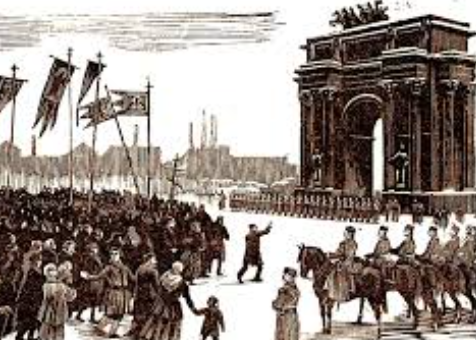
- The “Bloody Sunday” massacre in January 1905, where unarmed protestors were fired upon, ignited widespread strikes and uprisings across Russia, forcing Tsar Nicholas II to concede limited reforms.

The Great War and Its Aftermath: Reshaping the World in 1919
The early 20th century plunged the world into an unprecedented conflict that fundamentally altered the global order: World War I. Its origins were complex, its scale immense, and its conclusion led to a period of intense diplomatic maneuvering and widespread societal upheaval, permanently reshaping geopolitical boundaries and national identities.
That Summer of 1914: How an Assassination Sparked a World War
The immediate catalyst for World War I was the assassination of Archduke Franz Ferdinand of Austria-Hungary by a Serbian nationalist in Sarajevo on June 28, 1914. However, this act was merely the spark that ignited a powder keg of underlying tensions. Decades of escalating rivalries among European powers, fueled by aggressive nationalism, complex alliance systems (the Triple Entente vs. the Triple Alliance), imperial competition for colonies, and an arms race, had created an extremely volatile environment. Austria-Hungary’s declaration of war on Serbia, backed by Germany, triggered a cascade of declarations as the alliance system pulled major powers into the conflict. This rapid escalation demonstrated the fragility of peace in a highly militarized and interconnected Europe. The war quickly devolved into a brutal stalemate of trench warfare, consuming millions of lives and resources.
- Underlying Causes of WWI:
- Militarism: An arms race and glorification of military power.
- Alliances: Secret treaties creating a domino effect (e.g., Triple Entente, Triple Alliance).
- Imperialism: Competition for colonies and resources globally.
- Nationalism: Intense patriotism and desire for self-determination or dominance among ethnic groups.
- The Chain Reaction:
- Assassination of Archduke Franz Ferdinand.
- Austria-Hungary issues ultimatum to Serbia.
- Austria-Hungary declares war on Serbia (July 28, 1914).
- Russia mobilizes to support Serbia.
- Germany declares war on Russia and France, invading Belgium.
- Britain declares war on Germany.
The World in 1919: Versailles, the May Fourth Movement, and Global Protest
The end of World War I in November 1918 brought an end to hostilities but ushered in a new era of political restructuring and social unrest. The year 1919 was particularly significant, marked by the Paris Peace Conference, the signing of the Treaty of Versailles, and a global wave of protest and revolutionary movements.
The Paris Peace Conference and the Treaty of Versailles
The Paris Peace Conference (1919) brought together the victorious Allied powers to negotiate the terms of peace. Dominated by the “Big Four” (Woodrow Wilson of the U.S., David Lloyd George of Britain, Georges Clemenceau of France, and Vittorio Orlando of Italy), the conference aimed to establish a new international order. The resulting Treaty of Versailles, signed with Germany, was highly punitive. It imposed severe territorial losses, massive war reparations, and strict limitations on Germany’s military. While intended to prevent future aggression, many historians argue its harshness fostered deep resentment in Germany, contributing to the rise of Nazism and the eventual outbreak of World War II. The conference also saw the creation of the League of Nations, an ambitious attempt at collective security, though ultimately hampered by a lack of enforcement power and U.S. non-participation.
- Key Provisions of the Treaty of Versailles:
- Territorial losses for Germany (Alsace-Lorraine, Saarland, colonies).
- War guilt clause (Article 231) blaming Germany for the war.
- Heavy war reparations to the Allies.
- Demilitarization of the Rhineland and severe restrictions on the German military.
- Creation of the League of Nations.
- Critiques and Consequences:
- Seen by many as a “dictated peace” (Diktat) by Germany.
- Contributed to economic instability and political extremism in post-war Germany.
- Failed to establish a lasting peace, laying groundwork for future conflicts.
The May Fourth Movement and a Global Wave of Protest
Beyond Europe, the post-war period sparked significant movements for self-determination and social change. In China, the decisions made at the Paris Peace Conference ignited the May Fourth Movement. When news broke that the Treaty of Versailles would transfer former German concessions in Shandong to Japan rather than return them to China, massive student-led protests erupted in Beijing on May 4, 1919. This nationalist and anti-imperialist movement quickly spread across China, encompassing intellectuals, workers, and merchants. It marked a new awakening in Chinese nationalism, questioning traditional values and advocating for scientific and democratic reforms. The May Fourth Movement profoundly influenced subsequent political developments in China, including the rise of the Communist Party. Similar waves of protest and calls for independence were seen across colonial territories, reflecting a global yearning for self-determination and justice in the wake of the Great War.
- Causes of the May Fourth Movement:
- Betrayal by Western powers at the Paris Peace Conference regarding Shandong.
- Growing Chinese nationalism and anti-imperialist sentiment.
- Desire for modernization and democratic reforms.
- Impact:
- Sparked a cultural and intellectual revolution in China.
- Promoted vernacular Chinese and new ideas like science and democracy.
- Further fueled the growth of both the Chinese Nationalist Party (KMT) and the Chinese Communist Party (CCP).

Cold War Tensions: Confrontation and Proxy Conflicts
The period following World War II was dominated by the Cold War, an ideological, political, and military standoff between the United States and its Western allies (the capitalist bloc) and the Soviet Union and its satellite states (the communist bloc). Characterized by proxy wars, an arms race, and intense espionage, this era brought humanity closest to global destruction on several occasions.
The Cuban Missile Crisis: 13 Days on the Brink of Annihilation
The Cuban Missile Crisis (October 1962) stands as one of the most perilous episodes of the Cold War, bringing the world to the brink of nuclear war. The crisis erupted when U.S. reconnaissance discovered that the Soviet Union was secretly installing nuclear-armed ballistic missiles in Cuba, just 90 miles off the U.S. coast. This direct threat to American security provoked an immediate and forceful response from President John F. Kennedy, who imposed a naval blockade (quarantine) around Cuba to prevent further Soviet missile deliveries. For 13 tense days, the world held its breath as diplomatic negotiations unfolded against a backdrop of military readiness. Both superpowers engaged in a dangerous game of brinkmanship, with the fate of humanity hanging in the balance. Ultimately, a secret agreement was reached: the Soviets would remove the missiles from Cuba in exchange for a U.S. pledge not to invade Cuba and a clandestine agreement to remove U.S. Jupiter missiles from Turkey. This crisis underscored the existential threat of nuclear weapons and led to efforts to reduce direct communication barriers, such as the establishment of the Moscow-Washington hotline.
- Key Players: United States (President Kennedy), Soviet Union (Premier Khrushchev), Cuba (Fidel Castro).
- Crisis Escalation:
- Discovery of Soviet missile sites in Cuba.
- U.S. naval blockade declared.
- Intense diplomatic exchanges and military alerts.
- U.S. invasion preparations.
- Resolution:
- Soviet withdrawal of missiles from Cuba.
- U.S. public pledge not to invade Cuba.
- U.S. secret agreement to remove missiles from Turkey.
- Long-term Impact:
- Increased awareness of nuclear war dangers.
- Establishment of direct communication channels (hotline).
- Shift towards détente in U.S.-Soviet relations.
The Vietnam War: Why the United States Became Mired in the Quagmire
The Vietnam War (c. 1955-1975) was a protracted and devastating conflict that exemplified the Cold War’s proxy battles and the complexities of decolonization. The United States became deeply involved in Vietnam to prevent the spread of communism (the “domino theory”) after France’s colonial rule ended. Supporting South Vietnam against the communist North Vietnam and its Viet Cong allies, the U.S. escalated its military presence throughout the 1960s. Despite massive military resources, advanced technology, and significant casualties, the U.S. found itself embroiled in a “quagmire.” The nature of guerrilla warfare, the resilience of the Vietnamese nationalists, the challenging jungle terrain, and growing anti-war sentiment at home made a clear military victory elusive. The war exacted a heavy toll in lives, resources, and domestic division within the U.S. The eventual withdrawal of American forces and the fall of Saigon in 1975 led to the reunification of Vietnam under communist rule, marking a significant geopolitical defeat for the United States and profoundly impacting its foreign policy for decades.
- U.S. Involvement Drivers:
- Containment of communism (Domino Theory).
- Support for anti-communist South Vietnam.
- Legacy of French colonialism and Cold War ideology.
- Challenges for the U.S.:
- Guerrilla warfare tactics by the Viet Cong.
- Lack of clear objectives and political will.
- Growing anti-war movement and domestic dissent.
- High casualty rates and psychological impact on soldiers.
- Consequences:
- Over 58,000 American lives lost, millions of Vietnamese casualties.
- Significant economic cost to the U.S.
- Profound social and political divisions in America.
- Reunification of Vietnam under communist rule.

Unveiling Secrets: Clandestine Operations of the Cold War
Beyond overt military confrontations and diplomatic standoffs, the Cold War was characterized by a pervasive shadow war of espionage, covert operations, and psychological warfare. Both the U.S. and the Soviet Union engaged in highly secretive activities to gain intelligence, destabilize adversaries, and influence global events without direct military engagement. Declassified archives have gradually revealed the intricate and often morally ambiguous nature of these operations.
The 10 Most Secretive Events of the Cold War: Truth Revealed
The Cold War’s “secret events” represent a critical dimension of the conflict, illustrating how intelligence agencies and covert action shaped international relations. These operations ranged from elaborate spying missions and propaganda campaigns to regime changes and technological arms races conducted in the shadows. Examples include:
- Project MKUltra (U.S.): A highly controversial CIA program involving human experimentation to develop techniques for mind control, interrogation, and psychological torture. Declassified documents revealed unethical practices and a lack of oversight, raising significant ethical questions about intelligence gathering.
- Operation Gladio (NATO/CIA): A series of clandestine “stay-behind” anti-communist organizations established in Western European countries during the Cold War. Designed to resist a potential Soviet invasion, these networks were later accused of involvement in domestic terrorism and political manipulation, sparking widespread controversy.
- The Berlin Tunnel (U.S./UK): A joint CIA and MI6 operation in the mid-1950s to tap into Soviet military communication lines beneath East Berlin. This sophisticated engineering feat provided valuable intelligence for a period before its discovery by the Soviets, likely due to a mole within the British intelligence.
- Cuban Bay of Pigs Invasion (U.S.): A failed CIA-backed attempt in 1961 to overthrow Fidel Castro’s communist government in Cuba using Cuban exiles. The operation was a major foreign policy embarrassment for the Kennedy administration and pushed Cuba further into the Soviet orbit.
- The U-2 Incident (U.S./USSR): In May 1960, a U.S. U-2 spy plane was shot down over Soviet territory, leading to the capture of pilot Francis Gary Powers. Initially denied by the U.S., the incident was exposed by the Soviets, causing a diplomatic crisis and the collapse of a crucial East-West summit.
These and many other covert operations highlight the extreme measures taken by both sides to gain an advantage, often with unforeseen consequences that continue to resonate in historical analysis and public perception.

The Enduring Legacy of Conflict and Diplomacy
The tapestry of global history is rich with lessons gleaned from the fires of conflict and the often-fragile efforts of diplomacy. From the imperialistic ambitions that fueled the Opium Wars and the Crimean War to the ideological showdowns of the Cold War, each historical event has contributed to the intricate web of contemporary international relations. These pivotal moments have not only redrawn maps and restructured political systems but have also profoundly influenced cultural identities, economic trajectories, and the very philosophy of governance worldwide.
Lessons Learned from Historical Conflicts
An examination of these historical events reveals several recurring themes and invaluable lessons:
- The Peril of Unchecked Ambition: Whether imperial expansion, ideological dominance, or resource acquisition, unchecked national ambitions frequently lead to devastating conflicts, as seen in the scramble for colonies or the origins of World War I.
- The Power of Modernization and Adaptation: Japan’s rapid industrialization during the Meiji Restoration allowed it to rise as a major power, demonstrating the critical importance of internal reform and strategic adaptation in the face of global shifts. Conversely, China’s initial inability to adapt during the Opium Wars led to significant national humiliation.
- The Human Cost of War: Every conflict, from the trenches of WWI to the jungles of Vietnam, underscores the immense human suffering and societal disruption caused by armed struggle. The 1905 Russian Revolution, sparked by “Bloody Sunday” and fueled by war defeats, vividly illustrates the internal costs.
- The Complexity of Peace: The Paris Peace Conference and the Treaty of Versailles showed that simply ending a war does not guarantee lasting peace. Punitive measures and unresolved grievances can sow seeds for future conflicts, highlighting the need for equitable and sustainable diplomatic solutions.
- The Shadow of Covert Operations: The numerous secretive events of the Cold War demonstrate how clandestine activities, while sometimes effective for intelligence gathering, can also lead to ethical dilemmas, unintended consequences, and a pervasive atmosphere of mistrust that complicates international relations.
By studying these transformative periods, we gain a deeper appreciation for the forces that shape our world, the fragility of peace, and the continuous human endeavor to navigate a complex and interconnected global landscape. The echoes of these past conflicts and diplomatic efforts continue to inform our understanding of present-day challenges and the ongoing quest for a more stable and prosperous future.
Frequently Asked Questions (FAQ)
- Q1: How did the Opium Wars fundamentally change China’s trajectory?
- The Opium Wars marked a profound turning point in modern Chinese history by forcing the Qing Dynasty to concede significant sovereignty to Western powers through unequal treaties. This led to the opening of treaty ports, the cession of territories like Hong Kong, and the imposition of extraterritoriality. These humiliations fueled widespread anti-imperialist sentiment, contributed to internal rebellions, and ultimately weakened the Qing regime, paving the way for revolutionary movements and China’s long struggle for national resurgence and modernization.
- Q2: What was the significance of the Russo-Japanese War for global power dynamics?
- The Russo-Japanese War was globally significant as it was the first time an Asian power decisively defeated a major European power in a modern military conflict. Japan’
Reader context note: This article is educational history and geopolitical commentary. It is not real-time intelligence, tactical instruction, operational planning, political campaigning, legal advice, investment advice, security advice, weapons guidance, extremist support, or endorsement of violence. Readers should check dates, sources, and multiple perspectives when evaluating conflict, disaster, security, or policy topics.High-sensitivity topic note: Mentions of nuclear weapons, military bases, terrorism, active conflicts, cyberattacks, biological threats, troop movements, missiles, or war are provided for historical and civic context only. The article does not provide targeting help, evasion advice, attack instructions, weapons construction, cyber operations guidance, extremist propaganda, or policy advocacy.
