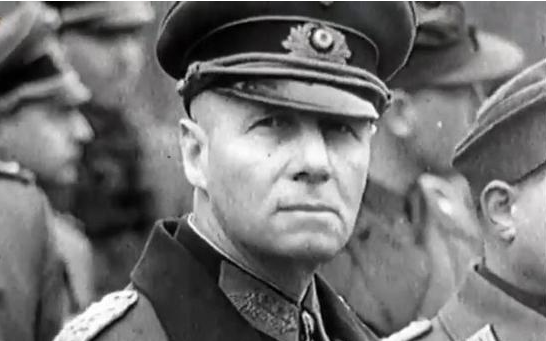
Among the generals of World War II, Erwin Rommel stands out as a unique figure. His nickname, “The Desert Fox,” wasn’t chosen randomly, but rather because of his cunning, agile, and unexpected tactics on the North African battlefield, which truly resembled a fox. Yet, behind this “cleverness” lay the loneliness and helplessness of a general. Today, let’s discuss this brilliant yet tragic man.
Desert Fox
Rommel’s greatest military achievement was, of course, in North Africa. In that desolate desert, no one thought it was a place where any major battles could be fought, yet Rommel achieved a world-shaking victory there.
His strength is mainly reflected in three aspects:
The first was speed . Rommel knew that in the desert, whoever ran faster had an advantage. He often led armored units in rapid infiltration, attacking the enemy unexpectedly and leaving them unable to defend themselves.
Second, he was adept at deception . He often deliberately created false impressions, such as pretending to be short of troops, and then suddenly launched a fierce attack at a critical moment, catching the enemy off guard.
Third, he was flexible in his actions . Rommel never stubbornly defended one location, but always moved flexibly according to the situation, like a fox, never staying in one place for too long.
Because of this, the British had to admit that he was a formidable opponent and nicknamed him “Desert Fox”. In World War II, it was rare to find a commander who could be respected by the enemy.
A “good general” in the hearts of soldiers
Another reason Rommel is so respected is his exceptional kindness to his soldiers. Unlike many Nazi generals, he didn’t treat them as expendable. He often went to the front lines to observe the situation firsthand, even eating and chatting with them.
More importantly, he prioritized the safety of his soldiers. He often said, “Combat is brutal, but my mission is to minimize unnecessary casualties.” This attitude made his soldiers feel that at least someone cared about their lives. In comparison, some other German generals seemed much more callous.
Therefore, even after the war was lost, many German soldiers still missed this general. Even the Allies admitted that Rommel was a worthy opponent.
Lonely General
Yet, such a brilliant and respected commander led a profoundly lonely career. Why? Because of his awkward relationship with the Nazis.
Rommel wasn’t a die-hard Nazi. He initially had a favorable impression of Hitler, believing him to be a force that could revitalize Germany. However, as the war progressed, he found Hitler’s military leadership increasingly unreliable, often issuing completely unrealistic orders. Rommel tried to persuade him, but was often ignored.
To make matters worse, Rommel’s fame made the Nazi leadership wary of him. A general with outstanding military achievements, beloved by his soldiers, and respected even by his enemies, was a potential threat to the dictator. Therefore, despite his prowess on the front lines, Rommel remained politically isolated.
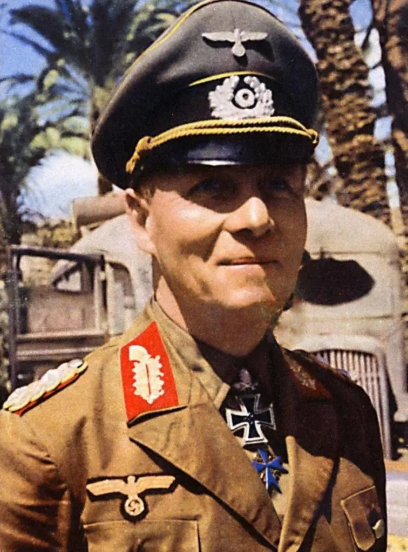
A turning point in fate
Rommel’s loneliness reached its peak in the later stages of the war. In 1944, the “assassination of Hitler” conspiracy was exposed. Although Rommel was not directly involved, he was eventually implicated because of his connections with some of the plotters.
Hitler offered him two choices: go to court and implicate his family and subordinates, or commit suicide by poisoning himself to save his family and reputation. Rommel chose the latter. Thus, the “Desert Fox” committed suicide by poisoning himself at home, ending his legendary yet tragic life.
This is also the best proof of his loneliness: even with outstanding achievements, he still has to face death alone in the end.
The contradiction between wit and loneliness
Looking back on Rommel’s life, we can find a big contradiction in him:
On the battlefield, he was clever and resourceful, as agile as a fox, giving the enemy a headache;
Politically, he seemed isolated and helpless, and even became a victim of the power struggle.
This contrast makes Rommel’s life tragic. He could have become a national hero of Germany, but in the end he was forced to commit suicide.
Rommel’s legacy
So how should we view Rommel today? He wasn’t a perfect man, and he served the Nazi war machine. But it’s undeniable that his tactical brilliance, his care for his soldiers, and the choices he made in his later years set him apart from other German generals.
Even after the war, many people regarded him as a “clean general”. Although this statement is controversial, it also shows that he occupies a special place in historical memory.
Summarize
Rommel, the “Desert Fox,” is a man who commands both admiration and regret. His wit made him one of the most outstanding tacticians of World War II, while his loneliness makes his story full of tragedy.
In the desert, he was as agile and cunning as a fox; in life, he was as lonely and helpless as a fox. Perhaps this is the unique role that history has given Rommel.
