
Russia’s immense geographical scale has produced a fascinating and complex tapestry of territories, borders, and geopolitical anomalies. Its history is not one of static lines on a map but a dynamic story of expansion, retraction, strategic calculation, and economic necessity. From a heavily militarized exclave in the heart of Europe to a former North American territory sold in a historic deal, Russia’s frontiers tell a compelling story of its enduring strategic priorities. This guide examines four distinct case studies—Kaliningrad, Alaska, the Altay Republic, and the “Peanut Hole”—to provide a comprehensive understanding of how Russia has shaped and managed its unique territorial footprint.
Kaliningrad: Russia’s Geopolitical Outpost in Europe
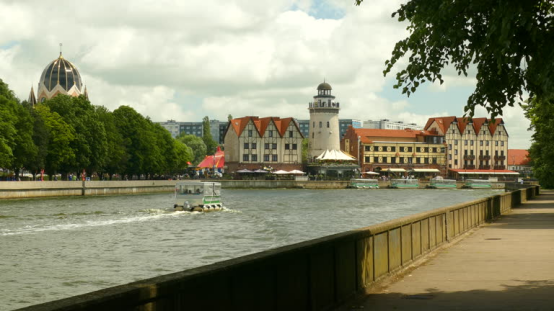
Nestled between NATO members Poland and Lithuania on the Baltic coast, the Kaliningrad Oblast is a quintessential example of a geopolitical exclave. Geographically separated from the Russian mainland, its existence is a direct legacy of World War II and the redrawing of European borders. Its strategic value far outweighs its small size, serving as a critical military and economic outpost for Moscow.
From Prussian Königsberg to Soviet Kaliningrad
Before 1945, the region was known as Königsberg, the capital of East Prussia and a center of German culture for centuries. Following the defeat of Nazi Germany, the Potsdam Agreement awarded the territory to the Soviet Union. The German population was expelled, and the area was repopulated with Soviet citizens. The city was renamed Kaliningrad, and the region was transformed into a heavily militarized zone, closed off to foreigners throughout the Cold War. The collapse of the Soviet Union in 1991 physically isolated Kaliningrad, turning it from a contiguous part of the USSR into a true exclave surrounded by newly independent nations that would later join the European Union and NATO.
The Strategic Imperative: The Baltic Fleet and NATO’s Border
Kaliningrad’s primary importance to modern Russia is military. It is the headquarters of the Russian Baltic Fleet, providing the nation with its only year-round, ice-free port on the Baltic Sea. This allows the Russian Navy to project power and maintain a constant presence in a region of critical strategic importance. In recent years, Russia has stationed advanced missile systems, including the nuclear-capable Iskander missiles, in Kaliningrad. This deployment places key European capitals and NATO military installations within striking range, creating a powerful deterrent and a source of significant concern for the Western alliance. The exclave acts as a strategic wedge, complicating NATO’s operational planning and reinforcing Russia’s A2/AD (Anti-Access/Area Denial) capabilities in Northern Europe.
Economic Realities and Challenges of an Exclave
Economically, Kaliningrad faces unique challenges due to its isolation. It is heavily dependent on transit routes through Lithuania and Poland for goods and energy from mainland Russia. This reliance has been a source of political friction, particularly as relations between Russia and the West have deteriorated. Moscow has attempted to mitigate this vulnerability by establishing a Special Economic Zone (SEZ) to attract investment and by developing its own port infrastructure. However, the region’s economy remains deeply intertwined with its geopolitical status, often fluctuating with the state of Russia’s relationship with its European neighbors.
The Alaska Purchase: A Historic Transaction and its Aftermath
The sale of Alaska to the United States in 1867 for $7.2 million is one of history’s most consequential land deals. What was once seen as a remote, inhospitable Russian outpost has since become a cornerstone of American energy production and strategic defense. The story of the Alaska Purchase reveals the shifting geopolitical priorities of a 19th-century Russian Empire facing financial strain and strategic overreach.
Russian America: The Economics of the Fur Trade
Russia’s presence in North America began in the 18th century, driven primarily by the lucrative maritime fur trade. The Russian-American Company established settlements to hunt sea otters and other fur-bearing animals. However, by the mid-19th century, the fur trade was in steep decline due to overhunting. The territory was vast, sparsely populated, and incredibly difficult and expensive to supply and administer from the capital in St. Petersburg. The colony was becoming a significant financial drain on the Russian imperial treasury.
Why Russia Sold: The Geopolitical Calculus of 1867
The decision to sell Alaska was driven by a convergence of factors. Russia’s defeat in the Crimean War (1853-1856) had left the empire financially crippled and exposed its naval weaknesses. Tsar Alexander II and his advisors concluded that defending the remote Alaskan territory against a potential British invasion from neighboring Canada would be nearly impossible. Selling the territory to the United States was seen as a pragmatic solution. It would not only provide a much-needed infusion of cash but also create a strategic buffer by placing a friendly power—the U.S.—between Russian territory and the British Empire, its primary geopolitical rival at the time.
From “Seward’s Folly” to Strategic Energy Powerhouse
Initially, the purchase was widely mocked in the American press as “Seward’s Folly,” named after Secretary of State William H. Seward who championed the deal. The territory was perceived as a barren wasteland of ice. This perception dramatically changed with the Klondike Gold Rush in the late 1890s. The true value of Alaska, however, was unlocked in the 20th century with the discovery of massive oil reserves, particularly at Prudhoe Bay in 1968. This discovery transformed Alaska into a major energy producer and a vital component of U.S. energy independence. Furthermore, during the Cold War, Alaska’s strategic location provided a critical vantage point for monitoring Soviet activities across the Bering Strait, solidifying its military importance.
The Altay Republic: A Nexus of Empires and Pipelines
The Altay Republic, located in the heart of Asia, represents a different kind of Russian frontier—one defined by mountainous terrain and its position at the convergence of four nations: Russia, China, Mongolia, and Kazakhstan. Its history is one of a remote imperial borderland that has now evolved into a region of immense strategic importance for energy and trade in the 21st century.
A Historical Frontier between Russia and China
For centuries, the Altay region was a sparsely populated frontier zone inhabited by various Turkic peoples. The Russian and Qing Empires expanded towards this region, leading to a need to formally demarcate their spheres of influence. The border was not a single line but a fluid zone of control. The process of defining this border was a long and complex diplomatic endeavor, reflecting the power dynamics between the two vast empires.
The Treaties that Shaped the Modern Border
The modern border in the Altay region was primarily established through a series of 19th-century treaties. The Treaty of Tarbagatai (1864) and the Treaty of Saint Petersburg (1881) were instrumental in delineating the boundary between the Russian and Chinese Empires. These agreements were part of a broader process of border settlement across Central Asia, aimed at preventing conflict and establishing clear lines of sovereignty. This historical legacy has created the unique geopolitical crossroads that exists today.
Contemporary Significance: Energy, Trade, and a Strategic Buffer
Today, the Altay Republic’s strategic value is defined by its role in Russia’s “pivot to Asia.” It is the proposed route for the “Power of Siberia 2” natural gas pipeline, a massive project designed to supply China with Russian gas. This pipeline would solidify the energy partnership between Moscow and Beijing and grant Russia significant economic leverage. The region’s location also makes it a critical transport corridor for trade. Militarily, it serves as a strategic buffer, providing Russia with depth and a stable frontier in a complex and dynamic part of the world.

The Peanut Hole Dispute: Securing Resources in the Sea of Okhotsk
The “Peanut Hole” dispute is a lesser-known but highly significant case study in how Russia uses international law to secure its economic and strategic interests. It involved a small patch of high seas in the Sea of Okhotsk, completely surrounded by Russia’s Exclusive Economic Zone (EEZ), and the international conflict that arose over its rich fishing grounds.
The Anomaly of an International Water Enclave
The Peanut Hole was a legal anomaly created by the United Nations Convention on the Law of the Sea (UNCLOS). While Russia’s EEZ extended 200 nautical miles from its coastline, this doughnut-shaped area in the center of the Sea of Okhotsk fell just outside that limit, classifying it as international waters. This meant that fishing fleets from any nation could legally operate there, a fact that became highly contentious in the early 1990s.
The “Fish Wars” and Russia’s Economic Claims
Following the collapse of the Soviet Union, fishing fleets from countries like Poland, South Korea, and China began to heavily exploit the Peanut Hole’s rich pollock stocks. Russia argued that this unregulated fishing was devastating the straddling fish stocks that migrated between the Peanut Hole and its own EEZ, threatening the entire ecosystem and the livelihood of Russian fishing communities. This led to a period of tension often referred to as the “Fish Wars,” where Russia took unilateral actions to deter foreign vessels, claiming the unregulated fishing was a threat to its national economic security.
Resolving the Dispute through International Law
Rather than relying solely on force, Russia pursued a long-term legal strategy. It submitted a claim to the UN Commission on the Limits of the Continental Shelf (CLCS), arguing that the seabed of the Peanut Hole was a natural extension of the Russian continental shelf. After years of scientific research and diplomatic lobbying, the CLCS officially recognized Russia’s claim in 2014. This ruling effectively extended Russian sovereignty over the seabed and its resources, allowing Moscow to regulate all fishing activity in the area and close the Peanut Hole to foreign fleets. The resolution demonstrated a sophisticated use of international maritime law to achieve a key strategic and economic objective.
Analyzing Russia’s Territorial and Border Doctrines
Examining these diverse cases reveals several consistent themes in Russia’s approach to its borders and territories. Whether through military positioning, economic transactions, or legal maneuvering, Russia’s actions are consistently guided by a deep-seated focus on strategic security and resource control. These doctrines have been shaped by centuries of history and continue to inform its policies today.
The Role of Strategic Depth and Buffer Zones
A core tenet of Russian military thinking is the concept of strategic depth—having vast territory to absorb an invasion and trade space for time. While this applies mainly to its core landmass, the principle extends to its frontiers. Territories like Kaliningrad and the Altay Republic function as forward outposts or buffer zones. Kaliningrad projects power outward and complicates NATO’s planning, while Altay provides a stable frontier with a major power, China. The sale of Alaska can even be seen through this lens: it was a territory Russia could not defend, and selling it prevented it from becoming a strategic vulnerability.
Economic Drivers vs. Military Imperatives
Russia’s territorial policies often involve a careful balance between economic benefit and military necessity. The Peanut Hole dispute was almost entirely driven by the need to protect a vital economic resource—the pollock fishery. The Alaska sale was a purely economic decision made to shore up a failing treasury. In contrast, Kaliningrad’s primary value is military, with its economy being a secondary and often challenging consideration. The Altay region represents a modern fusion of both, where its role as a strategic buffer is now complemented by its potential as a critical energy corridor to China.
Leveraging International Law and Historical Claims
While often portrayed as acting unilaterally, Russia has also shown a capacity to skillfully use international law and historical precedent to its advantage. The resolution of the Peanut Hole dispute is the prime example, where a decade-long legal process resulted in a major victory. Similarly, the annexation of Kaliningrad was legitimized through post-WWII international agreements like the Potsdam Conference. This dual approach—combining hard power with legal and diplomatic instruments—is a hallmark of its foreign policy, allowing it to pursue its objectives through multiple avenues.
Frequently Asked Questions (FAQ)
- Why is Kaliningrad so strategically important to Russia?
- Kaliningrad is strategically vital for two main reasons. First, it hosts the headquarters of the Russian Baltic Fleet and provides Russia’s only ice-free port in the Baltic Sea, ensuring year-round naval access. Second, its location, surrounded by NATO countries, allows Russia to position advanced missile systems and other military assets that can project power deep into Europe, acting as a powerful deterrent and a key component of its A2/AD strategy.
- Was the sale of Alaska really a mistake for Russia?
- In hindsight, given the immense oil and mineral wealth discovered, the sale appears to be a colossal mistake. However, from the perspective of 1867, the decision was pragmatic. The Russian Empire was financially devastated after the Crimean War, the territory was unprofitable, and it was considered impossible to defend from the British Empire. Selling it to the United States generated needed funds and placed a friendly nation on its border, which was a sound strategic calculation at the time.
- How does the Altay region function as a modern strategic barrier?
- The Altay region functions as a strategic barrier due to its rugged, mountainous terrain and its location at the junction of four countries. It creates a natural buffer on Russia’s southern Siberian flank. In the modern context, its strategic importance is increasingly economic. It serves as a key transit route for the planned “Power of Siberia 2” gas pipeline to China, binding the two major powers in a long-term energy partnership and strengthening Russia’s geopolitical position in Asia.
- What precedent did the Peanut Hole dispute set for international maritime law?
- The resolution of the Peanut Hole dispute set a significant precedent by demonstrating how the UN Commission on the Limits of the Continental Shelf (CLCS) can be used to resolve conflicts over high-seas enclaves. It affirmed that a coastal state can claim sovereignty over the seabed resources of an area completely surrounded by its EEZ if it can scientifically prove a natural prolongation of its continental shelf. This provided a legal pathway for closing such loopholes in maritime law, prioritizing the claims of the surrounding coastal state over the rights of distant-water fishing nations.
