The attacks of September 11, 2001, were a watershed moment in modern history, fundamentally altering the trajectory of international relations, US foreign policy, and the geopolitical landscape of the Middle East. This event was not a spontaneous act of violence but the culmination of decades of complex historical, political, and ideological developments. To fully comprehend its far-reaching impact, one must trace the origins of the conflict, from the rise of Osama bin Laden and the formation of al-Qaeda in the crucible of the Soviet-Afghan War to the critical break with the United States following the Gulf War. The subsequent “War on Terrorism” launched by the U.S. unleashed forces that continue to shape global dynamics, creating both profound instability and unforeseen strategic opportunities for other world powers.
This guide provides a comprehensive analysis of the entire 9/11 timeline and its aftermath. We will dissect the ideological radicalization of key figures, the strategic miscalculations by global powers, the immediate and long-term consequences of the U.S. military response, and the new world order that emerged from the ashes of the World Trade Center.
The Genesis of a Global Conflict: The Rise of Bin Laden and Al-Qaeda
The story of 9/11 begins not in 2001, but decades earlier in the mountains of Afghanistan. The Cold War conflict between the Soviet Union and the United States provided the fertile ground for the growth of a global jihadist movement, with Osama bin Laden emerging as one of its most prominent and dangerous figures.
From Wealthy Scion to Militant Leader
Osama bin Laden was born into a wealthy and influential Saudi family, seemingly destined for a life of privilege. However, he was deeply influenced by radical Islamist ideologies during his university years. The pivotal event in his transformation was the Soviet invasion of Afghanistan in 1979. Viewing the invasion as an assault on Muslim lands by a godless superpower, bin Laden traveled to Afghanistan to join the resistance. He used his family’s wealth and connections to fund and organize Arab volunteers, known as the “Afghan Arabs,” who flocked to the region to fight alongside the Afghan Mujahideen.
The Soviet-Afghan War: A Crucible for Global Jihad
The war in Afghanistan served as a crucial training ground and ideological incubator. While the United States, through the CIA, provided covert support (primarily through Pakistan’s Inter-Services Intelligence) to the Mujahideen to bog down the Soviets, it inadvertently helped create a network of battle-hardened militants. In this environment, bin Laden and his associate Abdullah Azzam established the Maktab al-Khidamat (MAK), an organization dedicated to recruiting and training foreign fighters. It was from this network that al-Qaeda (“The Base”) was formally established around 1988, with the goal of extending the jihad beyond Afghanistan to a global stage.
The Formation and Ideology of Al-Qaeda
With the Soviet withdrawal from Afghanistan in 1989, bin Laden returned to Saudi Arabia as a celebrated hero. Al-Qaeda evolved from a logistical support base for the Afghan war into a global terrorist organization. Its core ideology was a radical interpretation of Salafist jihadism, which called for the overthrow of “apostate” regimes in the Middle East and the expulsion of all Western influence. The primary enemy, in bin Laden’s view, was the United States, which he saw as the “far enemy” propping up the “near enemy” (corrupt Middle Eastern governments).

The Turning Point: The Gulf War and the Break with the West
While bin Laden’s anti-Western sentiment was already formed, the 1990-1991 Gulf War was the definitive turning point that transformed him from a regional militant leader into America’s most wanted enemy. This event solidified his belief that the United States was an imperialist power occupying the holiest lands of Islam.
Iraq’s Invasion of Kuwait and the Saudi Dilemma
When Saddam Hussein’s Iraq invaded Kuwait in August 1990, the Saudi monarchy feared it would be the next target. Osama bin Laden approached the Saudi royal family with a proposal: he would use his network of veteran Afghan Arab fighters to defend the kingdom, arguing against reliance on non-Muslim foreign powers. His offer was rebuffed. Instead, the Saudi government accepted the U.S. offer to station hundreds of thousands of American troops on its soil as part of Operation Desert Shield.
The “Infidel” Presence in the Holy Land
For bin Laden, the presence of U.S. troops in Saudi Arabia, the land of the two holy cities of Mecca and Medina, was a profound desecration and a betrayal by the Saudi regime. This act confirmed his view that the Saudi monarchy was an illegitimate puppet of the United States. He began to publicly denounce both the U.S. and the Saudi government, leading to his denaturalization and eventual exile to Sudan in 1992, and later to Afghanistan in 1996 under the protection of the Taliban.
A Formal Declaration of War
From his new base in Afghanistan, bin Laden’s rhetoric and actions escalated dramatically. In 1996, he issued his first public fatwa, a “Declaration of War Against the Americans Occupying the Land of the Two Holy Places.” This was followed by a 1998 fatwa, co-signed by other militant leaders, that called for the killing of Americans—both military and civilian—anywhere in the world. This ideology directly led to a series of attacks preceding 9/11, including the 1998 U.S. embassy bombings in Kenya and Tanzania and the 2000 attack on the USS Cole in Yemen.

The 9/11 Attacks and the Immediate Aftermath
On the morning of September 11, 2001, al-Qaeda’s long-brewing war against the United States reached its devastating climax. Nineteen terrorists hijacked four commercial airliners, carrying out a series of coordinated attacks that killed nearly 3,000 people and shook the world to its core.
A Coordinated Strike on American Symbols
The attacks were meticulously planned to strike at the heart of American economic, military, and political power.
- The World Trade Center: Two planes, American Airlines Flight 11 and United Airlines Flight 175, were flown into the North and South Towers in New York City, causing their catastrophic collapse.
- The Pentagon: American Airlines Flight 77 was crashed into the headquarters of the U.S. Department of Defense in Arlington, Virginia.
- United Airlines Flight 93: The fourth plane, believed to be targeting another high-profile site in Washington D.C. (likely the White House or the Capitol), crashed in a field in Shanksville, Pennsylvania, after passengers and crew fought back against the hijackers.
The Global Shockwave and America’s Response
The immediate aftermath was a period of profound shock, grief, and anger in the United States and around the world. The attacks triggered an unprecedented “rally ’round the flag” effect, creating a powerful sense of national unity and a demand for swift retribution. President George W. Bush declared a “War on Terror,” a term that would define U.S. foreign policy for the next two decades. On September 14, Congress passed the Authorization for Use of Military Force (AUMF), a joint resolution that granted the President sweeping authority to use all “necessary and appropriate force” against those he determined had “planned, authorized, committed, or aided” the 9/11 attacks. This resolution would become the legal foundation for military operations in Afghanistan, Iraq, and numerous other countries.

A New Era: The Global War on Terrorism and Its Consequences
The 9/11 attacks triggered a massive and multifaceted U.S. response that reshaped the Middle East and led to prolonged military conflicts. The “War on Terror” became the central organizing principle of American foreign policy, with far-reaching and often destabilizing consequences.
The Invasion of Afghanistan and the Hunt for Al-Qaeda
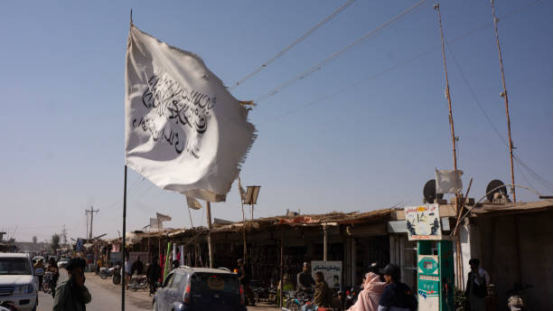
The first target was Afghanistan, where the Taliban regime harbored Osama bin Laden and al-Qaeda. In October 2001, the U.S. and its allies launched Operation Enduring Freedom. The initial invasion was swift, toppling the Taliban government within weeks and forcing al-Qaeda’s leadership into hiding in the mountainous border region with Pakistan. However, this initial success devolved into a nearly 20-year counter-insurgency campaign as the Taliban regrouped, leading to a protracted and costly war that ultimately ended with the Taliban’s return to power in 2021.
The Iraq War: A Controversial Shift in Focus
In 2003, the Bush administration shifted its focus to Iraq, arguing that Saddam Hussein’s regime possessed weapons of mass destruction (WMDs) and had ties to al-Qaeda. Despite a lack of international consensus and the later discovery that no WMDs existed, the U.S. led an invasion that quickly overthrew Hussein. The invasion and subsequent occupation, however, shattered the Iraqi state, dismantled its army, and created a massive power vacuum. This destabilization unleashed sectarian violence between Sunni and Shia Muslims and, critically, created the conditions for the rise of a new, even more brutal extremist group: Al-Qaeda in Iraq, which would later morph into the Islamic State of Iraq and Syria (ISIS).
The Proliferation of Chaos and Extremism
The wars in Afghanistan and Iraq, combined with counter-terrorism operations in countries like Pakistan, Yemen, and Somalia, had a profound and often counterproductive effect. While the core leadership of the original al-Qaeda was decimated (culminating in the killing of bin Laden in 2011), the ideology of global jihad proliferated. The chaos in Iraq and the subsequent civil war in Syria allowed ISIS to seize vast territories and establish a “caliphate,” inspiring terrorist attacks across the globe. The War on Terror, intended to eliminate a specific threat, inadvertently fueled a cycle of regional instability and spawned new generations of extremist groups.

Reshaping the World Order: Long-Term Geopolitical Shifts Post-9/11
The impact of 9/11 and the War on Terror extended far beyond the battlefields of the Middle East. It fundamentally altered U.S. domestic and foreign policy and created a strategic opening for other global powers, most notably China, to expand their influence.
The Evolution of US Policy: Homeland Security and Pre-emption
Domestically, 9/11 led to the largest reorganization of the U.S. government since World War II with the creation of the Department of Homeland Security. Sweeping surveillance legislation, such as the PATRIOT Act, was passed, raising ongoing debates about the balance between national security and civil liberties. In foreign policy, the U.S. adopted a doctrine of pre-emption, asserting the right to take military action against perceived threats before they could fully materialize. This aggressive, unilateralist posture strained relationships with traditional allies and damaged America’s international standing.
A Strategic Opening for China
While the United States was deeply mired in costly wars in the Middle East, spending trillions of dollars and immense political capital, China was quietly executing a long-term strategy of economic expansion and diplomatic engagement. With the U.S. distracted, China was able to join the World Trade Organization, rapidly grow its economy, and expand its influence across Asia, Africa, and Latin America through initiatives like the Belt and Road. The two decades following 9/11, when America was focused on counter-terrorism, coincided precisely with China’s rise as a peer competitor and the primary challenger to U.S. global leadership.
The Enduring Instability in the Middle East
The post-9/11 interventions left the Middle East more fragmented and volatile than ever before. The collapse of state structures in Iraq and Libya, the brutal civil war in Syria, and the empowerment of regional actors like Iran have created a landscape of perpetual conflict. The dream of exporting democracy through military force failed, replaced by a reality of failed states, proxy wars, and a humanitarian crisis of immense proportions. The legacy of 9/11 is not one of a resolved conflict, but of a region and a world still grappling with its turbulent consequences.
Frequently Asked Questions (FAQ)
- What was the primary reason Osama bin Laden turned against the United States?
- The definitive turning point was the 1990-1991 Gulf War. Bin Laden was vehemently opposed to the presence of U.S. military forces in Saudi Arabia, the land of Islam’s two holiest sites, Mecca and Medina. He viewed their presence as a “desecration” and a form of occupation, and he condemned the Saudi monarchy for allowing it. This event transformed his anti-Western ideology into a direct declaration of war against the United States.
- How did the War on Terror lead to the rise of ISIS?
- The 2003 U.S. invasion of Iraq was a critical factor. The invasion toppled Saddam Hussein’s Sunni-led government and dismantled the Iraqi army. This created a power vacuum and disenfranchised the Sunni population, leading to a violent insurgency. The group Al-Qaeda in Iraq (AQI), led by Abu Musab al-Zarqawi, thrived in this chaos. After years of evolution and capitalizing on the Syrian Civil War, this group rebranded itself as the Islamic State of Iraq and Syria (ISIS), eventually seizing large territories in both countries.
- In what ways did 9/11 change domestic policy within the United States?
- The changes were profound. The most significant was the creation of the Department of Homeland Security, a massive new federal agency merging 22 different government bodies to coordinate defense against terrorism. Additionally, Congress passed the USA PATRIOT Act, which greatly expanded the surveillance powers of law enforcement and intelligence agencies, allowing for increased monitoring of communications and financial transactions to track terrorist activities. These changes sparked a long-running debate over privacy and civil liberties.
- What is the connection between the Soviet-Afghan War and the 9/11 attacks?
- The Soviet-Afghan War (1979-1989) was the crucible where al-Qaeda was forged. Osama bin Laden and other Arab volunteers traveled to Afghanistan to fight the Soviets in a U.S.-backed jihad. This war provided them with military training, combat experience, and a shared ideological purpose. It also allowed bin Laden to build a global recruitment and logistics network (Maktab al-Khidamat), which he later transformed into al-Qaeda. The victory against the Soviets emboldened these militants, leading them to believe they could also defeat the world’s other superpower, the United States.
