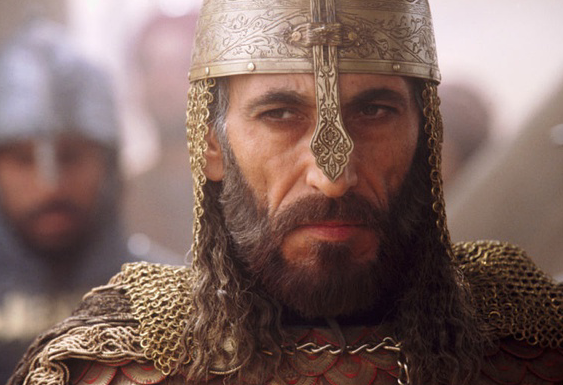
At the end of the 12th century, the Crusades in the eastern Mediterranean were raging, bringing Europe’s Christian powers into direct conflict with the Muslim world in the Middle East. Amid this turbulent era, a remarkable leader emerged: Saladin (Salah ad-Din Yusuf ibn Ayyub). He not only earned victories on the battlefield with extraordinary military skill but also won historical respect through his political wisdom and magnanimity, becoming a hero of the Muslim world.
I. Rise and Political Strategy
Saladin was born in 1137 in a Kurdish family near the border of Syria and Iraq. From a young age, he displayed exceptional military talent and political acumen. Early in the founding of the Ayyubid dynasty, he gradually gained control over Egypt and, in a short time, unified the Muslim forces of Egypt and Syria. This political unification not only provided a strong base against the Crusaders but also laid the foundation for him to become a leader of the broader Muslim world.
Saladin’s political wisdom was evident in his skill at forming alliances and managing different tribes and sects. He understood that military power alone could not sustain long-term rule, so he implemented a policy of tolerance, respecting the customs of both Sunni and Shia communities, and mediating tribal conflicts. This approach stabilized internal affairs and provided a strong foundation for long-term military campaigns.
II. Exceptional Military Prowess
Saladin is most admired for his military abilities. In 1187, he decisively defeated the Crusaders at the Battle of Hattin, reclaiming Jerusalem—a battle now regarded as a classic in medieval military history.
Tactically, Saladin was flexible and inventive. He excelled in guerrilla and ambush tactics, skillfully exploiting terrain advantages, maneuvering his cavalry to strike enemy weaknesses, while keeping his main forces defensively solid. During the Battle of Hattin, he meticulously cut off Crusader supply lines, trapping them under siege and starvation, ultimately achieving a decisive victory.
Equally important, Saladin understood psychological warfare. He conducted multiple harassment attacks before major battles, exhausting the Crusaders, while his reputation for mercy toward prisoners enhanced Muslim morale and earned international respect.
III. Integration of Military and Political Strategy
Saladin’s wisdom extended beyond the battlefield into political strategy. He recognized that military victory was only a means to an end; stable governance and winning the hearts of the people were the ultimate goals. After reclaiming Jerusalem, he refrained from large-scale massacres, allowing Christians to safely withdraw and ensuring religious coexistence in the city. This approach prevented social unrest and enhanced his reputation across both Muslim and European worlds.
Moreover, Saladin skillfully employed diplomacy. By forming alliances with Egypt, Syria, and neighboring states, he ensured the sustainability of his military strength. At the same time, he maintained communication and negotiations with European powers, creating strategic buffers for future conflicts. This integration of military and political strategy made Saladin one of the few leaders in the region capable of unifying most of the Muslim world.
IV. Historical Significance and Symbolism
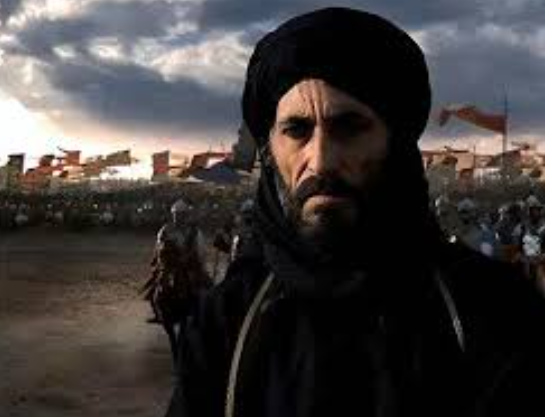
Saladin was not only a military genius but also a symbol of the Muslim world’s spirit. He embodied the ideal of leadership combined with mercy, demonstrating that wisdom and courage together could shape history. His tactics and strategies remain subjects of study for military scholars, while his character and policies of tolerance continue to serve as models for cross-cultural understanding.
In modern historical studies, Saladin is recognized not only as a key figure of the Crusader era but also as an outstanding symbol of Muslim unity, resistance against foreign invasion, and the balance of warfare with political governance. His story shows that a true hero wins not only on the battlefield but also in the hearts of people and in history.
V. Conclusion
Saladin was courageous, intelligent, and compassionate. He used his military skill to reshape the history of the Middle East and his political wisdom to stabilize the Muslim world. Brave in battle and merciful in governance, he became an enduring hero of history.
For military enthusiasts and historians alike, Saladin provides invaluable lessons and inspiration. A true hero is one who writes history not only with strength but also with wisdom and a generous heart.
