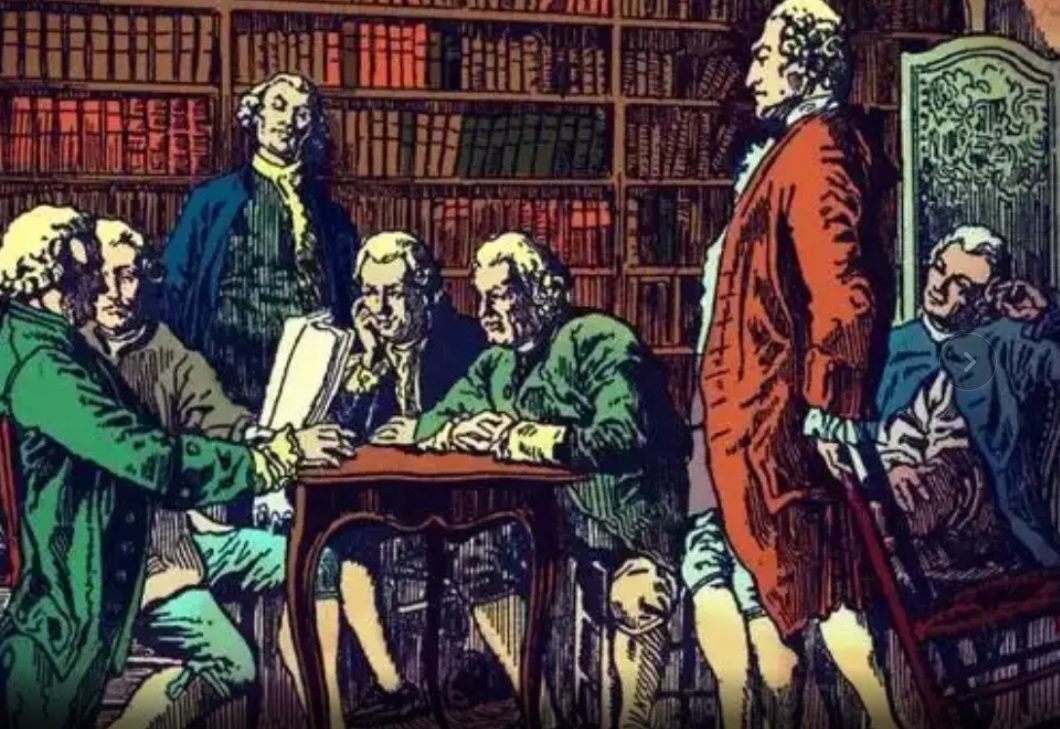
The Enlightenment, a transformative intellectual and cultural movement spanning the 17th and 18th centuries, stands as a pivotal period in human history. It was a time when reason, individualism, and skepticism challenged traditional authority and dogma, setting the stage for modern thought and governance. This era, often dubbed the “Age of Reason,” witnessed a profound shift in how humanity understood itself, society, and the universe. From the rigorous philosophical inquiries of Immanuel Kant to the passionate advocacy for human rights by Voltaire, the Enlightenment laid the groundwork for many of the values and institutions we cherish today. This ultimate guide delves into the core tenets of this revolution, exploring its key figures, enduring impacts, and the complex legacy it bequeathed to the world.
The Dawn of Reason: Understanding the Enlightenment’s Core Principles
The Enlightenment did not emerge in a vacuum; it was a culmination of centuries of intellectual development, spurred by the Scientific Revolution and the tumult of religious wars. At its heart was an unwavering faith in the power of human reason to solve problems, understand the natural world, and improve human conditions. This belief challenged the prevailing reliance on tradition, revelation, and inherited authority, proposing instead that knowledge could be attained through empirical observation, logical deduction, and open debate.
Historical Context: Europe on the Eve of Change
Before the Enlightenment, Europe was largely defined by absolute monarchies, the pervasive influence of the Church, and a social structure rooted in feudalism. The devastating Thirty Years’ War (1618-1648) had left a continent yearning for stability and new ways of thinking about governance and religious tolerance. Thinkers like Francis Bacon and René Descartes had already sown the seeds of scientific inquiry and rationalism, advocating for systematic doubt and empirical evidence. This intellectual ferment, coupled with burgeoning trade and the rise of a literate middle class, created fertile ground for new ideas to take root and flourish, questioning the very foundations of power and knowledge.
Key Ideals: Reason, Liberty, and Progress
The Enlightenment was characterized by several interconnected ideals that formed the bedrock of its philosophical edifice. “Reason” was paramount, seen as the primary source of authority and legitimacy, capable of guiding moral actions and societal organization. This emphasis on reason naturally led to the demand for “Liberty”—freedom of thought, speech, religion, and from arbitrary rule. Philosophers argued that individuals possessed inherent rights that governments were obligated to protect. Coupled with these was the optimistic belief in “Progress,” the idea that humanity could continuously improve its condition through the application of reason and scientific knowledge, leading to a more enlightened and prosperous future. These ideals collectively fueled a revolutionary spirit that sought to transform society from the ground up.

Pillars of Thought: Key Enlightenment Philosophers
The Enlightenment was a vibrant tapestry woven by the contributions of numerous brilliant minds, each adding a unique thread to the intellectual revolution. While their approaches and specific focuses varied, they shared a common commitment to reason and the betterment of humanity. From the critical philosophy of Immanuel Kant, who sought to define the limits and scope of human understanding, to the fiery polemics of Voltaire, who championed individual freedoms, these thinkers collectively dismantled old paradigms and constructed new frameworks for thought.
Immanuel Kant: The Critique of Pure Reason and Moral Autonomy
Immanuel Kant (1724-1804), a German philosopher, stands as one of the most influential figures of the Enlightenment. His monumental work, “Critique of Pure Reason,” revolutionized epistemology by exploring the boundaries of human knowledge and arguing that our minds actively structure our experience of the world. Kant famously urged individuals to “Sapere Aude!” (Dare to know!), encapsulating the spirit of intellectual independence. His moral philosophy, articulated in works like “Groundwork of the Metaphysics of Morals,” introduced the concept of the Categorical Imperative, emphasizing the importance of acting according to universalizable principles and treating humanity as an end in itself, never merely as a means. This focus on individual moral autonomy profoundly influenced later ethical and political thought, stressing the inherent dignity of every person.
Voltaire: Champion of Free Speech and Religious Tolerance
François-Marie Arouet, better known as Voltaire (1694-1778), was a French writer, historian, and philosopher renowned for his wit, sharp critiques of the Catholic Church, and advocacy for civil liberties. Through his prolific writings—including plays, essays, and philosophical treatises—Voltaire relentlessly campaigned for freedom of speech, religious tolerance, and the separation of church and state. He famously stated, “I disapprove of what you say, but I will defend to the death your right to say it,” a sentiment that became a cornerstone of modern liberal democracies. Voltaire’s influence extended beyond philosophy; he was a public intellectual who used his platform to fight injustice, particularly advocating for victims of religious persecution. His relentless questioning of authority and superstition played a crucial role in undermining the Old Regime in France.
Other Influential Thinkers: Montesquieu, Rousseau, Locke, Diderot
Beyond Kant and Voltaire, a constellation of other thinkers contributed significantly to the Enlightenment. John Locke (1632-1704), an English philosopher, laid the groundwork for liberal political theory with his concept of natural rights (life, liberty, and property) and the idea of government by consent, profoundly influencing the American Declaration of Independence. Baron de Montesquieu (1689-1755), a French political philosopher, advocated for the separation of powers within government (executive, legislative, judicial) as a means to prevent tyranny, a principle enshrined in many modern constitutions. Jean-Jacques Rousseau (1712-1778), another influential Genevan philosopher, explored the concept of the “social contract” and argued for popular sovereignty, believing that legitimate political authority comes from the general will of the people. Denis Diderot (1713-1784) was the chief editor of the monumental Encyclopédie, a collaborative effort to compile all human knowledge, which became a powerful tool for disseminating Enlightenment ideas and challenging established authority.

Societal Impact: Transforming Politics, Science, and Culture
The intellectual ferment of the Enlightenment was not confined to academic salons; its ideas cascaded into every aspect of society, sparking profound transformations that continue to shape the modern world. The emphasis on individual rights, popular sovereignty, and rational governance directly fueled political revolutions. Simultaneously, the scientific method gained ascendancy, leading to remarkable advancements, while cultural spheres witnessed a democratization of knowledge and the rise of new artistic forms. The Enlightenment’s reach was truly global, inspiring movements for reform and challenging existing power structures across continents.
Political Revolutions: American and French Influence
Perhaps the most dramatic and immediate impact of Enlightenment thought was its role in inspiring major political revolutions. The American Revolution (1775-1783) drew heavily from Locke’s theories of natural rights and government by consent, as articulated in the Declaration of Independence. Thomas Jefferson, Benjamin Franklin, and other Founding Fathers were deeply immersed in Enlightenment philosophy. Following suit, the French Revolution (1789-1799) was a direct manifestation of Rousseau’s ideas of popular sovereignty and the general will, alongside Voltaire’s calls for liberty and equality. The “Declaration of the Rights of Man and of the Citizen” encapsulated the Enlightenment’s ideals, proclaiming universal human rights and equality before the law. These revolutions irrevocably altered the course of history, establishing new models of republican government and setting precedents for democratic movements worldwide.
Scientific Advancements and the Rise of Empiricism
The Enlightenment built upon the foundations of the Scientific Revolution, further solidifying the empirical method as the gold standard for acquiring knowledge. Thinkers like Isaac Newton, whose laws of motion and universal gravitation demonstrated a universe governed by rational principles, became icons of the age. This period saw significant advancements in various fields: botany (Linnaeus), chemistry (Lavoisier), and electricity (Franklin). The Royal Societies and academies across Europe fostered collaboration and the dissemination of scientific discoveries, challenging religious dogma and superstitious beliefs. The rise of empiricism meant that observation and experimentation, rather than tradition or faith, became the primary arbiters of truth, leading to a more secular and rational understanding of the natural world.
Art, Literature, and the Public Sphere
The cultural landscape of the Enlightenment also underwent significant shifts. In literature, the novel emerged as a popular form, reflecting a new focus on individual experience and social commentary. Authors like Daniel Defoe and Jonathan Swift explored themes of reason, morality, and human nature. Art moved from the ornate Baroque to the more restrained and classical Neoclassicism, emphasizing order, clarity, and civic virtue. Perhaps most importantly, the Enlightenment fostered the growth of the “public sphere”—spaces like coffee houses, salons, and lending libraries where people from different social strata could gather, discuss ideas, and critically engage with political and philosophical issues. This expansion of public discourse was crucial for the widespread dissemination and popularization of Enlightenment ideals.
The Enduring Legacy of the Enlightenment
The Enlightenment’s influence resonates powerfully in the modern world, shaping our political systems, legal frameworks, scientific endeavors, and fundamental understanding of human rights. Its emphasis on reason, individual liberty, and progress laid the bedrock for contemporary democratic societies, secular governance, and the pursuit of knowledge. However, its legacy is not without its complexities and criticisms, prompting ongoing re-evaluations of its ideals and historical impact.
Modern Relevance: Democracy, Human Rights, and Secularism
Many core tenets of modern Western societies are direct descendants of Enlightenment thought. The principles of democracy, with its emphasis on popular sovereignty, representative government, and the rule of law, are rooted in the writings of Locke, Montesquieu, and Rousseau. The concept of universal human rights, enshrined in international declarations and national constitutions, stems directly from the Enlightenment’s assertion of inherent individual dignity and liberty. Furthermore, the rise of secularism—the separation of church and state—and the promotion of religious tolerance are direct outcomes of Enlightenment thinkers’ critiques of religious authority and advocacy for freedom of conscience. These foundations continue to be vital in addressing contemporary global challenges and upholding fundamental freedoms.
Criticisms and Counter-Enlightenment Movements
Despite its profound positive impact, the Enlightenment has also faced significant criticism, both contemporary and historical. The Romantic movement, emerging in the late 18th century, challenged the Enlightenment’s overemphasis on reason, advocating for the importance of emotion, intuition, and individual experience. Critics have also pointed to the Enlightenment’s blind spots, particularly regarding issues of race, gender, and colonialism. While advocating for universal rights, many Enlightenment thinkers still held prejudiced views, and their ideas were sometimes used to justify imperial expansion and the subjugation of non-European peoples. The “Counter-Enlightenment” movements highlighted the potential dangers of unchecked reason, arguing that it could lead to social atomization, moral relativism, and even totalitarianism. Understanding these critiques is essential for a nuanced appreciation of the Enlightenment’s complex and multifaceted legacy.
Pro Tips: Navigating Complex Enlightenment Texts
- Start with Context: Before diving into a philosopher’s work, understand their historical period, personal background, and the specific intellectual debates they were responding to. This provides crucial context for their arguments.
- Identify Key Terms: Enlightenment philosophers often used terms like “reason,” “nature,” “liberty,” and “contract” with specific, nuanced meanings. Pay close attention to how each author defines and uses these central concepts.
- Trace the Argument: Don’t just read for conclusions; trace the logical progression of the author’s argument. Identify their premises, supporting evidence, and how they arrive at their conclusions. What are their underlying assumptions?
- Look for Counter-Arguments: A hallmark of philosophical writing is engaging with opposing viewpoints. Identify where the author addresses potential objections or critiques, as this often clarifies their own position.
- Consider the “Why”: Beyond “what” they argued, consider “why” they argued it. What societal problems were they trying to solve? What injustices were they fighting against? This helps connect their abstract ideas to real-world implications.
- Utilize Secondary Sources Wisely: Scholarly commentaries and introductions can be invaluable for understanding difficult texts, but always engage with the primary text first. Use secondary sources to clarify, not to replace, your own reading.
- Discuss and Debate: Engage with others about these texts. Discussing ideas and different interpretations can deepen your understanding and reveal new insights.
Enlightenment Thinkers: A Comparative Overview
| Philosopher | Key Ideas/Contributions | Major Works | Impact/Legacy |
|---|---|---|---|
| Immanuel Kant | Categorical Imperative, Moral Autonomy, Limits of Reason, “Sapere Aude!” | Critique of Pure Reason, Groundwork of the Metaphysics of Morals | Revolutionized epistemology and ethics, influenced idealism and modern moral philosophy. |
| Voltaire | Freedom of Speech, Religious Tolerance, Separation of Church & State | Candide, Letters on England | Championed civil liberties, influenced French Revolution, advocated for human rights. |
| John Locke | Natural Rights (Life, Liberty, Property), Government by Consent, Tabula Rasa | Two Treatises of Government, An Essay Concerning Human Understanding | Foundation of liberal political theory, influenced American Declaration of Independence. |
| Jean-Jacques Rousseau | Social Contract, General Will, Popular Sovereignty, Noble Savage | The Social Contract, Emile, or On Education | Influenced French Revolution, theories on education, challenged notions of progress. |
| Baron de Montesquieu | Separation of Powers, Checks and Balances | The Spirit of the Laws | Influenced constitutional design in USA and other democracies. |
Frequently Asked Questions (FAQ)
- What was the primary goal of the Enlightenment thinkers?
- The primary goal was to apply reason and scientific methods to all aspects of life, challenging traditional authority (monarchy, church), superstitious beliefs, and social injustices. They aimed to improve humanity through knowledge, liberty, and progress, fostering a more rational and humane society.
- How did the Enlightenment influence modern political systems?
- The Enlightenment profoundly influenced modern political systems by promoting ideas such as natural rights, popular sovereignty, separation of powers, and government by consent. These principles directly inspired the American and French Revolutions and are foundational to contemporary democratic constitutions and human rights declarations worldwide.
- What is “Sapere Aude!” and who popularized it?
- “Sapere Aude!” is a Latin phrase meaning “Dare to know!” or “Dare to be wise!” It was popularized by Immanuel Kant as the motto of the Enlightenment, urging individuals to use their own reason and intellect without relying solely on external authority or guidance.
- Were Enlightenment ideals universally applied to all people?
- No, unfortunately, Enlightenment ideals were not universally applied. While advocating for universal human rights and liberty, many Enlightenment thinkers held views that excluded women, people of color, and non-Europeans from full participation or consideration of their rights. This represents a significant contradiction and a major point of criticism against the movement’s legacy.
- What was the role of the Encyclopédie during the Enlightenment?
- The Encyclopédie, edited by Denis Diderot and Jean le Rond d’Alembert, was a monumental compendium of human knowledge, encompassing science, arts, and crafts. Its role was crucial in disseminating Enlightenment ideas, challenging religious and political authority, and promoting a rational, secular worldview to a wider, literate public across Europe.
