The Strategic Impact of the Battle of Hastings in 1066
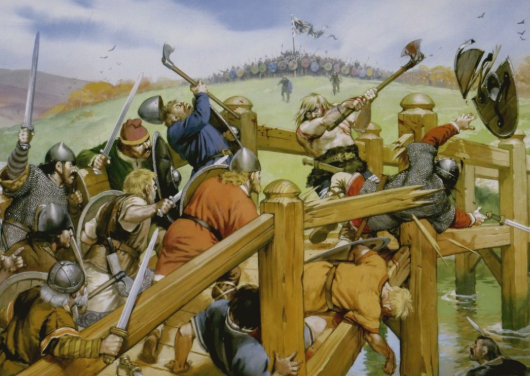
The year 1066 remains the most significant turning point in English history, marking the end of Anglo-Saxon dominance and the beginning of the Norman era. The Battle of Hastings was not merely a clash of armies but a collision of two distinct military doctrines.
The Anglo-Saxon Shield Wall
King Harold Godwinson’s forces relied on the traditional shield wall, a defensive formation that had served them well for centuries. By positioning themselves on Senlac Hill, the English gained a tactical height advantage that forced the Normans to fight uphill.
- Formation Integrity: The shield wall was virtually impenetrable to frontal cavalry charges.
- Strategic Vulnerability: The reliance on static defense made the English infantry susceptible to feigned retreats, a tactic famously employed by William the Conqueror to break the line.
The Tactical Superiority of the English Longbow
Centuries later, the English military transformation reached its zenith with the development of the longbow. By the time of the Hundred Years’ War, the longbow had become the definitive weapon that challenged the supremacy of armored chivalry.
Technical Specifications and Ballistics
The English longbow, typically crafted from yew, required immense physical strength to draw—often exceeding 100-120 pounds of pull. This allowed for a devastating combination of range and penetrating power.
| Feature | Impact on Battlefield |
|---|---|
| Draw Weight | High kinetic energy for piercing plate armor |
| Rate of Fire | Up to 10-12 arrows per minute per archer |
| Effective Range | Approximately 250-300 yards |

Anatomy of the English Victory at Agincourt
The Battle of Agincourt (1415) serves as a masterclass in terrain utilization and force multiplication. Despite being heavily outnumbered, Henry V utilized the environment to neutralize the French heavy cavalry.
Environmental Factors and Chokepoints
The narrow strip of land between the woods of Agincourt and Tramecourt acted as a natural funnel. As the French knights advanced through the muddy, waterlogged terrain, their mobility was severely restricted.
The Role of Defensive Stakes
English archers installed sharpened wooden stakes angled toward the enemy. This prevented the French cavalry from charging the archer lines directly, forcing them to veer into the path of a constant, lethal rain of arrows.

The Legacy of Medieval Military Innovation
The transition from the infantry-heavy tactics of 1066 to the specialized missile-unit dominance of 1415 showcases the evolution of the English military apparatus. These battles established a precedent for the importance of terrain, equipment, and discipline over raw numerical strength.
Frequently Asked Questions (FAQ)
- Q1: Why was the shield wall effective at Hastings?
- The shield wall created a dense, interlocking barrier that prevented cavalry from breaking through the English lines. It was only defeated when the English broke formation to pursue the Normans during feigned retreats.
- Q2: What made the longbow so lethal against French knights?
- The longbow combined high-velocity armor-piercing bodkin arrows with a high rate of fire, creating a “zone of death” that decimated advancing cavalry before they could reach the English front line.
- Q3: Did terrain play a bigger role than technology at Agincourt?
- Both were critical. While the longbow provided the offensive firepower, the narrow, muddy terrain at Agincourt forced the French into a bottleneck where they could not effectively deploy their numerical superiority.
- Q4: How did the English archers survive the French charge?
- English archers were equipped with defensive stakes and light armor, allowing them to remain mobile and protected while maintaining a constant rate of fire, effectively neutralizing the French charge at a distance.