In the grand theater of medieval Europe, no institution held more sway or commanded more authority than the Latin Christian Church. It was a spiritual and temporal superpower, an entity that held the keys to the afterlife in one hand and guided the swords of kings in the other. The Church’s power was not merely abstract; it was woven into the very fabric of daily life, from the humblest peasant to the most powerful emperor. This immense authority, however, was not uncontested. The greatest challenges often came not from external foes, but from within Christendom itself. The rise of heresies, particularly the Albigensian heresy in southern France, presented a profound threat to the Church’s ideological monopoly and triggered a response so brutal and systematic that it would forever alter the landscape of European power, law, and religious identity.
This guide explores the multifaceted power of the medieval Church and examines its most decisive confrontation with dissent: the war against the Cathars. By understanding the foundations of the Church’s dominance, we can fully grasp the existential nature of the Cathar threat and the reasons behind the creation of two of its most fearsome instruments of control: the Albigensian Crusade and the Papal Inquisition.
The Foundations of Papal Supremacy in the Middle Ages
The power of the medieval Church was not monolithic but was built upon several interconnected pillars that reinforced one another, creating a near-unbreakable structure of authority that dominated Europe for centuries. This supremacy was both spiritual and profoundly worldly, allowing the papacy to exert influence over every aspect of medieval society.
Spiritual Authority: The Keys to the Kingdom
At its core, the Church’s power was spiritual. It was the sole gatekeeper to salvation in a deeply religious age. The doctrine of apostolic succession held that the Pope was the direct spiritual heir of St. Peter, to whom Christ had given the “keys to the kingdom of heaven.” This belief gave the Pope and his clergy immense power over the souls of all Christians. The sacraments—baptism, confirmation, the Eucharist, penance, marriage, holy orders, and last rites—were essential for a Christian life and, ultimately, for entering heaven. Only the Church could administer them, making exclusion a terrifying prospect.
The most potent spiritual weapons were excommunication and the interdict. Excommunication cast an individual out of the Church, denying them the sacraments and condemning their soul to hell. The interdict was a collective punishment, closing all churches and suspending all religious services in a noble’s lands or an entire kingdom, placing immense pressure on rulers to bend to the Church’s will.
Political and Temporal Dominance
Spiritual authority translated directly into political power. Popes claimed the right to crown emperors and kings, symbolizing that their authority came from God, mediated through the Church. Conversely, they also claimed the right to depose monarchs who defied them. The famous confrontation between Pope Gregory VII and Holy Roman Emperor Henry IV at Canossa in 1077, where the emperor stood for three days in the snow to beg the Pope’s forgiveness, became a potent symbol of papal supremacy over secular rulers. The Church also had its own legal system, Canon Law, which governed matters like marriage, inheritance, and the conduct of the clergy, often superseding local secular laws.
Economic Clout: Land, Tithes, and Wealth
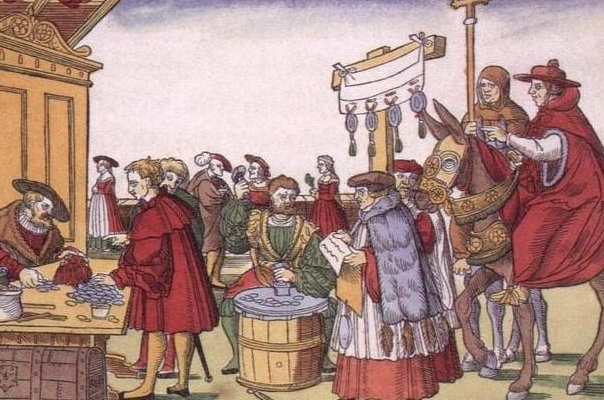
The Church was the largest landowner in Europe. Through gifts, bequests, and purchases over centuries, it amassed vast estates, monasteries, and cathedrals. This land generated enormous revenue. Furthermore, the Church levied a mandatory tax known as the tithe, which required all Christians to give ten percent of their income or produce to the Church. This system, combined with fees for religious services and the sale of indulgences, made the Church an economic powerhouse, capable of funding armies, constructing magnificent buildings, and wielding financial influence across the continent.
The Rise of Heresy: The Cathar Challenge in Languedoc
While the Church projected an image of unified Christian belief, or “orthodoxy,” dissent simmered beneath the surface. In the 12th century, the region of Languedoc in what is now southern France became the heartland of a powerful heretical movement known as Catharism. The Cathars, who called themselves simply “Good Christians,” posed the most significant ideological threat the medieval Church had ever faced.
Understanding Cathar Beliefs: A Dualist Worldview
Catharism was fundamentally a dualist religion. Cathars believed the universe was a battleground between two opposing principles: a good, spiritual God who created the eternal, unseen world of the spirit, and an evil, material god (often identified with the Old Testament God or Satan) who created the corrupt, physical world, including the human body.
- Rejection of the Material World: Because the physical world was evil, Cathars rejected many core tenets of Catholic doctrine. They believed the human soul was a divine spark trapped in the prison of the body.
- Rejection of the Church: They saw the Catholic Church as a corrupt, worldly institution in service to the evil god. They rejected its sacraments, its hierarchy, its opulent churches, and its priesthood. They denied the incarnation, believing Christ was a pure spirit who only appeared to be human.
- The Consolamentum: The only sacrament the Cathars recognized was the consolamentum, a spiritual baptism of laying on of hands that was believed to purify the soul and allow it to return to the good God upon death.
Why Languedoc? A Haven for Dissent
Catharism flourished in Languedoc for several reasons. The region was culturally distinct from northern France, with its own language (Occitan) and a vibrant courtly culture. Its political structure was highly decentralized, with powerful local nobles who often resented the authority of both the French king and the distant Pope. These nobles, and the general populace, were often critical of the local Catholic clergy’s wealth and perceived corruption, making them receptive to the ascetic lifestyle of the Cathar leaders, known as the Perfects.
The Church Strikes Back: The Albigensian Crusade (1209-1229)
Initially, the Church attempted to counter the spread of Catharism through preaching and debate. Missions led by figures like Saint Dominic were sent to the region, but they had little success. For Pope Innocent III, a powerful and assertive pontiff, the existence of a thriving, alternative Christian church within Europe was intolerable. The murder of his papal legate, Pierre de Castelnau, in 1208 was the final catalyst that unleashed the full military might of Christendom against the region.
From Preaching to Warfare: The Papal Call to Arms
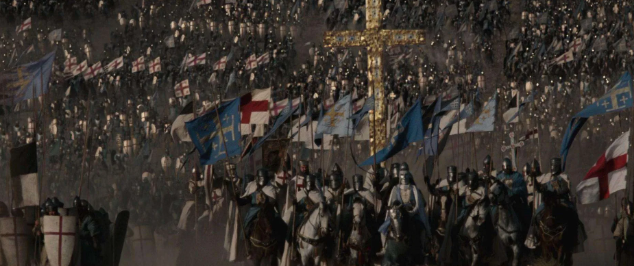
In 1209, Pope Innocent III called for a crusade—the first to be directed not against Muslims in the Holy Land but against fellow Christians in Europe. He offered crusaders the same spiritual rewards, including the remission of sins, that were offered for fighting in the East. This call was answered enthusiastically by nobles from northern France, who were motivated by a mixture of religious fervor and the promise of seizing the rich lands of the southern lords who tolerated or protected the heretics.
Key Events and Brutality: The Sack of Béziers
The Albigensian Crusade was marked by extreme brutality. The first major engagement, the siege of Béziers in 1209, set a terrifying precedent. When the city fell, crusaders were said to have asked the papal legate, Arnaud Amaury, how to distinguish the Catholics from the Cathars. His alleged reply became infamous: “Kill them all. God will know his own.” While the historicity of the exact quote is debated, the resulting massacre saw the slaughter of thousands of men, women, and children, demonstrating that the crusade was as much about conquest and subjugation as it was about doctrinal purity.
The Political Aftermath: French Royal Power Expands
The war, led initially by the ruthless commander Simon de Montfort, devastated Languedoc for two decades. While it succeeded in breaking the power of the southern nobility, it did not fully eradicate Catharism, which went underground. The primary political beneficiary was the French crown. The Treaty of Paris in 1229 formally ended the conflict, bringing most of Languedoc under the direct control of the King of France and effectively destroying its political and cultural autonomy.
Forging a New Weapon: The Papal Inquisition
Recognizing that military force alone could not eliminate a belief system, the Church developed a more systematic and enduring tool for identifying and punishing heresy: the Papal Inquisition. Established in the 1230s by Pope Gregory IX, this institution was designed to root out the remaining Cathars and any other form of religious dissent with terrifying efficiency.
From Episcopal to Papal Control
Prior to this, the investigation of heresy was typically handled by local bishops (an episcopal inquisition). The new Papal Inquisition, however, placed this power directly under the Pope’s authority. He appointed special inquisitors, often from the highly educated and disciplined new mendicant orders like the Dominicans and Franciscans, who could operate across diocesan boundaries. This centralized control made the process more uniform, relentless, and effective.
Methods of the Inquisition
The Inquisition developed a sophisticated legal procedure for its investigations. Inquisitors would arrive in a town and announce a “grace period,” during which heretics could confess in exchange for a lighter penance. After this period, investigations began in earnest.
- Systematic Interrogation: Suspects were interrogated, and detailed records were kept. The goal was to secure a confession and to get the accused to name other heretics.
- Use of Torture: While not its primary tool, torture was authorized by the papacy in 1252 as a means of extracting confessions from those who refused to cooperate.
- Punishments: Penalties varied widely. Those who confessed and repented might be ordered to wear crosses on their clothing, go on pilgrimages, or pay fines. Unrepentant heretics or those who relapsed were “relaxed” to the secular authorities, which meant they were typically burned at the stake, as the Church itself was forbidden from shedding blood.
The fortress of Montségur, the last major Cathar stronghold, fell in 1244, and over 200 Cathar Perfects were burned in a massive pyre. This event, combined with the relentless pressure of the Inquisition, effectively broke the back of the Cathar movement over the following decades.
Reshaping Christendom: The Lasting Impact of the Conflict
The campaign against the Albigensians was more than just the suppression of a heresy; it was a pivotal moment that profoundly reshaped the Latin Christian order. Its consequences were felt in the realms of politics, religion, and culture for centuries to come.
Centralization of Papal Authority
The successful prosecution of the crusade and the establishment of the Inquisition dramatically enhanced the power and prestige of the papacy. It demonstrated that the Pope could mobilize international armies, overthrow regional lords, and create a powerful, centralized legal body to enforce doctrinal uniformity. This set a precedent for future papal interventions in secular and religious affairs, solidifying the Pope’s position as the supreme leader of Christendom.
The Intolerance of Dissent and the Definition of Orthodoxy
The conflict institutionalized the idea that religious dissent was a form of treason against both God and the Christian social order, punishable by death. The Inquisition created a legal framework for identifying, prosecuting, and eliminating heresy that would be used for centuries. This fostered an atmosphere of religious intolerance and created a clear, rigidly defined boundary between “orthodoxy” and “heresy,” with little room for theological deviation.
The Cultural and Political Transformation of Southern France
For Languedoc, the consequences were catastrophic. Its unique and tolerant culture was crushed. The Occitan language declined, and the region was politically and culturally absorbed into northern France. The local nobility was decimated and replaced by loyalists to the French crown, accelerating the centralization of the French state. The vibrant courtly society that had produced the troubadours was extinguished forever.
The Symbiotic Relationship Between Power and Persecution
The Albigensian affair reveals a crucial truth about the medieval Church: its spiritual authority and temporal power were inextricably linked. The Church’s power gave it the means to persecute heretics, while the act of defining and eliminating heresy served to reinforce and expand that very power. By positioning itself as the sole defender of the true faith against a dangerous internal enemy, the papacy justified an unprecedented expansion of its legal and military authority.
The story of the Church’s confrontation with the Cathars is a stark reminder that immense power often seeks to preserve itself by defining any challenge as an existential threat. The Church, acting as both spiritual guide and worldly ruler, used its vast resources not only to lead souls to heaven but also to police the boundaries of thought and belief on Earth, reshaping a continent in the process.
Frequently Asked Questions (FAQ)
- What was the main difference between Cathar and Catholic beliefs?
- The core difference was dualism. Cathars believed in two gods: a good God of the spiritual world and an evil god of the material world. This led them to reject the material world, the physical body, and the Catholic Church’s sacraments, which they saw as creations of the evil god. Catholics, in contrast, believe in one God who created both the spiritual and physical worlds, which are seen as fundamentally good.
- Was the Albigensian Crusade purely about religion?
- No, it was not. While religious differences were the official justification, the crusade also had significant political and economic motivations. Nobles from northern France were enticed by the opportunity to seize the wealthy lands of the southern lords in Languedoc. For the French monarchy, it was a chance to crush the political autonomy of the south and expand its direct royal authority over a powerful and independent region.
- How did the Inquisition differ from a modern court?
- The Inquisition differed significantly from modern legal systems. The accused had few rights; they were often not told the names of their accusers and did not have a right to legal counsel. The inquisitor acted as both prosecutor and judge. The primary goal was to secure a confession, and methods like psychological pressure and, eventually, physical torture were permissible to achieve this. The standard of evidence was also far different, with rumor and accusation carrying significant weight.
- Did the Catholic Church become more powerful after the Albigensian Crusade?
- Yes, significantly so. By successfully orchestrating a major international military campaign within Europe and creating the Papal Inquisition, the papacy demonstrated its supreme authority over both secular rulers and religious matters. It centralized power in Rome, created a powerful mechanism for enforcing doctrinal uniformity, and set a precedent for its right to intervene directly in the affairs of kingdoms to protect the faith, thereby cementing its role as the ultimate arbiter of power in medieval Europe.
- Why was it called the “Albigensian” Crusade?
- The crusade was named after the town of Albi, a major center of Cathar activity in the Languedoc region. Although the heresy was widespread throughout southern France, the name “Albigensian” became a common term used by the Church and crusaders to refer to the heretics of the region, and thus the conflict became known as the Albigensian Crusade.