
The global presence of the United States military is unparalleled in modern history. With approximately 750 bases scattered across 80 nations, this network serves as the physical manifestation of American “hard power” and diplomatic influence. Understanding the map of US military bases requires looking beyond simple troop counts; it involves analyzing the strategic logic of “deterrence through presence” and the logistical mastery required to sustain operations thousands of miles from the mainland.
This guide explores the foundational principles of this global network, detailing the most critical permanent hubs that serve as the anchors for regional stability and rapid response capabilities.
The Evolution of US Overseas Military Strategy
The current distribution of US military installations is not accidental; it is a legacy of the 20th century’s major conflicts. The architecture of the overseas base network was largely established following World War II and solidified during the Cold War. The primary objective shifted from total war mobilization to a “containment” strategy, designed to limit the expansion of rival ideologies and ensure the freedom of international trade routes.
From Containment to Rapid Global Response
During the Cold War, bases were positioned as a “tripwire” to deter Soviet advancement. In the 21st century, the strategy has evolved into the “Global Posture Review,” focusing on flexibility. This transition involves moving from massive, city-like permanent bases toward “Lily Pads”—smaller, more agile cooperative security locations (CSLs) that allow the US to project power into remote areas without the political or financial burden of a massive permanent footprint.

Deep Dive into the Five Major Permanent Hubs
While hundreds of smaller sites exist, five specific installations serve as the “nerve centers” for US global operations. These bases are essentially self-sustaining cities that provide the logistics, intelligence, and firepower necessary to maintain regional order.
1. Ramstein Air Base, Germany
Located in the Rhineland-Palatinate, Ramstein serves as the headquarters for US Air Forces in Europe (USAFE) and is the primary gateway for operations in Europe, Africa, and the Middle East. It is the most critical logistical node for medical evacuations and cargo transport in the Western Hemisphere.
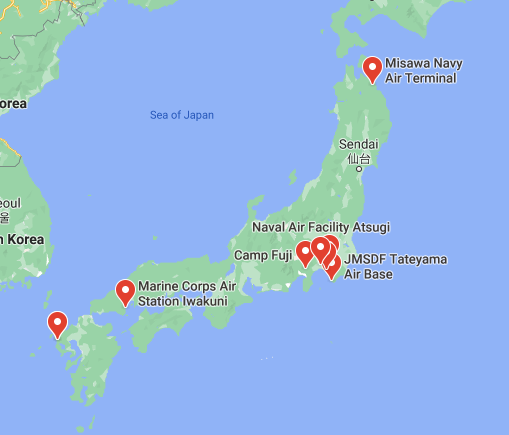
2. Kadena Air Base, Japan
Known as the “Keystone of the Pacific,” Kadena is located on Okinawa. It hosts the 18th Wing and is the largest combat-ready air wing in the US Air Force. Its proximity to mainland Asia makes it the primary deterrent against regional escalations in the Indo-Pacific.
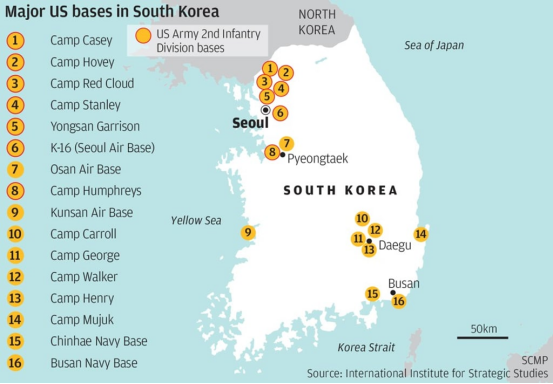
3. Camp Humphreys, South Korea
Camp Humphreys is the largest overseas US military installation. Located south of Seoul, it serves as the headquarters for United States Forces Korea (USFK). It is a massive land-based hub designed for rapid ground force mobilization and serves as a direct counterweight to northern regional threats.
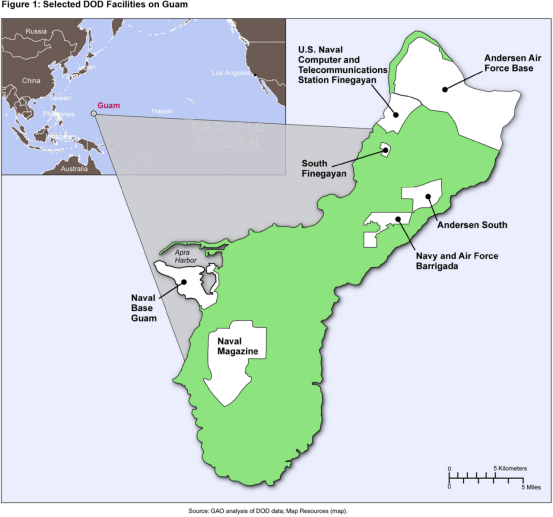
4. Naval Base Guam, Pacific Ocean
Guam is a US territory, making this base a critical sovereign outpost in the Western Pacific. It provides deep-water pier space for nuclear submarines and aircraft carriers, serving as a forward-deployed “unsinkable aircraft carrier” for the US Navy.
5. Thule Air Base (Pituffik Space Base), Greenland
Located in the high Arctic, this base is essential for early warning systems. It monitors the northern polar routes for ballistic missile launches and provides satellite tracking and command-and-control capabilities that protect the North American continent.
The Strategic Logic of Global Power Projection
The distribution of these bases follows a “Hub and Spoke” model. The major hubs provide the heavy maintenance, hospital facilities, and administrative command, while the “spokes” consist of smaller airfields and refueling stations. This allows the US to maintain a “permanent presence” without stationing the entire force in one vulnerable location.
| Strategic Function | Operational Objective | Key Region |
|---|---|---|
| Deterrence | Preventing aggression by demonstrating immediate retaliatory capability. | Indo-Pacific & Eastern Europe |
| Sea Lane Security | Ensuring the free flow of global trade and energy supplies. | Persian Gulf & South China Sea |
| Logistical Support | Rapid transport of troops, equipment, and medical aid. | Western Europe & Central Asia |
| Intelligence | Surveillance and reconnaissance to prevent surprise attacks. | Global / Satellite Coverage |
Logistics and Infrastructure: Building the Global Backbone
A military base is only as effective as its infrastructure. To be classified as a major hub, an installation must meet rigorous technical standards that allow it to function even if local civilian infrastructure fails. This includes independent power grids, advanced water purification systems, and high-bandwidth secure communication lines.
Technical Checklist for Strategic Hubs
- Runway Capacity: Must support heavy-lift cargo planes like the C-5 Galaxy and C-17 Globemaster III.
- Fuel Storage: Strategic Petroleum Reserves (SPR) capable of sustaining operations for 30-90 days without resupply.
- Deep-Water Access: Ability to dock Nimitz-class or Ford-class aircraft carriers.
- Hardened Structures: Bunkers and hangars designed to withstand conventional missile strikes.
- Host Nation Support: Legal frameworks (Status of Forces Agreements – SOFA) that allow for operational freedom.

Geopolitical Expert Insights and Future Trends
The future of US military basing is moving away from the “Mega-Base” concept. Experts suggest that as long-range precision missiles become more common, large concentrated bases become “static targets.” The shift is toward “Distributed Maritime Operations” and “Agile Combat Employment.”
Pro Tips for Understanding Geopolitical Shifts
Watch the “Second Island Chain”: As tensions rise in the Pacific, look for increased investment in bases further from the mainland, such as those in Tinian and Palau, to create depth in defense.
The Arctic Frontier: With melting ice opening new shipping lanes, expect bases like Pituffik (Thule) to receive significant upgrades for maritime surveillance and search-and-rescue operations.
Frequently Asked Questions (FAQ)
- How many US military bases are there worldwide?
- While the exact number fluctuates, the Department of Defense typically manages around 750 sites in over 80 countries. These range from massive installations like Camp Humphreys to small radar stations.
- What is a Status of Forces Agreement (SOFA)?
- A SOFA is a legal agreement between the US and a host country that defines the legal status of US personnel and property. It covers issues like jurisdiction, taxes, and movement of equipment.
- Why does the US keep bases in Germany and Japan decades after WWII?
- These bases have transitioned from post-war occupation forces to strategic regional hubs. They serve as the primary logistical and deterrence points for the European and Pacific theaters respectively.
- How much does it cost to maintain these overseas bases?
- Estimates suggest that maintaining overseas installations costs between $100 billion and $150 billion annually, though some costs are offset by host nation contributions (e.g., Japan and South Korea pay billions toward base operations).
- What is the “Lily Pad” strategy?
- This refers to the use of smaller, less permanent facilities that can be quickly activated during a crisis. This allows the military to maintain a global reach without the high political and financial cost of large permanent bases.
