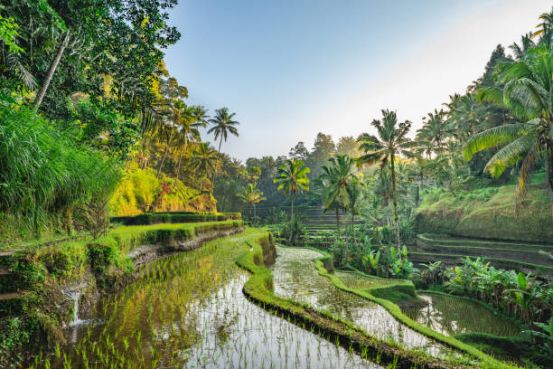
Southeast Asia is a region of breathtaking diversity, a dynamic mosaic of ancient cultures, stunning natural landscapes, and rapidly growing economies. From sprawling archipelagos forged by volcanic fire to strategic maritime crossroads and landlocked nations harnessing the power of great rivers, each country offers a unique story of history, identity, and ambition. This guide provides an in-depth exploration of five key nations—Indonesia, Malaysia, the Philippines, Singapore, and Laos—to illuminate the complexities and wonders that define this vital global region.
Indonesia: The Volcanic Archipelago and Economic Giant
As the world’s largest archipelagic state, Indonesia is a nation of immense scale and complexity. Its sheer size, demographic weight, and resource wealth make it a dominant force in Southeast Asia and a significant player on the global stage. Understanding Indonesia is key to understanding the region’s trajectory.
A Landscape Forged by Fire: Geography and Climate
Indonesia’s geography is defined by its position on the Pacific Ring of Fire, a belt of intense seismic and volcanic activity. The nation is comprised of over 17,500 islands, including major landmasses like Sumatra, Java, Borneo (Kalimantan), Sulawesi, and New Guinea (Papua). This volcanic legacy has created incredibly fertile soils, particularly on Java, which supports one of the most densely populated areas on Earth. The tropical climate and volcanic terrain give rise to diverse ecosystems, from lush rainforests teeming with unique biodiversity to savannahs and mangrove swamps. This dramatic landscape, however, also brings the constant threat of earthquakes, tsunamis, and volcanic eruptions.
Unity in Diversity: A Mosaic of Cultures
The national motto, “Bhinneka Tunggal Ika” (Unity in Diversity), perfectly captures Indonesia’s cultural fabric. The country is home to over 300 distinct ethnic groups, each with its own language, customs, and traditions. The Javanese are the largest ethnic group, but Sundanese, Malay, Batak, and many others contribute to the rich cultural tapestry. While Islam is the majority religion, the country officially recognizes Christianity, Hinduism, Buddhism, and Confucianism, with places like Bali being famous for their unique form of Hinduism. This incredible diversity is unified under the national ideology of Pancasila, which promotes pluralism and religious tolerance.
The Economic Engine of Southeast Asia
Indonesia boasts the largest economy in Southeast Asia and is a member of the G20 group of major economies. Its economic structure is built on a foundation of abundant natural resources, including palm oil, coal, natural gas, and various minerals. In recent decades, the country has been diversifying its economy, with a growing manufacturing sector and a rapidly expanding digital economy. The services sector, particularly tourism, is also a critical contributor, with destinations like Bali attracting millions of visitors annually. Despite its progress, challenges such as infrastructure development and equitable wealth distribution remain key priorities.

Malaysia: The Equatorial Crossroads of Culture and Commerce
Strategically located and blessed with natural beauty, Malaysia is a federation that uniquely bridges mainland and maritime Southeast Asia. It stands out as a model of economic development and a fascinating example of a multicultural society where diverse heritages coexist.
A Tale of Two Lands: Peninsular and East Malaysia
Malaysia’s territory is divided into two distinct regions separated by the South China Sea. Peninsular Malaysia is the western part, sharing a border with Thailand and home to the capital, Kuala Lumpur. East Malaysia, located on the island of Borneo, shares borders with Indonesia and Brunei. This geographical split has led to different developmental paths and cultural landscapes. The entire country experiences an equatorial climate, characterized by high temperatures and humidity year-round, which supports some of the world’s oldest rainforests and incredible biodiversity.
The Cultural Melting Pot
Malaysia is a prime example of a multi-ethnic and multicultural nation. Its population is a composite of three main ethnic groups:
- Malays: The largest group, who are constitutionally defined as Muslim and form the cultural and political bedrock of the nation.
- Chinese: Descendants of nineteenth and twentieth-century immigrants, who play a significant role in the country’s business and commercial sectors.
- Indians: Primarily of Tamil origin, whose ancestors came to work on colonial plantations and have since integrated into all aspects of Malaysian life.
This mix of cultures is reflected in Malaysia’s cuisine, festivals, and architecture, creating a vibrant and diverse national identity.
A Diversified and Modern Economy
Malaysia has successfully transitioned from a resource-dependent nation into an upper-middle-income, multi-sector economy. While it remains a major exporter of palm oil, natural gas, and petroleum, its economic strength now lies in high-tech manufacturing, particularly electronics and semiconductors. The services sector has also become a powerful driver of growth, with significant contributions from finance, tourism (including medical tourism), and retail. Government initiatives aim to push Malaysia towards high-income status by fostering innovation and a knowledge-based economy.

The Philippines: The Pearl of the Orient Seas
Often called the “Pearl of the Orient Seas,” the Philippines is an archipelago defined by its stunning natural beauty, a unique cultural blend of East and West, and the resilience of its people. Its strategic location in the western Pacific has made it a crossroads of trade and culture for centuries.
An Archipelago of Natural Beauty and Hazard
Comprising over 7,600 islands, the Philippines is another major archipelagic nation. Like Indonesia, it sits on the Pacific Ring of Fire, resulting in numerous volcanoes and frequent seismic activity. This geography creates breathtaking landscapes, from pristine white-sand beaches and coral reefs to dramatic mountain ranges and terraced rice paddies. However, this location also exposes the country to natural disasters, particularly typhoons that regularly sweep in from the Pacific Ocean, posing significant challenges to development and safety.
A Unique Blend of Eastern and Western Heritage
The culture of the Philippines is a distinctive fusion of indigenous Malay traditions and significant Spanish and American colonial influences. Over 300 years of Spanish rule left a lasting legacy, most notably making the Philippines the only predominantly Catholic nation in Asia. This is visible in its festivals, architecture, and family names. The subsequent American colonial period introduced the English language, which is widely spoken today, and a democratic system of government. This blend creates a cultural identity that is unique within Southeast Asia.
An Economy Driven by Services and People
The Philippine economy is classified as an emerging market. A key driver of its growth is the robust services sector, which includes a world-leading Business Process Outsourcing (BPO) industry. Another vital component of the economy is the vast amount of remittances sent home by millions of Overseas Filipino Workers (OFWs). These financial inflows support domestic consumption and provide a stable source of foreign currency. Agriculture remains an important sector, though the country faces challenges in achieving food security and modernizing its farming practices.

Singapore: The Global Hub and Garden City
Singapore stands in stark contrast to its larger neighbors. It is a small island city-state that, despite its lack of natural resources, has transformed itself into a global powerhouse for finance, trade, and innovation. Its success story is a testament to strategic planning and human capital.
Strategic Location and Urban Innovation
Singapore’s primary geographical asset is its strategic location at the southern tip of the Malay Peninsula, overlooking the Strait of Malacca, one of the world’s busiest shipping lanes. This has cemented its role as a premier global transshipment hub. Faced with limited space, Singapore has become a world leader in urban planning and green architecture, earning the moniker “Garden City” for its efforts to integrate lush greenery and nature reserves within a high-density urban environment. Projects like Gardens by the Bay and the extensive network of park connectors exemplify this commitment.
A Harmonious Multicultural Society
Similar to Malaysia, Singapore is a multicultural nation with a population primarily composed of Chinese, Malay, and Indian ethnic groups, alongside a large expatriate community. The government has actively promoted racial and religious harmony as a cornerstone of national stability. English serves as the language of business and administration, while Mandarin, Malay, and Tamil are also official languages, reflecting the nation’s diverse heritage.
The Pillars of a High-Income Economy
Singapore possesses one of the most open and business-friendly economies in the world. Its prosperity is built on several key pillars:
- Finance: It is a leading international financial center, home to the Asian headquarters of countless banks and financial institutions.
- Trade and Logistics: The Port of Singapore is one of the busiest in the world, and Changi Airport is a top-rated global aviation hub.
- Manufacturing: The country has a strong high-value manufacturing sector, focusing on electronics, biomedical sciences, and precision engineering.
- Tourism: Singapore is a major destination for both business and leisure travel, known for its world-class attractions and infrastructure.

Laos: The Landlocked Heart of the Mekong
Laos offers a different perspective on Southeast Asia. As the region’s only landlocked country, its development and identity are intrinsically linked to its rugged terrain, the mighty Mekong River, and its powerful neighbors. It is a nation of quiet charm, immense cultural heritage, and emerging economic potential.
Geography of Plateaus and Rivers
The landscape of Laos is dominated by mountains and plateaus, with the Annamite Range forming a natural border with Vietnam. The Mekong River is the nation’s lifeblood, flowing through the length of the country and serving as a primary artery for transportation, agriculture, and culture. The country’s topography has historically made internal travel difficult but has also preserved its diverse ethnic cultures. Its landlocked position presents challenges for trade but also opportunities for becoming a key transit link between its neighbors.
The People and Traditions of Laos
Laos is a multi-ethnic state, officially recognizing 49 different ethnic groups, which are often categorized into three main families: the lowland Lao Loum, the midland Lao Theung, and the highland Lao Soung. The Lao Loum are the dominant group politically and culturally. Theravada Buddhism is central to the national identity, deeply influencing art, literature, and daily life, with serene temples found in every town and village. The culture is known for its relaxed and gentle pace of life.
Emerging Opportunities and Development Path
Laos is a developing country with a socialist government, and its economy is in a state of transition. The primary economic sectors are agriculture, mining, and, increasingly, hydropower. With its mountainous terrain and extensive river systems, Laos has positioned itself as the “Battery of Asia,” developing numerous dams to generate electricity for export to neighboring countries like Thailand and Vietnam. Tourism is also a growing sector, attracting visitors with its laid-back atmosphere, ancient temples, and stunning natural scenery.

Comparative Insights: A Snapshot of Southeast Asia
To better understand the scale and diversity of these nations, a direct comparison of key metrics is useful. The table below highlights the significant differences in population, economic output, and land area, illustrating the unique profile of each country within the region.
| Country | Capital | Population (approx. 2023) | GDP (Nominal, approx. USD) | Area (km²) | Key Geographic Feature |
|---|---|---|---|---|---|
| Indonesia | Jakarta | 277 million | $1.3 trillion | 1,904,569 | Largest Archipelago |
| Malaysia | Kuala Lumpur | 33 million | $430 billion | 330,803 | Peninsula and Borneo |
| Philippines | Manila | 114 million | $440 billion | 300,000 | Archipelago on Ring of Fire |
| Singapore | Singapore | 5.6 million | $497 billion | 728 | Strategic Island City-State |
| Laos | Vientiane | 7.5 million | $15 billion | 236,800 | Landlocked, Mountainous |
This data underscores the vastness of Indonesia, the economic efficiency of Singapore, and the developing status of Laos. Each nation leverages its unique characteristics to navigate the complexities of the 21st-century global economy.
Frequently Asked Questions (FAQ)
- What makes Southeast Asia so economically diverse?
- The economic diversity stems from vast differences in geography, resources, and historical development. Singapore, with its strategic port, became a global financial hub. Indonesia and Malaysia leverage immense natural resources. The Philippines has capitalized on its English-speaking population for the BPO industry, while Laos is harnessing its geography for hydropower. This specialization creates a complex and interdependent regional economy.
- How does the “Ring of Fire” impact countries like Indonesia and the Philippines?
- The Pacific Ring of Fire provides both benefits and risks. The volcanic activity creates extremely fertile soil, which is ideal for agriculture and supports dense populations. However, it also means these countries face a constant threat from natural disasters, including devastating earthquakes, volcanic eruptions, and tsunamis. This requires significant investment in disaster preparedness and resilient infrastructure.
- What is the significance of multiculturalism in nations like Malaysia and Singapore?
- In Malaysia and Singapore, multiculturalism is a core component of their national identity and economic strategy. The blend of Malay, Chinese, Indian, and other cultures creates a vibrant society and a workforce with diverse skills and global connections. Managing this diversity harmoniously is a key policy objective, as social stability is seen as essential for continued economic prosperity and attracting foreign investment.
- Why is the Mekong River so important for Laos?
- As a landlocked country, Laos relies on the Mekong River as its primary geographical and economic artery. It facilitates transportation, provides water for rice cultivation (the staple food), and is the source for the country’s ambitious hydropower development plans. The river is also central to the cultural and spiritual life of the Lao people, making its health and sustainable management a critical national priority.
- What is ASEAN and what role does it play?
- The Association of Southeast Asian Nations (ASEAN) is a regional intergovernmental organization comprising ten Southeast Asian countries, including all five discussed here. Its primary purpose is to promote economic cooperation, political stability, and cultural exchange among its members. ASEAN provides a platform for these diverse nations to address regional challenges, negotiate trade agreements, and present a unified voice on the global stage.
