
If one were to rank the most controversial American generals of World War II, General Patton would undoubtedly be in the top three. He was the “iron-blooded Big Brother” to his soldiers, yet also a troublemaker for his superiors. How could one man simultaneously receive these two diametrically opposed evaluations? Today, let’s explore why Patton was both revered by his soldiers and a challenge to his superiors.
Tank God, a “living legend” in the hearts of soldiers
Let’s first discuss what the soldiers thought of Patton. Patton’s greatest strengths were his courage, skill, and speed. He was one of the founders of the US Armored Forces and a master of tank warfare. During pivotal moments of World War II, such as the Sicilian Campaign, the Normandy Breakthrough, and the Battle of the Bulge, he demonstrated his astonishing “fast-fighting style.” Patton believed that “war is about speed,” believing that when opportunities arise, an all-out attack is necessary, giving the enemy no chance to breathe.
What did this style mean to the soldiers on the front lines? It meant that fighting with Patton meant attacking and advancing, rather than being stuck in a quagmire and slowly languishing. Naturally, the soldiers felt that this general was truly capable and would not let them die in vain.
Furthermore, Patton was very concerned about morale. He often personally visited the front lines, not sitting back and giving orders, but riding a jeep or even standing on a tank, directly confronting the troops. His rude and direct speaking style, although sometimes involving profanity, made the soldiers feel at home.
“This is our general. He is the same as us, but he wears a general’s uniform.”
Therefore, many soldiers later recalled: “Either follow Patton to win, or follow others to lose.” This sharp contrast naturally made him a legendary figure in the hearts of the soldiers.
A “ticking time bomb” in the eyes of superiors
But from another perspective, the superiors’ feelings towards Patton were completely different.
First, he was too outspoken, to the point of offending others. Patton often made shocking public statements, openly expressing his views. In one speech, he declared that war between the US and the Soviet Union would come sooner or later—a taboo at the time. Publicly “predicting” the outcome of World War II before it was over would have infuriated any Supreme Commander.
Second, he was too dramatic. Patton favored a particularly ornate uniform, with two silver-handled pistols tucked into his waistband and a shiny helmet, looking more like a character from a movie. To the soldiers, this was cool, but to the military brass, it was a bit too showy and lacked the composure they desired.
Furthermore, he was overly emotional. The most notable incident was the “slapping incident.” Patton once assaulted two soldiers in a field hospital because they showed signs of combat fatigue, calling them cowards. When this incident became public, it sparked enormous controversy. While the soldiers understood that Patton was trying to “toughen them up,” public opinion and military brass viewed it as deeply inappropriate. Eisenhower, his immediate superior, was forced to apologize and temporarily put him on ice.
Therefore, in the eyes of his superiors, Patton was like a “time bomb”: he was irreplaceable on the battlefield, but as soon as he opened his mouth, it could cause trouble to the image of the entire US military.
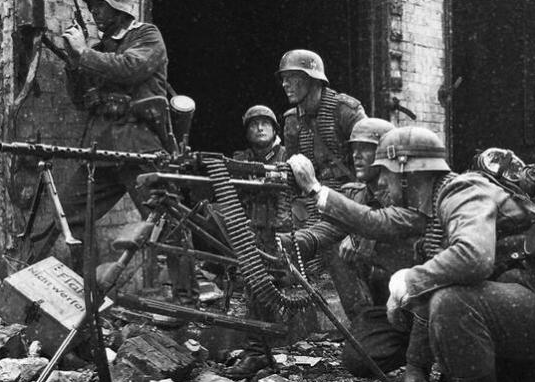
The “two-faced people” between soldiers and their superiors
This is precisely Patton’s contradiction: to his subordinates, he is a ruthless, sincere, and even a bit fanatical leader; to his superiors, he seems unstable and difficult to manage.
This “two-sidedness” is a bit like a double-edged sword:
Sharp Side: He can use his superior fighting power to win victories and boost the morale of the troops.
The dangerous side: He may mess up all the achievements with just one word or one thing.
This also explains why Patton’s military career was marked by both brilliance and controversy. After the Normandy landings, his Third Army advanced rapidly, arguably the pinnacle of US armored forces. However, his actions and words also drew scrutiny from top brass. Even after the war, his stance toward the Soviet Union deeply unnerved Washington, directly impacting his chances of further promotion.
Patton’s unique charm
Even so, Patton remains one of the most memorable generals of World War II. His unyielding and adventurous temperament perfectly matched the leader image that soldiers in wartime desired.
Soldiers knew that following Patton into battle gave them at least the confidence that “we can win.” Even though his temper was frightening, his iron-fisted style was the most direct source of strength on the battlefield.
The reason why the superiors felt so troubled was, after all, because they needed Patton. Without him, the advancement of the European battlefield might not have been so fast; with him, they had to endure the “trouble” that might happen at any time.
Summarize
So why was Patton admired by his soldiers yet a source of frustration for his superiors? The answer is actually quite simple:
What the soldiers care about is whether they can win and survive , and Patton did it.
The superiors looked at whether it was stable and controllable , but Patton was an “uncontrollable wild horse”.
This is Patton, a legendary figure who was irreplaceable on the battlefield but difficult to place politically. His existence, like war itself, is full of contradictions and tensions.
