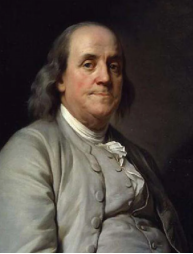
Benjamin Franklin, one of America’s most iconic Founding Fathers, often appears in history books as the quintessential Enlightenment figure: a scientist, inventor, diplomat, and polymath. Yet, beneath this veneer of secular rationalism, Franklin was deeply shaped by the religious and moral framework of American Puritanism. While his personal beliefs evolved away from orthodox Calvinism, his practical philosophy, relentless pursuit of self-improvement, and dedication to civic virtue were direct descendants of Puritanical ideals. This ultimate guide delves into “The Why” behind Franklin’s representation of American Puritanism, exploring the historical context, the specific virtues he embodied, and how his life and work provided a pivotal bridge between the rigid piety of early Puritan settlers and the burgeoning, pragmatic spirit of a new American nation. Understanding Franklin through this lens reveals a more nuanced picture of his legacy and the enduring influence of Puritanism on American character and values.
The Roots of American Puritanism and Franklin’s Context
To fully appreciate Benjamin Franklin’s connection to Puritanism, it’s crucial to understand the movement itself and the societal landscape into which he was born. Puritanism, originating in 16th-century England, was a religious reform movement that sought to “purify” the Church of England of its perceived Catholic practices and doctrines. When many Puritans emigrated to North America in the 17th century, they established colonies like Massachusetts Bay with the explicit goal of creating a “city upon a hill” – a model society governed by God’s laws, where religious devotion and moral rectitude were paramount. This vision profoundly shaped early American culture, instilling values of hard work, self-discipline, education, community responsibility, and a strong sense of divine providence.
Defining Puritanism: Core Beliefs and Societal Impact
At its heart, Puritanism was a comprehensive worldview that permeated every aspect of life. Its core tenets included the sovereignty of God, the depravity of humanity, the importance of biblical literalism, and the concept of predestination. While the theological aspects were central, the practical implications for daily life were equally significant. Puritans believed in diligent labor as a form of worship (the “Protestant work ethic”), frugality, and the pursuit of knowledge to better understand God’s word. They established schools, codified moral laws, and fostered tight-knit communities where individual conduct was closely monitored for the collective good. This created a society with a strong moral compass, but also one characterized by strict social control and a sometimes rigid intolerance for dissent.
The Shifting Landscape: Puritan Decline and the Enlightenment
By the time Benjamin Franklin was born in Boston in 1706, Puritanism was already undergoing significant transformations. The fervor of the first generation had waned, economic prosperity brought new temptations, and the burgeoning Age of Enlightenment began to introduce ideas of reason, individualism, and religious toleration that challenged traditional Puritan dogma. The Great Awakening, a series of religious revivals in the 1730s and 40s, was a reaction to this perceived decline in piety, attempting to reignite spiritual passion. Franklin, while acknowledging the moral benefits of religion, was largely a deist, believing in a God who created the universe but did not directly intervene in its affairs. His approach to morality became more practical and less dogmatic, reflecting the broader societal shift from a purely theological foundation to one that incorporated rational inquiry and empirical observation. Franklin was a product of this transition, embodying the remnants of Puritanical ethics while embracing the new intellectual currents.

Benjamin Franklin’s Embodiment of Puritan Virtues
Despite his departure from orthodox Puritan theology, Franklin meticulously cultivated a set of personal virtues that directly mirrored and reinterpreted Puritan ideals. His famous “Project of Arriving at Moral Perfection,” detailed in his autobiography, is perhaps the clearest testament to his Puritanical drive for self-improvement and moral rectitude, albeit with a secular, pragmatic twist. He sought not salvation through grace, but personal and civic utility through disciplined living.
The 13 Virtues: A Practical Guide to Moral Perfection
Franklin’s list of 13 virtues was a systematic approach to moral living, designed for practical application rather than purely spiritual contemplation. He aimed to master one virtue each week, cycling through them over the course of a year, meticulously tracking his progress. This disciplined, almost scientific method of moral self-cultivation is profoundly Puritanical in its emphasis on introspection, self-control, and constant striving for betterment. The virtues themselves—Temperance, Silence, Order, Resolution, Frugality, Industry, Sincerity, Justice, Moderation, Cleanliness, Tranquility, Chastity, and Humility—reflect a blend of classical wisdom and Puritanical ethics. For example, “Industry” and “Frugality” are direct echoes of the Protestant work ethic, while “Order” and “Resolution” speak to the Puritanical desire for a well-regulated life and unwavering commitment to one’s duties.
The Autobiography: A Blueprint for Self-Improvement
Franklin’s Autobiography is not merely a recounting of his life; it is a didactic text, a manual for success and moral living. In this regard, it functions similarly to Puritan spiritual autobiographies, which were often written to document God’s grace and provide examples of righteous living. However, Franklin’s version replaces divine intervention with human agency and practical wisdom. He presents his own life as a model for how one can rise from humble beginnings through hard work, education, and moral discipline. The narrative emphasizes actionable steps, demonstrating how his virtues led to both personal contentment and public esteem. It’s a secularized sermon on self-reliance and the pursuit of excellence, perfectly aligning with the Puritanical belief that God helps those who help themselves, but applied to worldly success rather than just spiritual salvation.
From Spiritual Calling to Civic Duty: Redefining “Good Works”
Traditional Puritanism emphasized “good works” as evidence of one’s election, a demonstration of faith. Franklin reinterpreted this concept, shifting the focus from purely spiritual acts to civic engagement and public service. His numerous contributions to Philadelphia – founding the first public library, the first fire department, the University of Pennsylvania, and pioneering scientific advancements for the common good – were his “good works.” He believed that by improving one’s community, one improved society as a whole, fulfilling a moral obligation. This secularized altruism, driven by a desire for societal betterment and a belief in collective progress, is a direct evolution of the Puritan impulse to build a virtuous community, albeit without the explicit theological underpinnings. His tireless efforts in these areas showcase a profound commitment to the welfare of his fellow citizens, echoing the communal responsibility inherent in Puritan thought.

Franklin’s Legacy: Shaping the American Character
Benjamin Franklin’s life and philosophy profoundly influenced the emerging American character, solidifying many traits that are still considered foundational to the national identity. His ability to synthesize Puritan ethics with Enlightenment rationalism created a blueprint for success that resonated deeply with a new nation striving for independence and prosperity.
The Protestant Ethic and the Spirit of Capitalism
Max Weber’s seminal work, “The Protestant Ethic and the Spirit of Capitalism,” argues that the asceticism, diligence, and frugality inherent in Protestant (especially Puritan) theology fostered the conditions necessary for the rise of modern capitalism. Franklin’s maxims, such as “Time is Money” and “A Penny Saved is a Penny Earned,” perfectly encapsulate this ethic. He linked industry and thrift not just to personal virtue but to economic prosperity, viewing wealth accumulation (when responsibly managed) as a sign of God’s favor and a means to further civic good. This pragmatic approach to wealth, driven by a moral imperative to be productive and avoid idleness, became a cornerstone of the American Dream, where hard work and self-discipline lead to material success and upward mobility. Franklin provided a secular rationale for a religiously derived economic philosophy.
Civic Engagement and Public Service as Moral Imperatives
Franklin exemplified the ideal of the “citizen-statesman,” dedicating significant portions of his life to public service, both locally and internationally. His belief that individuals had a moral duty to contribute to the well-being of their community and nation was a secularized version of the Puritan commitment to the collective good of the “city upon a hill.” He understood that a thriving society required active, responsible citizens. This emphasis on civic engagement, volunteering, and public-mindedness became a hallmark of American democracy, fostering a culture where participation in community affairs was seen not just as a right, but as a moral responsibility. His efforts laid groundwork for enduring American institutions and volunteerism.
The Enduring Influence on American Values
Franklin’s legacy is evident in the enduring American values of self-reliance, pragmatism, innovation, and a strong work ethic. He demonstrated that character could be cultivated, success achieved through diligent effort, and societal progress driven by individual initiative combined with collective action. While the explicit religious context of Puritanism faded, its ethical framework, championed by figures like Franklin, continued to shape the American psyche. His life story continues to inspire countless individuals, serving as a powerful narrative of self-made success and the transformative power of personal discipline and public service. He effectively translated abstract Puritanical ideals into concrete, achievable goals for a diverse and rapidly evolving society.
Pro Tips: Applying Franklin’s Wisdom Today
Benjamin Franklin’s approach to life offers timeless lessons that remain highly relevant in the modern world. His methods for self-improvement and civic contribution can be adapted to navigate contemporary challenges and foster personal growth.
Developing a Personal Virtue System
- Identify Core Values: Begin by reflecting on what truly matters to you. What virtues do you aspire to embody? Don’t just list what sounds good; consider what genuinely drives your moral compass.
- Define Each Virtue: Like Franklin, give each virtue a clear, actionable definition. What does “industry” or “sincerity” look like in your daily life? How would you measure it?
- Systematic Practice: Choose one virtue to focus on for a week or a month. Keep a journal or use a simple tracking app to monitor your adherence. Be honest with yourself about successes and failures.
- Reflect and Adjust: At the end of each cycle, review your progress. What challenges did you face? How can you improve? The goal isn’t perfection, but continuous improvement.
The Power of Autobiography and Self-Reflection
- Journaling as a Tool: Regularly write about your experiences, decisions, and their outcomes. This practice, similar to Franklin’s autobiography, helps you understand your patterns, learn from mistakes, and recognize your growth.
- Document Your Journey: Don’t just record events; reflect on your motivations, feelings, and the lessons learned. How did a particular challenge shape your character? What principles guided your choices?
- Share for Impact (Optional): While Franklin published his autobiography, you might share insights with a trusted mentor or friend, or simply keep it as a personal record. The act of articulating your journey can solidify your understanding and provide perspective.
Comparing Franklin’s Practical Puritanism
Franklin’s interpretation of Puritan ideals represented a significant shift from the stricter, more religiously dogmatic practices of earlier generations. This table highlights key differences and adaptations.
| Aspect | Traditional Puritanism (17th Century) | Franklin’s Practical Puritanism (18th Century) |
|---|---|---|
| Primary Motivation | Achieve salvation, demonstrate election, glorify God. | Achieve moral perfection, personal success, civic utility. |
| Source of Morality | Divine revelation (Bible), strict theological dogma. | Reason, observation, pragmatic utility, secular ethics. |
| Concept of “Good Works” | Evidence of grace, fulfilling God’s covenant, spiritual acts. | Civic contributions, public service, scientific innovation for common good. |
| Role of Wealth | A blessing from God, to be used responsibly, but often viewed with suspicion. | A result of industry and frugality, a means for further good and societal improvement. |
| Self-Improvement Goal | Spiritual purity, overcoming sin, preparing for eternal life. | Moral perfection, personal effectiveness, social respectability, worldly success. |
| Community Focus | Theocratic “city upon a hill,” strict moral enforcement. | Enlightened citizenry, voluntary associations, mutual improvement. |
Frequently Asked Questions (FAQ)
- Was Benjamin Franklin a practicing Puritan?
- No, Benjamin Franklin was not a practicing orthodox Puritan in the traditional sense. While he was raised in a Puritan household and deeply influenced by its ethics, he became a deist, believing in a God who created the universe but did not actively interfere in human affairs. His focus shifted from strict theological adherence to a more pragmatic and rational approach to morality and self-improvement.
- How did Franklin’s virtues differ from traditional Puritanical virtues?
- Franklin’s virtues, while rooted in Puritan ethics like industry and frugality, were primarily aimed at achieving worldly success, personal effectiveness, and civic utility, rather than solely spiritual salvation. He systematized them into a practical project for self-improvement, emphasizing a rational, almost scientific method, whereas traditional Puritan virtues were more deeply intertwined with religious dogma and the pursuit of divine grace.
- What is the “Protestant Ethic” and how did Franklin embody it?
- The “Protestant Ethic,” as described by Max Weber, refers to the values of hard work, discipline, frugality, and a rational pursuit of economic gain, often seen as a sign of divine favor. Franklin perfectly embodied this by advocating for diligence (“Time is Money”), thrift, and continuous self-improvement, linking these virtues directly to material success and societal contribution, thereby providing a secular justification for this religiously rooted ethic.
- How did Franklin bridge the gap between Puritanism and the Enlightenment?
- Franklin bridged this gap by retaining the ethical core of Puritanism (hard work, self-discipline, civic responsibility) while stripping away its rigid theological dogma and integrating it with Enlightenment ideals of reason, individualism, and scientific inquiry. He demonstrated that one could pursue moral perfection and contribute to society through rational, secular means, effectively modernizing Puritan values for a new, independent American identity.
- What was Franklin’s greatest contribution stemming from his Puritanical influences?
- Arguably, Franklin’s greatest contribution stemming from his Puritanical influences was his systematic articulation and popularization of a practical, achievable blueprint for self-improvement and civic virtue. Through his autobiography and maxims, he translated abstract religious ideals into actionable steps for personal and societal betterment, creating a lasting model for American character that emphasized industriousness, public service, and the pursuit of excellence.