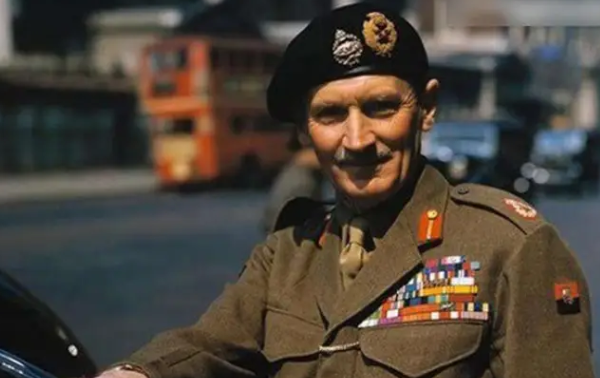
Among the famous generals of World War II, if you were to pick one with the most polarizing opinions, British General Montgomery would undoubtedly rank near the top. Some say he was the hero who saved Britain and played a major role in the Battle of El Alamein; others say he was too stubborn and showy, even hindering Allied cooperation. So, was Montgomery a hero, or just a stubborn commander? Let’s discuss this topic today.
Hero of Alamein
Montgomery’s defining moment was the Second Battle of El Alamein . Britain faced a precarious situation in North Africa. German General Erwin Rommel, known as the “Desert Fox,” launched a relentless offensive, pushing the British to a point of near-impasse. At this crucial juncture, Montgomery took command of the Eighth Army.
His first act upon taking office was to bolster morale. He told the soldiers, “We are fighting a battle we must win. There is no retreat.” This resolute attitude immediately lifted the troops from their doldrums. He then formulated a steady and cautious battle plan, eschewing extravagant and risky tactics. Instead, he relied on superior firepower and manpower to gradually suppress Rommel.
As we all know, the Battle of El Alamein marked a decisive British victory. This victory was not only a tactical success but also a strategic turning point—it marked the end of the German offensive in North Africa and the beginning of the Allied counteroffensive. Churchill even said, “Before El Alamein, we had never won; after El Alamein, we had never lost.” This statement made Montgomery a national hero in the hearts of the British.
The Stubbornness of “General Slow”
However, Montgomery’s command style also drew criticism. He was a man of meticulous preparation, preferring to finalize every detail before engaging in battle. This caution certainly reduced risk, but it also earned him the nickname “General Slow.”
For example, during the Battle of Normandy, after the successful Allied landings, there was an opportunity to quickly break through the German defenses. However, Montgomery insisted on a methodical approach, which gave the Germans valuable time to consolidate their positions. In contrast, American General Patton was more decisive and efficient, with his armored forces advancing at lightning speed, creating a stark contrast.
This caution was sometimes perceived by superiors as stubbornness . As Supreme Allied Commander, Eisenhower was often troubled by Montgomery’s lack of cooperation. Montgomery disliked compromise, always believing his own plans were the most reliable, and sometimes even publicly criticized the US military’s tactics. This trait was particularly jarring within the multinational Allied system.
Heroes and Troublemakers
Montgomery’s stubbornness wasn’t entirely unfounded. He was acutely aware of Britain’s domestic situation: limited resources and the need to minimize casualties. Therefore, he preferred a slower pace to ensure victory. In other words, his caution reflected his concern for the lives of his soldiers and the nation’s resilience.
The problem is that war is not just about military action; it’s also about politics and propaganda. Montgomery sometimes took too much credit for his achievements and was reluctant to share them. For example, in his summary of the Battle of Normandy, he openly emphasized his own role and downplayed the contributions of American generals. This behavior naturally irritated his allies and even affected his international reputation.
So the Montgomery we see is actually a character who is both a hero and a troublemaker . He can fight tough battles and win key battles, but his “unyielding” character also makes cooperation difficult.

Patton vs. Montgomery
When discussing Montgomery, many compare him to Patton. One was cautious and measured, while the other was impulsive and decisive. Soldiers may have preferred Patton’s aggressiveness, but from a strategic perspective, Montgomery’s steadiness was equally important.
Without Montgomery, the Battle of El Alamein might not have turned the tide of the war; but without Patton, the European battlefield would not have advanced as quickly. The two men’s styles seemed like completely opposite poles, but together they formed the key to the Allied victory.
Hero or stubborn?
So let’s go back to the original question: Was Montgomery a hero or a stubborn commander?
My answer is both.
From a British perspective, he was a national hero who had brought about the victory at El Alamein.
From the perspective of the Allied forces as a whole, he was a difficult to coordinate “tough-tempered” general.
From a historical perspective, his steadiness ensured victory, but his stubbornness also caused a lot of friction.
Perhaps this is precisely what makes Montgomery unique. He wasn’t a perfect general, but he was a true product of his time. His caution saved Britain from even greater losses, while his stubbornness made him a singular figure in history.
Summarize
Montgomery’s story tells us that being a hero doesn’t mean being perfect, and stubbornness doesn’t mean being wrong. In the extreme environment of war, it is sometimes this “uncompromising” personality that can bring victory at critical moments.
So, when we reflect on this general, perhaps we don’t have to choose between “hero” and “stubborn.” Montgomery is that complex figure, both admirable and vexing. His light and shadow constitute a true legend of World War II.
