
America’s smartest general of the 21st century may well be David Petraeus. A top student at West Point, a Ph.D. from Princeton, and a four-star general—Petraeus wasn’t just a commander on the battlefield in uniform, but also the kind of leader who could sit behind a desk writing military doctrine.
What set him apart from most U.S. generals was his unique ability to both fight and think. His most famous accomplishment wasn’t a single battlefield victory, but his application of a strategic theory—Counterinsurgency (COIN)—on the ground in Iraq, where it actually made a real impact.
From Princeton to Baghdad: A General Who Took the Road Less Traveled
Petraeus’s career was anything but conventional. Unlike traditional generals who rise through ranks by sheer combat command, Petraeus prioritized learning and strategic innovation. He excelled at West Point and went on to earn a doctorate from Princeton, where he studied international relations and military reform.
People often joked, “He’s a scholar in boots, a professor with a rifle”—and it wasn’t far from the truth. This unique dual identity helped lay the foundation for the strategic shift he later led in Iraq.
“Counterinsurgency Isn’t About Blowing Things Up—It’s About Winning People Over”
By 2005–2006, the Iraq War had reached a breaking point. Violence was rampant, sectarian conflict was spiraling, U.S. troops were seen more as targets than liberators, and Iraqi public sentiment had turned against the American presence.
At this low point, Petraeus came forward with a fresh approach.
His philosophy of Counterinsurgency (COIN) was simple yet radical: “Victory in war isn’t about killing the most enemies—it’s about winning the most hearts and minds.”
It may sound like idealistic rhetoric, but Petraeus didn’t just talk the talk—he put the strategy into action.
He Didn’t Just Write the Book—He Tested It Under Fire
In 2006, Petraeus authored the U.S. Army/Marine Corps Counterinsurgency Field Manual, a landmark text that would influence military thinking for years. It became popular not only among military circles but also among civilian strategists and war analysts.
What made him stand out, though, was that he didn’t stop at writing theory—he actually put it to the test.
In 2007, as the U.S. surged troop numbers in Iraq, Petraeus was appointed commander of U.S. forces there. Instead of relying on airstrikes or intimidation, he ordered troops to move into local communities, engage with civilians, and work to restore basic order and protect the population.
One of his most famous quotes captures the idea: “You can’t win over a terrified community.”
Under his leadership, U.S. forces shifted from being perceived as occupiers to protectors. Local militias began to cooperate, and violence levels began to drop. It wasn’t a total reversal of the war, but it was widely regarded as one of the few genuinely effective strategic shifts in the conflict.
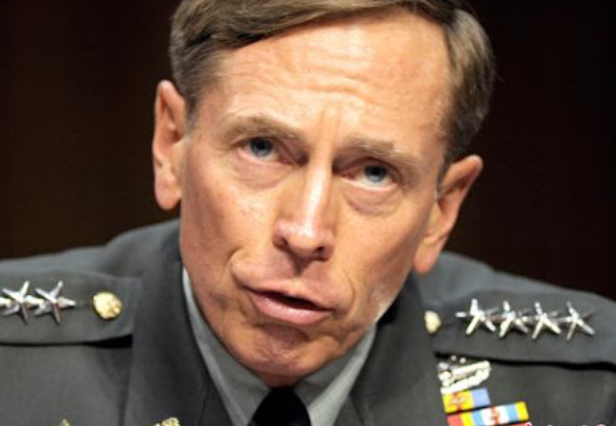
Behind the Theory: Adaptability and Realism
Petraeus’s approach wasn’t perfect, and critics pointed out its limitations. Some called him overly idealistic, and others argued that “winning hearts” was too hard to measure and difficult to sustain.
But his strategy had one major strength: it acknowledged that war couldn’t be won by brute force alone.
While many generals still clung to ideas of overwhelming firepower and swift victories, Petraeus saw Iraq for what it was—a nontraditional war that needed a different mindset. He challenged orthodoxy and wasn’t afraid to try new methods under intense political pressure. His realism, flexibility, and focus on facts over dogma were what made him exceptional.
From Battlefield to CIA: The Price of Power
In 2011, Petraeus retired from the military and was appointed Director of the CIA by President Obama. But his brilliance couldn’t shield him from personal failings.
In 2012, he resigned after a scandal involving an extramarital affair and mishandling of classified information. The scandal severely damaged his reputation and effectively ended his public career.
For many, it was a bittersweet end—how could a general who helped stabilize the Middle East not manage to keep control over his own life?
Conclusion: The Thinking General Who Wrote—and Fought—His Way Into History
David Petraeus’s story is a complex one—a blend of idealism, intellect, and the harsh realities of power. He wasn’t a flawless hero, but he truly changed how the U.S. military thought about and fought modern wars.
At a time when “faster and deadlier” was the standard for military success, he picked up a pen and outlined an entirely different kind of warfare.
And when that theory met the battlefield, he didn’t stay in the ivory tower—he tested every word with real blood and sweat.
That’s David Petraeus—the general who proved that in war, thinking can be just as powerful as fighting.
