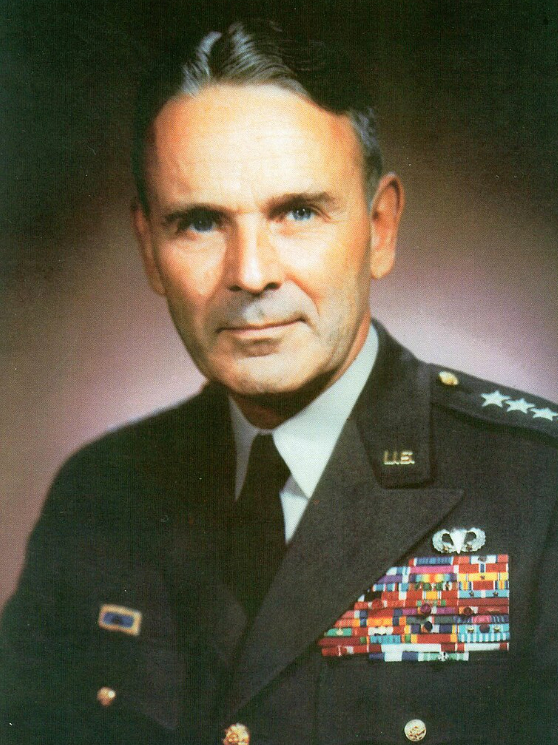
When people think of famous American generals, names like Patton, MacArthur, or Eisenhower often come to mind. But if you want to talk about a general who not only fought in war, went to the White House, but also took part in shaping Cold War policies, then Maxwell Taylor definitely deserves mention.
He wasn’t the “frontline tough guy” type of general; instead, he was a high-IQ commander with both battlefield experience and a deep understanding of power. His life can be seen as a secret pathway from the beaches of Normandy to the Oval Office.
A General’s Career Starting with Parachuting
Taylor’s military background was impressive. A West Point graduate, he was a textbook “top student officer.” During WWII, he led the 101st Airborne Division, personally participating in the Normandy landings—the same unit famously portrayed as heroic yet harrowing in Band of Brothers.
He was not just an executor of orders but a staunch advocate of airborne tactics, believing fast-moving troops were vital in modern warfare. You could say Taylor had a huge role in the development of the U.S. Army’s airborne forces into a major combat element.
But he wasn’t just about fighting; he was even better at seeing the long-term strategic and political games after the war.
From WWII to the Heart of Power
After the war, many generals either retired or stayed in the military to rise through the ranks. Taylor was different—he deliberately moved closer to the strategic decision-making circle. He served as Army Chief of Staff, Commander of U.S. Forces in Korea, and by the late 1950s, became a key military advisor inside the White House.
What made him stand out was not just his battlefield skills but also his political savvy and debating skills.
Amid the escalating U.S.-Soviet Cold War tensions, Taylor proposed the “Flexible Response” strategy—basically, don’t always threaten nuclear war, but instead build a military response system capable of operating at various levels. This allowed the U.S. to avoid direct conflict with the USSR while still flexing military muscle worldwide.
“Mentor and Friend” to President Kennedy
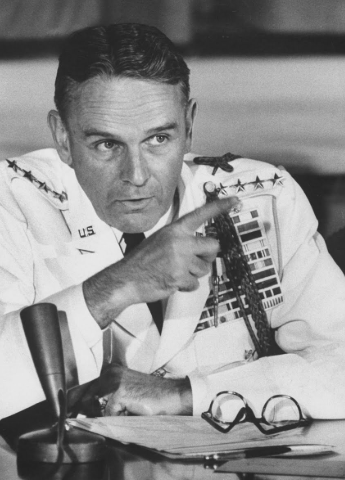
While Eisenhower became president by fighting wars, and Kennedy rose through charisma and ideals, Taylor was one of the few military men with real combat experience who truly understood politics, standing close to Kennedy.
In 1961, Kennedy appointed Taylor as Chairman of the Joint Chiefs of Staff—one of the highest military positions in the U.S. Armed Forces. Although prestigious, the role was challenging, coinciding with the Cuban Missile Crisis and the early stages of the Vietnam conflict.
During the Cuban Crisis, Taylor advocated military containment rather than immediate war, buying Kennedy valuable diplomatic negotiation time. On Vietnam, he initially supported limited involvement but grew cautious as the war escalated.
His stance was often delicate and sometimes controversial, but undeniably, he helped steady the situation at critical moments and softened the burden of “dangerous decisions” for the president.
Not Perfect, But a Key Cog in the Cold War Machine
Compared to battlefield-famous generals, Taylor might not be as well-known or legendary, but his behind-the-scenes role was crucial. He knew how to fight on the battlefield and how to speak up in the White House—with tact, restraint, and strategic foresight.
You can view him as the era’s representative “military intellectual.” He wrote books, contributed to policy research, served as an ambassador (including to Vietnam), and his life was a multi-front battle spanning military, politics, and diplomacy.
Summary: The Truly Powerful General Isn’t Always on the Frontline
Taylor’s life teaches us that generals aren’t just battlefield icons—they can also be architects of national security and foreign policy. He wasn’t the bravest or the most flamboyant, but his judgment, wisdom, and influence left a profoundly important mark on the tense prelude to the Cold War.
Though he experienced WWII firsthand, what truly changed the world was his “hidden front” work during the Cold War.