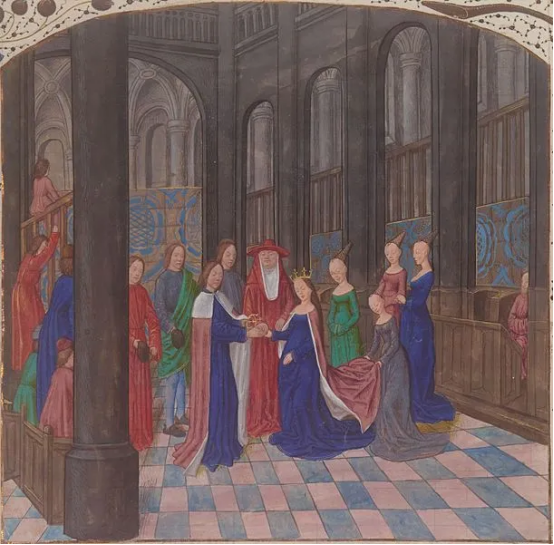
Throughout the annals of history, countless women have risen against the constraints of their time, demonstrating extraordinary courage, intellect, and resilience. Their stories, often overshadowed, reveal a powerful narrative of defiance and progress. From the politically charged court intrigues of medieval Europe to the pioneering frontiers of aviation and modern medicine, these women were not merely participants in history—they were its architects. This guide delves into the lives of several remarkable figures who, through their actions, challenged power structures, broke societal norms, and left an indelible legacy that continues to inspire. We will explore how accusations of witchcraft were wielded as political tools, celebrate an unprecedented escape from an infamous prison, and honor the visionaries who revolutionized nursing and conquered the skies.
The Political Cauldron: Royal Women Accused of Witchcraft
In the tumultuous landscape of 15th-century England, particularly during the Wars of the Roses, the accusation of witchcraft became a potent and gendered political weapon. For high-status women, whose influence was tied to their marriages and sons, a charge of sorcery was a swift and effective way to neutralize their power, confiscate their wealth, and tarnish their lineage. This was not about genuine belief in dark arts but about calculated political maneuvering in a brutal game of thrones.
Joan of Navarre: The Dowager Queen’s Trial
Joan of Navarre, the dowager queen of King Henry IV, was one of the earliest and most high-profile victims. In 1419, she was accused by her stepson, King Henry V, of using necromancy to try to poison him. The charges were flimsy and likely motivated by the king’s need for her immense wealth to fund his wars in France. Joan was imprisoned for three years, and her lands and money were confiscated. She was eventually released, but the incident set a dangerous precedent: even a queen was not safe from such politically motivated accusations.
Eleanor Cobham: Ambition and a Public Fall
Eleanor Cobham, Duchess of Gloucester, was the wife of the heir presumptive to the throne of the mentally unstable King Henry VI. Her ambition and proximity to power made her a target. In 1441, she was accused of consulting astrologers and sorcerers to predict the king’s death, an act considered treason. One of her alleged co-conspirators claimed they had created a wax effigy of the king to make him wither and die. Eleanor was found guilty and forced to perform a humiliating public penance, walking barefoot through London, before being imprisoned for life. Her downfall effectively removed her husband from the line of succession and consolidated the power of their rivals.
Jacquetta of Luxembourg and Elizabeth Woodville: Surviving the Wars
The pattern continued with Jacquetta of Luxembourg, mother of Queen Elizabeth Woodville. After her son-in-law, King Edward IV, was temporarily deposed in 1470, a rival faction accused Jacquetta of using witchcraft to arrange the marriage between Edward and her daughter. A key piece of “evidence” was a lead image of a man-at-arms, which she was accused of using for magical purposes. The charges were dismissed when Edward IV regained the throne. Years later, her daughter, Elizabeth Woodville, faced the same accusation from Richard III, who used the claim that her marriage to his brother was secured by sorcery to declare it invalid and seize the crown for himself.

A Daring Escape: Alice Tankerville’s Flight from the Tower
The Tower of London is infamous as a formidable prison from which few escaped. Yet, in the 16th century, one woman achieved the impossible. Alice Tankerville, also known as Alice Wilkes, holds the unique distinction of being the only woman ever recorded to have escaped from the Tower. Her story is a remarkable tale of audacity, involving a sensational heist and a mysterious disappearance.
The Accusation and the Heist
Alice Tankerville was implicated in a major robbery targeting the royal goldsmith, Robert Amadas. The crime involved the theft of an astonishing 366 golden crowns and other valuable jewels. While her male accomplices were swiftly captured and executed, Alice was arrested and imprisoned in the White Tower, the most secure part of the fortress and a place rarely used to hold female prisoners. Her confinement there underscored the severity of her alleged crime and the value of the stolen treasure the authorities hoped to recover.
The Unprecedented Escape
Details of her imprisonment suggest she was held under strict conditions. However, in an act of incredible daring, Alice managed to escape her cell. Historical accounts suggest she used torn sheets or clothes, fashioned into a makeshift rope, to lower herself from a window of the White Tower. This feat was not only physically demanding but required immense nerve and careful planning. She successfully evaded the guards and vanished from the precincts of the Tower, leaving the authorities stunned. Despite extensive searches and a bounty on her head, Alice Tankerville was never recaptured, and the mystery of the 366 golden crowns was never solved.

Queen of the Skies: Amelia Earhart’s Pioneering Legacy
In the golden age of aviation, Amelia Earhart emerged as a global icon, a symbol of adventure and female empowerment. She was not just a pilot; she was a trailblazer who shattered records and captured the world’s imagination with her courage and determination. Her legacy is one of groundbreaking achievements, even as it is shrouded in one of the 20th century’s most enduring mysteries.
From Nursing Assistant to Aviation Icon
Born in Atchison, Kansas, in 1897, Amelia Earhart’s path to fame was unconventional. During World War I, she served as a nurse’s aide in Toronto, caring for wounded soldiers. It was there, while watching pilots from a nearby airfield, that her passion for flying was ignited. After the war, she took her first flying lesson and, in 1922, used her savings to buy her first airplane, a bright yellow Kinner Airster she nicknamed “The Canary.” This was the beginning of a career that would challenge the male-dominated field of aviation.
Record-Breaking Flights and Global Fame
Earhart’s fame skyrocketed in 1928 when she became the first woman to fly across the Atlantic Ocean, albeit as a passenger. Dissatisfied with that role, she was determined to make the journey solo. In 1932, she accomplished that feat, flying from Newfoundland to Ireland in her Lockheed Vega 5B. This historic flight made her an international hero and a leading voice for women’s rights and commercial aviation. Her other major accomplishments include:
- First woman to fly solo and non-stop across the United States.
- Setting numerous altitude and speed records for female pilots.
- First person to fly solo from Hawaii to the U.S. mainland.
The Final Flight and Unsolved Disappearance
In 1937, Earhart embarked on her most ambitious project: to become the first woman to circumnavigate the globe. Accompanied by navigator Fred Noonan, she successfully completed over 22,000 miles of the journey. On July 2, 1937, they departed from Lae, New Guinea, for Howland Island, a tiny speck in the Pacific Ocean. During the flight, they encountered overcast skies and intermittent rain. In her final radio transmissions, Earhart indicated they were low on fuel and could not see the island. Then, silence. The ensuing search was the largest in U.S. naval history, but no trace of Earhart, Noonan, or their Lockheed Electra 10E was ever found, sparking decades of speculation and theories.

The Lady with the Lamp: Florence Nightingale’s Nursing Revolution
Florence Nightingale, known as “The Lady with the Lamp,” is celebrated as the founder of modern nursing. However, her impact extends far beyond the hospital ward. She was a brilliant statistician, a tireless social reformer, and a visionary who used data to save lives and transform public health. Her work during the Crimean War laid the foundation for professional nursing and evidence-based medical practices.
A Calling to Serve: Defying Victorian Expectations
Born into a wealthy British family in 1820, Florence Nightingale was expected to marry well and lead a life of domestic leisure. However, she felt a religious calling to serve humanity, specifically through nursing. At the time, nursing was a low-status profession with a reputation for neglect and filth. Against her family’s vehement opposition, Nightingale pursued her vocation, studying hospital systems across Europe and preparing herself for a life of service.
Transforming Crimean War Hospitals
In 1854, reports of the horrific conditions facing sick and wounded British soldiers in the Crimean War prompted the Secretary of War to appoint Nightingale to oversee the introduction of female nurses into military hospitals. She arrived at the Barrack Hospital in Scutari to find a scene of chaos: soldiers lay in filth, supplies were scarce, and infections like cholera and dysentery were rampant. Ten times more soldiers were dying from disease than from battle wounds. Nightingale and her team of 38 nurses implemented radical changes:
- Sanitation and Hygiene: They scrubbed the wards, laundered linens, and ensured patients had clean bedding and clothing.
- Improved Nutrition: She established a special kitchen to provide appealing and nutritious food for patients with specific dietary needs.
- Efficient Organization: She reorganized the hospital’s supplies and created a system for managing patient care.
Her famous lamplit rounds at night, checking on the men, earned her their eternal gratitude and her famous nickname. Under her leadership, the mortality rate at the hospital dropped dramatically.
Pioneer of Modern Nursing and Data Visualization
Upon her return to Britain, Nightingale used her newfound influence to campaign for healthcare reform. A gifted mathematician, she collected and analyzed vast amounts of data on soldier mortality. To make her case to Parliament, she developed innovative infographics, most notably the polar area diagram (a form of pie chart). This diagram powerfully illustrated that most deaths were preventable and caused by poor sanitation. Her data-driven approach was revolutionary and led to widespread reforms in military and civilian hospitals. In 1860, she established the Nightingale Training School for Nurses at St Thomas’ Hospital in London, professionalizing the field and establishing nursing as a respectable career for women.

Common Threads of Courage and Defiance
While separated by centuries and circumstances, the women profiled here share powerful common threads that connect their stories. Their lives serve as a testament to the enduring human spirit in the face of systemic opposition, societal constraints, and life-threatening danger. Examining these commonalities provides a deeper understanding of what it meant to be a trailblazing woman in a world not yet ready for her.
Challenging Patriarchal Power Structures
A central theme is the direct challenge to male-dominated power structures. For the royal women of the 15th century, their influence was a threat that could only be neutralized by an accusation—witchcraft—that was almost exclusively leveled at women. Their trials were not about magic but about men using a gendered superstition to maintain control. Similarly, Florence Nightingale’s ambition to professionalize nursing was a direct affront to both the military hierarchy and the Victorian ideal of a woman’s place being in the home. Her use of irrefutable data was a tool to force a patriarchal system to acknowledge its fatal flaws.
Personal Agency in the Face of Adversity
Each woman demonstrated a profound sense of personal agency. Alice Tankerville refused to be a passive victim of the justice system, orchestrating an escape that required immense personal courage and ingenuity. Amelia Earhart consistently rejected prescriptive roles, first as a passenger on her initial transatlantic flight and later by pushing the boundaries of what was thought possible for any pilot, male or female. This determination to control their own destinies, rather than submit to them, is a hallmark of their greatness.

The Enduring Impact of Historical Trailblazers
The legacies of these women are not confined to history books; they reverberate in the present, shaping our modern world in profound ways. Their struggles and triumphs laid the groundwork for future generations of women to pursue their ambitions with fewer obstacles. The impact of their lives can be seen across various domains, from politics and science to social justice and the arts.
Paving the Way for Future Generations
Florence Nightingale’s professionalization of nursing created a respected and vital global profession. Her emphasis on sanitation and evidence-based practice is a cornerstone of modern public health. Amelia Earhart’s daring flights inspired millions of women to enter fields like aviation, science, and engineering. She proved that courage and skill have no gender. Even the stories of women like Joan of Navarre and Alice Tankerville serve as powerful reminders of the injustices faced by women and the extraordinary measures they took to survive and resist. They highlight the long fight for legal and social equality that continues today.
Lessons in Resilience and Vision
Ultimately, the stories of these trailblazers offer timeless lessons in resilience. They faced public scorn, political persecution, and mortal danger, yet they persevered. Florence Nightingale battled a resistant bureaucracy, Amelia Earhart faced the unforgiving forces of nature, and the “royal witches” navigated deadly political intrigue. Their collective narrative teaches us the importance of having a vision and the tenacity required to pursue it, no matter the obstacles. They remind us that one person’s courage can indeed change the world, creating a legacy of progress and inspiration.
Frequently Asked Questions (FAQ)
- Why were high-status women in the 15th century accused of witchcraft?
- In 15th-century England, especially during the chaotic Wars of the Roses, accusations of witchcraft against royal and noble women were primarily a political tool. These charges were rarely about a genuine belief in magic. Instead, they were used by rival factions to neutralize a woman’s political influence, seize her wealth and lands, and delegitimize her children’s claim to power. Because a woman’s power was often indirect (through her husband or son), an attack on her character through a sorcery accusation was an effective way to undermine her entire family.
- What makes Alice Tankerville’s escape from the Tower of London so significant?
- Alice Tankerville’s escape is significant because she is the only woman in the Tower of London’s long history officially recorded as having successfully escaped. The Tower, particularly the White Tower where she was held, was considered one of the most secure fortresses in Europe. Her escape, allegedly using a rope made of sheets, demonstrated incredible bravery and resourcefulness. The fact that she was never recaptured, and the 366 stolen golden crowns were never recovered, adds to the legendary status of her story.
- What was Amelia Earhart’s most important aviation achievement besides her mysterious disappearance?
- While her disappearance is what she is most famous for, Amelia Earhart’s most significant achievement was arguably being the first woman to fly solo across the Atlantic Ocean in 1932. This flight proved her skill and courage as a pilot, shattering the public perception that long-distance aviation was an exclusively male endeavor. It cemented her status as a global icon and a powerful symbol of female capability and independence, inspiring countless others.
- How did Florence Nightingale use data to improve healthcare?
- Florence Nightingale was a pioneer in the field of data visualization. During the Crimean War, she meticulously collected data on the causes of soldier mortality. She discovered that far more soldiers died from preventable diseases like typhus and cholera than from their battle wounds. To present this data compellingly to politicians and military officials, she developed the polar area diagram. This chart clearly and dramatically showed the impact of poor sanitation. Her use of statistical evidence was revolutionary and became the foundation for her arguments for hospital reform, leading to massive improvements in public health and establishing the practice of evidence-based medicine.
