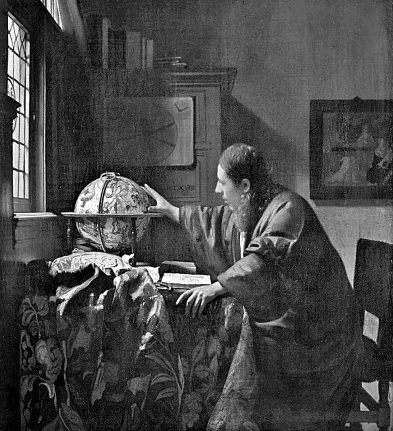
The Foundation of Medieval Celestial Studies
In the medieval period, the distinction between astronomy—the mathematical study of celestial bodies—and astrology—the interpretation of their influence—was virtually non-existent. Scholars viewed the cosmos as a divine machine, a grand clockwork system designed by the Creator that governed both the physical world and the destinies of men.
The Ptolemaic Influence
The medieval understanding of the universe was built primarily upon the geocentric model established by Claudius Ptolemy. This framework placed the Earth at the center of the universe, surrounded by concentric crystalline spheres carrying the moon, the sun, the planets, and the fixed stars.
The Role of the Church
While some ecclesiastical authorities viewed astrology with suspicion due to concerns regarding free will and determinism, many clerics utilized celestial charts to determine liturgical dates, most notably the calculation of Easter. This necessitated a rigorous, albeit theoretical, understanding of planetary motion.
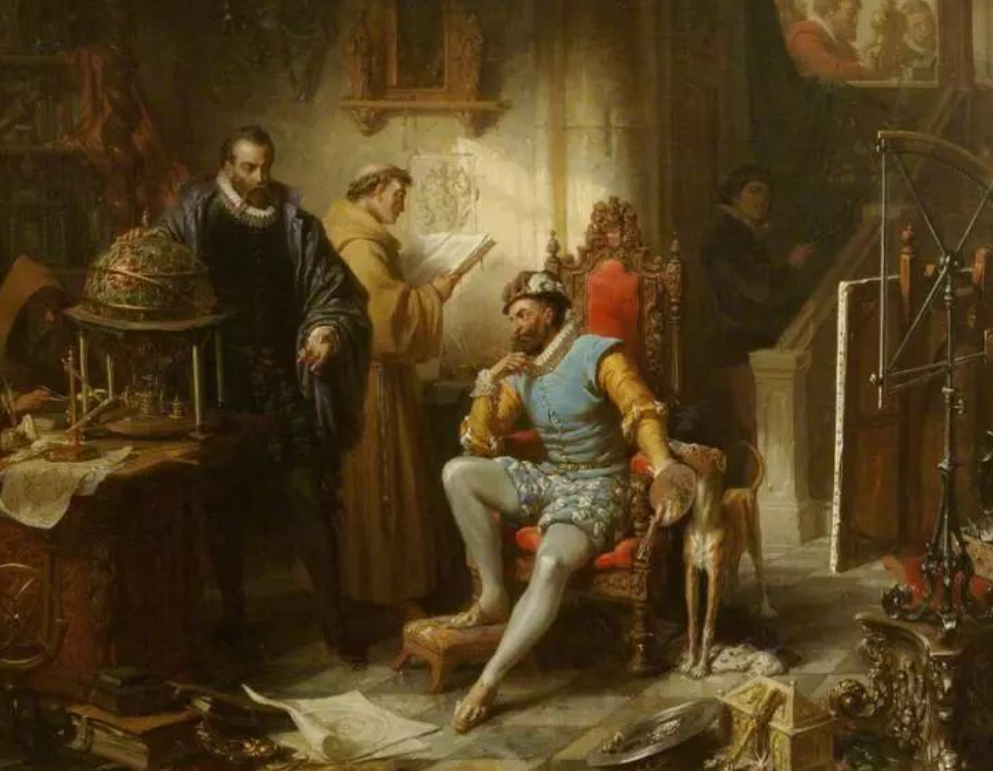
Methodologies and Tools of the Medieval Sky Watchers
Medieval astronomers relied on a sophisticated suite of instruments to measure the positions of stars and planets. These tools were not merely for navigation but for the creation of “ephemerides”—tables that predicted the future locations of celestial bodies.
Essential Instruments
- The Astrolabe: A portable model of the heavens used for timekeeping and surveying.
- The Quadrant: A device for measuring the altitude of stars above the horizon.
- The Equatorium: A complex instrument used to find the positions of planets without extensive calculation.
| Tool | Primary Function | Scientific Significance |
|---|---|---|
| Astrolabe | Timekeeping & Altitude | Enabled precise navigation and horoscopes. |
| Quadrant | Angle Measurement | Advanced the accuracy of stellar mapping. |
| Equatorium | Planetary Position | Reduced dependency on complex manual arithmetic. |
The Intersection of Fate and Physics
The “Ancient Code” referred to the belief that terrestrial events were reflections of celestial configurations. This “As Above, So Below” philosophy influenced everything from medical treatments—where doctors consulted planetary positions before performing surgery—to political decisions made by kings and popes.
Pro Tips for Understanding Medieval Astrology
To truly grasp the medieval mindset, one must stop viewing astrology as a superstition and start viewing it as a logical, albeit flawed, system of data analysis. Medieval thinkers were highly empirical; they observed the sky, recorded the data, and applied the best available logic to interpret what they saw.
Frequently Asked Questions (FAQ)
- Was medieval astrology considered a science?
- Yes. In the medieval curriculum, astrology was a core component of the Quadrivium, alongside arithmetic, geometry, and music. It was considered a legitimate branch of natural philosophy.
- Did medieval people believe in free will?
- This was a major theological debate. Most scholars argued that the stars “inclined” humans toward certain behaviors but did not “compel” them, thus preserving the concept of free will.
- Why did the church support astrology?
- The church supported the study of the heavens because it was seen as a way to understand God’s order. It also provided a practical method for maintaining the liturgical calendar.
- What is the difference between a horoscope and a chart?
- In the medieval context, a chart (or theme) was a mathematical map of the sky at a specific moment, while a horoscope was the interpretation of that chart’s influence on an individual or event.