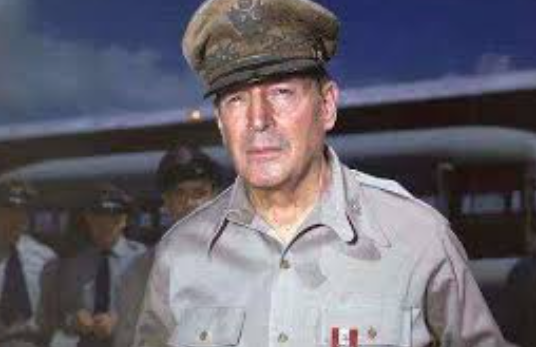
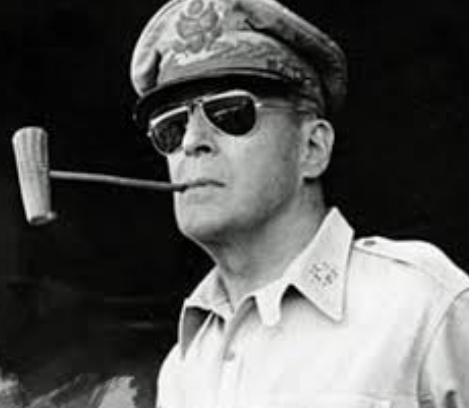
When people talk about American generals in World War II and the Korean War, many instantly picture that man in aviator sunglasses, biting down on a corncob pipe, with his cap tilted just right — Douglas MacArthur.
He wasn’t just a legendary figure in U.S. military history; he was also one of its most controversial. Some say he was a brilliant strategist, others see him as a headstrong commander. Today, let’s take a closer look at his story — and the strategies and personality traits behind his victories.
1. From “Model Kid” to Military Prodigy
MacArthur was born into a military family — his father was a lieutenant general in the U.S. Army. Growing up in army camps and military schools, he was, quite literally, raised among medals and salutes.
He later entered the famous West Point Military Academy, graduating near the very top of his class — an achievement that stunned the military world at the time.
Even as a young officer, MacArthur showed remarkable military talent. During World War I, he served as both a staff officer and a commander. Bold yet meticulous, he quickly rose through the ranks, becoming one of the youngest generals in U.S. history.
2. “I Shall Return” — A Promise Kept
Perhaps his most famous line is: “I shall return.”
In 1941, during the Pacific War, Japan invaded the Philippines. MacArthur, then the top U.S. commander there, faced an impossible situation. He was ordered to withdraw and leave the islands. Before departing, he promised the people of the Philippines and his troops: “I shall return.”
Three years later, he kept that promise — returning with his forces to liberate the Philippines, landing successfully at Leyte and reclaiming large swaths of territory. That moment not only fulfilled his vow but also cemented his legendary status in the Pacific theater.
3. Strategic Vision: More Than Just Brute Force
Many see MacArthur as a hard-charging commander, but he was far from a “just charge forward” kind of leader. He had a flexible and innovative strategic mind.
One famous example was his “island-hopping” strategy in the Pacific — bypassing heavily fortified Japanese-held islands and striking directly at key strategic points instead.
This approach saved countless lives and sped up the Allied advance. It proved so effective that it became a cornerstone of U.S. strategy in the Pacific.
4. Strong Personality: Defiant but Charismatic
MacArthur was famously “sharp-edged” in personality.
Confident — even to the point of arrogance — he often voiced his strategic opinions openly in the media, sometimes clashing with his superiors. This made him charismatic to his troops and admirers, but it also created friction with Washington.
During the Korean War, his disagreements with President Truman over strategy escalated so much that Truman eventually relieved him of his command. Though his military career ended there, the public still largely saw him as a war hero.
5. More Than Just a Soldier
MacArthur wasn’t only a battlefield commander — he was politically savvy and an able administrator.
After World War II, he was appointed Supreme Commander for the Allied Powers in Japan, tasked with overseeing the country’s postwar reconstruction.
He implemented sweeping reforms — democratization, economic rebuilding, and social restructuring — leaving a deep mark on Japan’s modern development.
Remarkably, many Japanese people respected, even admired, him — a rare sentiment toward an occupying force.
6. The “Human Side” Behind the Victories
Though decisive and tough on the battlefield, MacArthur showed genuine care for his soldiers.
He often visited the front lines to speak with them, calling them “my boys.” In the war’s darkest times, he would write personal letters of encouragement and even attend soldiers’ funerals.
This personal warmth earned him lasting loyalty and affection from his troops.
7. Conclusion: A Legacy of Triumph and Controversy
MacArthur’s life was defined by both battlefield brilliance and political controversy.
He had a sharp strategic mind, wasn’t afraid to innovate, and carried a personality that could inspire or provoke. He won great victories in the Pacific but also butted heads with political leaders, earning the nickname “the troublesome general.”
Whatever history’s verdict, his words — “I shall return” — have become part of military legend, ensuring that his place in history is secure.
