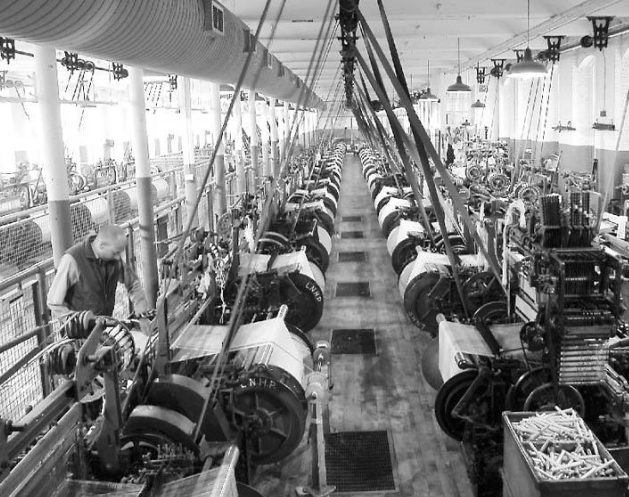
The Industrial Revolution, a transformative period spanning roughly from the late 18th to the mid-19th century, fundamentally reshaped human society, economy, and technology. It was an era defined by an unprecedented surge of innovation, shifting production from manual labor and agrarian economies to machine-based manufacturing and urban industrial centers. This monumental shift began in Great Britain and rapidly spread across the globe, laying the groundwork for the modern industrial world we inhabit today. This pillar page delves deep into the core innovations, technological leaps, and profound societal changes that characterized this pivotal historical epoch, examining how a series of ingenious inventions and systemic reorganizations converged to forge a new future.
The Dawn of Mechanization: Transforming Production
At the heart of the Industrial Revolution lay a profound shift from artisanal handcraft to mechanized production, a transformation most vividly exemplified by the textile industry. This transition was not merely about new machines, but about a complete rethinking of how goods were made, leading to an exponential increase in efficiency and output that had far-reaching economic and social consequences.
From Hand-Weaving to Power Looms: The Textile Revolution
The textile industry was the crucible of early industrial innovation. Before mechanization, spinning yarn and weaving cloth were laborious, time-consuming processes largely performed in homes or small workshops. The demand for textiles, particularly cotton, surged, pushing inventors to seek faster production methods.
- Key Innovations: The invention of the flying shuttle by John Kay in 1733 dramatically sped up weaving, but created a bottleneck in yarn supply. This led to breakthroughs in spinning, such as James Hargreaves’ Spinning Jenny (1764), Richard Arkwright’s Water Frame (1769), and Samuel Crompton’s Mule (1779), which combined features of both to produce stronger, finer yarn more quickly.
- The Power Loom: Edmund Cartwright’s power loom, patented in 1785, was the ultimate game-changer, mechanizing the weaving process itself. While early versions faced challenges, subsequent improvements made it incredibly efficient. This “one loom that opened the door to the modern economy” (as one source highlights) drastically reduced the labor required for weaving, making mass production of textiles feasible and affordable.
- Impact on Production: The power loom, alongside other textile machinery, meant that “humans can’t match machine speed” in terms of output. This led to an unprecedented volume of textile production, transforming fabrics from luxury items to readily available commodities.
The Lowell Mills: A Model of Industrial Enterprise
The rise of textile mills, particularly those in Lowell, Massachusetts, exemplified the integrated factory system. These mills brought together all stages of textile production under one roof, from raw cotton to finished cloth. They were not just industrial sites but social experiments, employing thousands of young women, known as “mill girls,” offering them economic independence while also subjecting them to strict factory discipline. The Lowell system demonstrated the organizational power of industrialization and its capacity to reshape labor markets and community structures.
The Textile Dyeing Revolution
Beyond weaving, the textile dyeing revolution transformed fabrics from monotonous to colorful. Innovations in chemistry allowed for the creation of new, vibrant, and stable dyes, greatly expanding the aesthetic possibilities of textiles. This chemical industrialization complemented mechanical advancements, ensuring that the explosion in fabric production could also meet diverse consumer preferences for color and design.

Powering a New Era: The Dominance of Steam and Beyond
The availability of a reliable and powerful energy source was paramount to the Industrial Revolution’s success. While early mills relied on water power, the true catalyst for widespread industrialization was the steam engine, a technology that freed factories from geographical constraints and revolutionized transportation.
The Heart of the Industrial Revolution: The Steam Engine
The steam engine, particularly James Watt’s improved design from the 1760s and 1770s, was indisputably the “heart of the Industrial Revolution.” Watt’s enhancements, including the separate condenser, dramatically increased the engine’s efficiency, making it a viable power source for a vast array of applications beyond just pumping water out of mines.
- Versatile Applications: Steam engines powered textile mills, drove machinery in factories, and provided the propulsion for revolutionary new forms of transportation. Their ability to generate immense power independently of water sources meant factories could be located closer to labor, raw materials, or markets, fostering urbanization and industrial clusters.
- Power and Efficiency: Early steam engines were crude and inefficient, but Watt’s innovations allowed for more controlled and continuous power output, making them indispensable. The question of “how powerful was the steam engine” became central to industrial capacity, with continuous improvements leading to ever-larger and more potent engines.
From Sailboats to Steamships: A Leap in Maritime Technology
The application of steam power to navigation initiated a “giant leap in maritime technology.” Traditional sailing ships were at the mercy of winds and currents, making travel times unpredictable and trade routes constrained. The advent of the steamship offered unprecedented speed, reliability, and the ability to travel upstream against currents.
- Global Trade and Connectivity: Steamships drastically cut travel times across oceans and facilitated the rapid movement of goods and people, fundamentally transforming global trade and communication. This innovation was critical for connecting distant markets and fueling the expansion of colonial empires.
- Naval Power: The development of the ironclad warship, a direct descendant of steam propulsion combined with metallurgical advances, marked the end of the wooden sailing ship’s supremacy and ushered in a new era of naval warfare and maritime power projections.
Beyond Steam: The Rise of the Internal Combustion Engine
While steam dominated the first phase of industrialization, the late 19th century saw the emergence of new power sources. The development of the internal combustion engine (ICE), particularly for automobiles, signaled “the next big leap of the Industrial Revolution.” The ICE offered a more compact, efficient, and mobile power source, paving the way for the automotive industry and personal transportation, further diversifying industrial output and energy consumption beyond coal-fired steam.

Forging Progress: Innovations in Materials and Manufacturing
The Industrial Revolution was not only about new machines but also about new materials and revolutionary methods for producing them. Advances in metallurgy and manufacturing processes provided the foundational elements for constructing larger machines, stronger infrastructure, and entirely new products, propelling industries like construction and transportation forward.
The Leap from Iron to Steel: Metallurgy’s Defining Moment
Iron had been a crucial material for centuries, but its limitations in strength and durability restricted its applications. The true breakthrough came with the ability to produce steel efficiently and in large quantities. The “leap from iron to steel” was a defining moment, offering a material that was stronger, more ductile, and more versatile.
- The Bessemer Converter: Henry Bessemer’s invention of the Bessemer converter in the 1850s “reshaped the industrial world” by providing the first inexpensive industrial process for the mass production of steel from molten pig iron. This innovation removed impurities through oxidation, dramatically reducing the cost and increasing the availability of steel.
- Impact: The widespread availability of cheap steel revolutionized construction, enabling taller buildings (with steel frameworks), stronger bridges, and more durable machinery and railway tracks. It also fueled the “glory and collapse of the steel empire,” referring to the rise of massive industrial concerns built on steel production.
- Further Advancements: The progression “from iron to stainless steel” represents a historical leap in alloy technology, demonstrating continuous innovation in material science that extended the utility and application of metals far beyond the initial industrial revolution.
From Wooden to Iron Bridges: Engineering a New Era
Infrastructure development was crucial for industrial expansion, and bridges were key. The transition “from wooden bridges to iron bridges” marked “the path of bridge technology innovation.” Iron, particularly cast iron and later steel, offered superior strength, span capabilities, and durability compared to timber.
- Symbol of Progress: Iron bridges became symbols of industrial prowess, enabling the construction of critical transportation arteries over wider rivers and challenging terrains, directly supporting the expansion of railway networks and urban development.
- Engineering Challenges: Early iron bridges, such as the Iron Bridge at Coalbrookdale, showcased the potential of the new material, but also presented engineers with novel challenges in design and construction, pushing the boundaries of structural engineering.
Ford’s Assembly Line: The Revolution in Manufacturing
While often associated with the Second Industrial Revolution, Henry Ford’s development of the assembly line in the early 20th century was a direct evolution of the mechanization principles established during the first wave. It transformed “from handcraft to mechanization” into mass production, drastically changing “global manufacturing.”
- Efficiency and Standardization: The assembly line broke down complex manufacturing tasks into simple, repetitive steps, allowing for incredible efficiency and the production of standardized, affordable goods like the Model T automobile. This proved that “humans can’t match machine speed” in highly organized, mechanized production environments.
- Economic Impact: Ford’s methods led to lower production costs, making consumer goods accessible to a broader market, and creating a new paradigm of high-volume, low-cost manufacturing that continues to influence industries worldwide.

Revolutionizing Infrastructure and Agriculture
The Industrial Revolution’s impact extended far beyond factories, driving fundamental changes in how goods were transported and how food was produced. These infrastructural and agricultural innovations were crucial for sustaining growing urban populations and facilitating the movement of raw materials and finished products.
An Industrial Miracle on Tracks: The Invention of Railways
The invention of railways was an “industrial miracle on tracks,” fundamentally transforming land transportation and acting as a powerful engine for economic growth. Steam locomotives, developed in the early 19th century, offered an unprecedented ability to transport heavy goods and large numbers of people quickly and efficiently over long distances.
- Economic Boom: Railways spurred an “economic boom” by connecting industrial centers with sources of raw materials and distant markets. This integration created national economies, reduced transportation costs, and allowed for the specialization of production regions.
- Social Impact: They facilitated migration, boosted tourism, and brought remote areas into closer contact with urban life, transforming social mobility and cultural exchange. The construction of railway networks also created massive demand for coal, iron, and steel, further stimulating those industries.
Agricultural Innovation Drives Industrial Takeoff
The ability to feed a rapidly growing industrial workforce was a prerequisite for sustained industrialization. Thus, agricultural innovation drives industrial takeoff. Advances in farming techniques and tools allowed for greater food production from fewer laborers, freeing up a significant portion of the population to work in factories.
- Mechanical Harvesters: The development of “mechanical harvesters” represented “the efforts and innovations behind mechanical harvesters” that dramatically increased efficiency in agriculture. Machines like Cyrus McCormick’s reaper reduced the labor intensity of harvesting grains, allowing larger areas to be cultivated and harvested.
- The Fertilizer Revolution: The “industrial impact of the fertilizer revolution” was profound. Scientific breakthroughs in understanding soil nutrients led to the production of artificial fertilizers. This greatly increased crop yields, preventing widespread famine and sustaining the burgeoning urban populations that industrialization created.
Coal Mining Technology Revolution
Coal was the primary fuel for the steam engine and a critical raw material for iron production. The increasing demand for coal necessitated a “coal mining technology revolution,” characterized by “the fusion of mechanization and automation.”
- Mechanization in Mines: Innovations included improved ventilation systems, better pumps to remove water, and eventually mechanical cutting and hauling devices. These advancements made mining safer and vastly more productive, ensuring a steady supply of energy for the expanding industries.
- Impact: The coal industry became a massive employer and a cornerstone of the industrial economy, despite the harsh and dangerous working conditions.

The Rise of New Systems and Societal Transformation
Beyond individual inventions, the Industrial Revolution fundamentally altered the organization of labor, the structure of communities, and the very fabric of society. New economic systems emerged, and the landscape of human settlement transformed dramatically.
The Factory System: Institutional Innovation
Perhaps one of the most significant “institutional innovations in the industrialization process” was the development of the factory system. This centralized mode of production brought workers, machinery, and raw materials together under one roof, fundamentally changing how goods were made and how labor was organized.
- Centralized Production: Unlike the dispersed cottage industry, factories allowed for strict supervision, division of labor, and the efficient use of power sources like the steam engine. This led to unparalleled economies of scale and mass production.
- Work Discipline: The factory system imposed a new kind of work discipline, with fixed hours, strict rules, and repetitive tasks, a stark contrast to the rhythms of agrarian life or artisanal craft. This gave rise to new social classes: the industrial capitalists and the factory proletariat.
From Chimneys to Streets: How Industrialization Transformed Communities
The concentration of factories led to rapid urbanization, with people migrating from rural areas to industrial towns in search of work. This process, moving “from chimneys to streets,” profoundly transformed communities.
- Urban Growth: Industrial cities grew at an astonishing pace, often without adequate planning or infrastructure. This led to overcrowded housing, poor sanitation, and widespread disease, creating significant social challenges.
- New Social Structures: Industrialization gave rise to distinct working-class neighborhoods, often characterized by cramped tenements and pollution from factory chimneys. At the same time, it fostered the growth of a middle class of merchants, managers, and professionals who benefited from the new economic opportunities.
- The Printing Press and Habits: While the printing press predates the Industrial Revolution, its continued development and the industrialization of paper production made printed materials more accessible. The “power of a machine, how the printing press changed our reading habits” highlights how industrial processes democratized information and education, influencing public opinion and social movements within these transformed communities.

Global Reach and the Second Industrial Leap
The Industrial Revolution was not confined to Great Britain; its innovations and systems spread across the globe, adapting to local contexts and catalyzing further waves of technological advancement, ultimately leading to the “Second Industrial Revolution.”
From Manchester to the Rhine: The European Continent
The spread of industrialization “from Manchester to the Rhine” illustrates “the Industrial Revolution on the European Continent.” Countries like Belgium, France, and Germany rapidly adopted British innovations, often with state support, and adapted them to their own resources and political structures.
- Belgium’s Early Start: With rich coal and iron deposits, Belgium was one of the first continental countries to industrialize, becoming a major producer of coal, iron, and textiles.
- German Industrialization: Germany’s industrialization, particularly after its unification in 1871, was characterized by rapid growth in heavy industries like steel and chemicals, often driven by scientific research and large corporations. The Ruhr Valley became a powerful industrial heartland.
- Differential Development: The pace and character of industrialization varied across the continent, influenced by factors such as access to capital, political stability, and existing infrastructure.
From Steam to Electricity: The Next Big Leap
The late 19th century ushered in the Second Industrial Revolution, characterized by new sources of energy and technological breakthroughs. The transition “from steam to electricity” marked “the next big leap of the Industrial Revolution,” providing a cleaner, more flexible, and easily transmittable form of power.
- Electrification: The development of efficient generators and electric motors, coupled with extensive power grids, allowed factories to operate more flexibly and efficiently, leading to new forms of production and the widespread adoption of domestic appliances.
- New Industries: This era also saw the rise of new industries based on chemicals, petroleum, and telecommunications, further accelerating technological progress and global interconnectedness.

The Enduring Legacy of Industrialization
The Industrial Revolution was more than a series of inventions; it was a fundamental reordering of human civilization. Its legacy is deeply embedded in our contemporary world, influencing everything from global economics to environmental challenges and social structures.
Economic Transformation
The revolution laid the foundation for modern capitalism, characterized by large-scale production, global markets, and continuous innovation. It fostered unprecedented economic growth and the accumulation of wealth, albeit often with significant disparities between social classes.
- Rise of Global Trade: Improved transportation and communication systems facilitated a truly globalized economy, with raw materials sourced from one continent, manufactured goods produced in another, and markets spanning the world.
- Consumer Culture: The ability to mass-produce goods at lower costs eventually led to the emergence of consumer societies, where a wider range of products became accessible to the general population.
Social and Political Ramifications
The immense social changes brought about by industrialization, including urbanization, the rise of the working class, and new forms of labor, led to significant political and social movements. Labor unions emerged to advocate for workers’ rights, and new ideologies like socialism and communism arose in response to the perceived injustices of industrial capitalism.
- Demographic Shifts: Population growth accelerated, driven by improved agricultural output and medical advancements, further intensifying the demand for industrial goods and labor.
- Environmental Impact: The reliance on coal and other fossil fuels, coupled with unchecked industrial waste, initiated environmental degradation on a scale previously unknown, laying the groundwork for modern ecological concerns.
Technological Momentum
Perhaps the most profound legacy is the establishment of a continuous cycle of technological innovation. The Industrial Revolution demonstrated the power of applied science and engineering to solve problems and create new possibilities, setting a precedent for ongoing scientific and technological progress that continues to define human endeavor.
- Innovation as a Driver: The era instilled the idea that innovation is a constant, necessary force for economic and societal advancement, leading to successive industrial revolutions and the rapid technological changes we experience today.
Frequently Asked Questions (FAQ)
- Q1: What were the primary drivers that initiated the Industrial Revolution in Great Britain?
- The Industrial Revolution in Great Britain was driven by a confluence of factors including a stable political environment, abundant natural resources (coal and iron ore), a growing population providing both labor and markets, an expanding global trade network, and a culture of scientific inquiry and entrepreneurship that fostered technological innovation. The enclosure movement also created a landless labor force available for factory work.
- Q2: How did the factory system fundamentally change the nature of work and society?
- The factory system shifted work from homes and small workshops to centralized industrial sites, leading to a strict division of labor, standardized production, and the imposition of rigid work schedules. It separated work from home life, created new social classes (industrial capitalists and the working class), and fueled rapid urbanization. While increasing efficiency, it often led to harsh working conditions, long hours, and child labor, prompting eventual social reforms and the rise of labor movements.
- Q3: What was the significance of the Bessemer converter and the shift from iron to steel?
- The Bessemer converter was revolutionary because it provided the first inexpensive and efficient method for mass-producing steel from pig iron. Before Bessemer, steel was costly and difficult to produce, limiting its use. The widespread availability of cheap, high-quality steel transformed industries by enabling stronger, more durable construction for bridges, railways, buildings, and machinery, fundamentally reshaping modern infrastructure and manufacturing capabilities.
- Q4: How did advancements in transportation impact the spread and effects of industrialization?
- Advancements like steamships and railways drastically reduced transportation costs and travel times, facilitating the rapid movement of raw materials, manufactured goods, and people. Railways connected inland factories to ports and markets, creating national economies. Steamships enhanced global trade and enabled faster colonization. These innovations were crucial for expanding industrial output, integrating
Reader context note: This article is educational history and geopolitical commentary. It is not real-time intelligence, tactical instruction, operational planning, political campaigning, legal advice, investment advice, security advice, weapons guidance, extremist support, or endorsement of violence. Readers should check dates, sources, and multiple perspectives when evaluating conflict, disaster, security, or policy topics.
