The Industrial Revolution was not merely a period of social change; it was a fundamental transformation in how humanity harnessed energy. Before this era, the world relied on “organic” energy—human muscle, animal labor, wind, and water. These sources were geographically limited and low in density. The transition to a fossil-fuel-based economy, led by coal and articulated through the steam engine, created a feedback loop of innovation that eventually culminated in the Second Industrial Revolution’s electrical age. This guide explores the deep technical and economic structures of this transition.
The Coal Revolution: Powering the First Industrial Leap
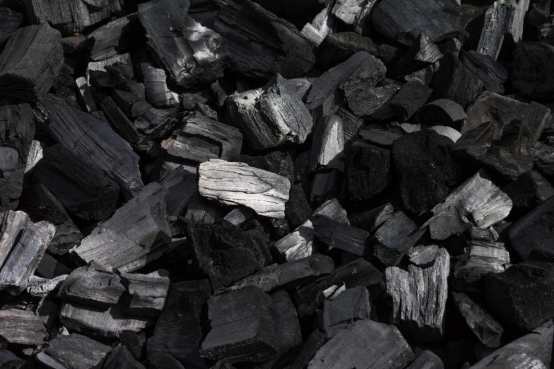
Coal, often referred to as “Black Gold,” served as the primary pacemaker for the Industrial Revolution. Its significance lay in its energy density compared to wood. As Great Britain faced a timber crisis in the 17th and 18th centuries, the necessity to find an alternative heating and industrial fuel led to the exploitation of deep coal seams. This shift was the catalyst for almost every major mechanical innovation that followed.
The Energy Density Advantage
Coal provides significantly more British Thermal Units (BTUs) per unit of volume than wood or charcoal. This high energy density allowed for the concentrated heat necessary for smelting iron and glass on a scale previously unimaginable. Without the move to coal, the metalworking industries would have remained artisanal and localized due to the massive land requirements for sustainable wood harvesting.
The Synergy of Mining and Pumping
The relationship between coal and technology was symbiotic. As mines grew deeper to meet demand, they faced the constant threat of flooding. This specific problem led to the development of the Newcomen atmospheric engine. While highly inefficient by modern standards, the Newcomen engine used the very coal being mined to power pumps that kept the mines dry, allowing for even deeper extraction. This created a self-sustaining cycle of energy production and technological refinement.
- Resource Accessibility: Proximity to coal seams determined the location of early industrial hubs.
- Economic Scaling: Cheap energy lowered the cost of production for basic goods, stimulating consumer demand.
- Infrastructure Growth: The need to transport heavy coal led to the development of canals and, eventually, the first railways.

The Mechanical Heart: Engineering the Steam Engine
If coal was the fuel, the steam engine was the heart of the Industrial Revolution. It represented the first time in history that heat energy could be reliably converted into mechanical work. This breakthrough decoupled production from the constraints of geography, such as the need to be near a fast-flowing river for waterwheels.
James Watt and the Separate Condenser
The most critical leap in steam technology came from James Watt. In 1765, Watt realized that the Newcomen engine wasted a tremendous amount of energy by cooling the entire cylinder after every stroke. By introducing a separate condenser, Watt allowed the main cylinder to remain hot at all times. This single innovation increased fuel efficiency by more than 300%, making steam engines economically viable for industries beyond coal mining.
From Reciprocating to Rotary Motion
Early engines were “beam engines” designed for up-and-down pumping. Watt’s further development of the “sun and planet gear” system allowed these engines to produce rotary motion. This was the turning point for the textile industry. Factories could now use a single central steam engine to drive hundreds of looms and spinning frames via a complex system of belts and pulleys.
Technical Specifications of Early Powerhouses
| Engine Type | Primary Innovation | Typical Use Case | Efficiency Level |
|---|---|---|---|
| Newcomen Engine | Atmospheric Pressure | Mine Dewatering | Very Low (~1%) |
| Watt Engine | Separate Condenser | Textile Mills | Moderate (~3-5%) |
| High-Pressure Engines | Non-condensing Steam | Locomotives / Steamboats | High for the Era |

Industrial Scaling: From Mines to Global Factories
The integration of coal and steam redefined the concept of a “factory.” Large-scale industrialization required more than just machines; it required a reliable, 24/7 power source that was not subject to the whims of the seasons or the weather. The steam engine provided this constancy, leading to the rise of the urban industrial center.
The Birth of the Railway Age
The miniaturization of steam engines through high-pressure steam (pioneered by Richard Trevithick and refined by George Stephenson) led to the locomotive. The “Rocket,” debuting in 1829, proved that steam could transport goods and people across land faster than any horse. This collapsed the distance between raw materials and manufacturing centers, effectively creating the first truly integrated national economies.
Steamships and Global Trade
On the water, the transition from sail to steam revolutionized global logistics. Steamships allowed for predictable schedules, as they no longer depended on trade winds. This reliability was essential for the “just-in-time” delivery of perishable goods and the rapid movement of coal and iron across the British Empire and beyond.

The Great Transition: Shifting from Steam to Electricity
As the 19th century progressed, the limitations of steam became apparent. Steam engines were bulky, required constant maintenance, and lost significant energy through the friction of belt-and-pulley transmission systems. The “Next Big Leap” was the transition to electricity, which defined the Second Industrial Revolution.
Electromagnetism and the Power of the Grid
The work of Michael Faraday and James Clerk Maxwell laid the theoretical foundation for electricity. However, it was the practical application by figures like Thomas Edison and Nikola Tesla that brought it to the industrial floor. The development of the alternating current (AC) system allowed electricity to be transmitted over long distances with minimal loss, centralizing power generation in massive power plants while decentralizing its use.
The Efficiency of the Electric Motor
Unlike the steam engine, which had to be large to be efficient, electric motors could be small and highly specialized. This led to the “unit drive” system, where every individual machine in a factory had its own dedicated motor. This eliminated the dangerous and inefficient overhead shafts and belts of the steam era, allowing for safer, cleaner, and more flexible factory layouts.

Comparative Analysis: Steam Power vs. Electrical Energy
The shift from steam to electricity was not overnight. For decades, the two technologies coexisted. However, the logical advantages of electricity eventually made it the standard for modern manufacturing.
Key Differences in Industrial Application
- Transmission Loss: Steam power lost up to 50% of its energy through mechanical friction in belts. Electricity, via copper wiring, was vastly more efficient.
- Scalability: To increase power in a steam factory, one often had to install a whole new boiler. In an electric factory, one simply drew more current from the grid.
- Precision Control: Electric motors allowed for precise speed adjustments, which was critical for the burgeoning chemical and precision engineering industries.

The Legacy of the Energy Revolution
The journey from coal-fired pumps to the electric grid represents the most significant increase in human capability in history. By mastering the conversion of energy, humanity moved from a state of scarcity to a state of mass production. This evolution set the stage for the digital age, where energy remains the invisible backbone of every technological achievement.
Environmental and Social Shifts
While these innovations brought unprecedented wealth, they also brought challenges. The reliance on coal led to the first major anthropogenic environmental impacts, such as the “London Fog.” Socially, the move to urban centers changed the family structure and labor laws forever. Understanding the history of energy is essential for navigating the current transition toward renewable sources.
Frequently Asked Questions (FAQ)
- Q1: Why was coal considered the “pacemaker” of the Industrial Revolution?
- Coal provided a concentrated, portable, and abundant source of heat energy that far surpassed wood. It allowed for the smelting of iron at scale and provided the necessary fuel for the steam engines that powered factories and transport, effectively “setting the pace” for economic growth.
- Q2: What was the primary technical breakthrough in James Watt’s steam engine?
- The primary breakthrough was the separate condenser. By condensing steam in a separate chamber, Watt kept the main piston cylinder hot, which drastically reduced the amount of fuel needed to reheat the cylinder after each stroke, making the engine efficient enough for widespread industrial use.
- Q3: How did electricity improve factory safety compared to steam?
- In steam-powered factories, a central engine turned long overhead shafts with leather belts connected to every machine. These belts were prone to snapping and could easily catch a worker’s clothing. Electricity replaced this with “unit drives,” where each machine had its own internal motor, eliminating the dangerous overhead machinery.
- Q4: Why did it take so long for electricity to replace steam?
- The transition required a massive investment in infrastructure, specifically the building of power plants and the laying of a national grid. Additionally, many factory owners were reluctant to scrap expensive, still-functional steam equipment until the efficiency gains of electricity became undeniable in the early 20th century.
- Q5: What was the “War of Currents”?
- The War of Currents was a competition in the 1880s and 1890s between Thomas Edison (who promoted Direct Current, or DC) and Nikola Tesla/George Westinghouse (who promoted Alternating Current, or AC). AC eventually won because it could be easily stepped up to high voltages for long-distance transmission using transformers.
