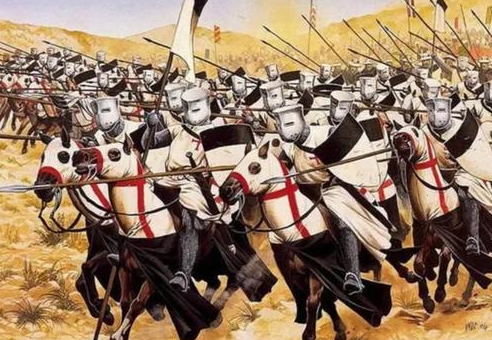
The Crusades represent one of the most significant and complex movements of the High Middle Ages, a series of religious wars that reshaped the political, religious, and cultural landscapes of Europe and the Middle East. While often singularly associated with the fight for the Holy Land, the crusading ideology was applied to various fronts. This guide explores two of its most definitive theaters: the iconic First Crusade culminating in the capture of Jerusalem, and the lesser-known but equally consequential Baltic Crusade led by the formidable Teutonic Knights. By examining these two campaigns, we gain a panoramic view of the fervor, ambition, and brutality that characterized this era.
The Genesis of the Crusading Movement: The Call for Jerusalem
The catalyst for the First Crusade was a confluence of religious anxiety, political instability, and a powerful call to arms. For centuries, Christian pilgrims had traveled to the Holy Land, but by the late 11th century, the rise of the Seljuk Turks created a volatile environment. The Byzantine Emperor Alexios I Komnenos, facing territorial losses, appealed to the West for military aid, an appeal that would be transformed into a mass movement by one of history’s most influential speeches.
Pope Urban II’s Speech at the Council of Clermont
In 1095, at the Council of Clermont in France, Pope Urban II delivered a sermon that ignited the crusading spirit. He called upon the knights and nobles of Christendom to cease their internal conflicts and redirect their martial prowess toward a common enemy. He detailed the alleged atrocities committed against Christian pilgrims and the desecration of holy sites. He framed the expedition not merely as a war of conquest but as an armed pilgrimage, a holy endeavor that offered a unique spiritual reward: the remission of all sins for those who participated. This promise of salvation was a powerful motivator, turning a military campaign into a sacred duty.
Motivations of the Crusaders: Faith, Fortune, and Fealty
While religious fervor was the primary driver, the motivations of those who “took the cross” were complex and varied. A deep-seated piety and the desire to liberate the land of Christ were undoubtedly genuine for many. However, other, more worldly factors were also at play.
- Spiritual Rewards: The papal promise of a plenary indulgence was a powerful incentive in a deeply religious society concerned with sin and the afterlife.
- Economic Opportunity: For landless younger sons of nobles, the Crusade offered a chance to acquire land, wealth, and status in the East. The promise of plunder was an explicit part of the appeal.
- Political Ambition: Feudal lords saw an opportunity to carve out new principalities and expand their influence, free from the constraints of their European monarchs.
- Social Pressure: Once the movement gained momentum, immense social pressure compelled knights and lords to join, lest they be seen as impious or cowardly.
The Siege and Conquest of Jerusalem (1099)
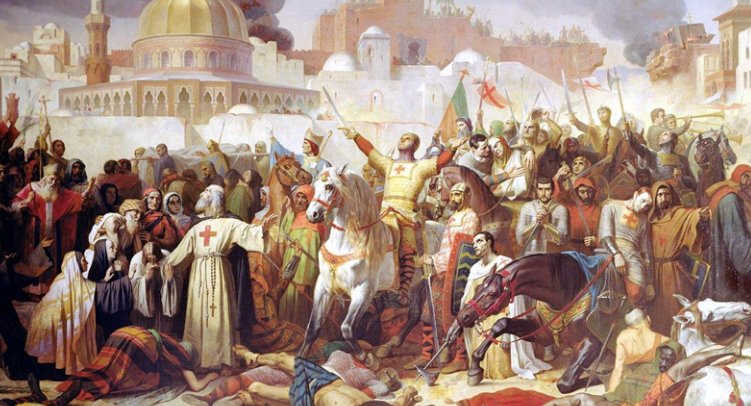
After a grueling three-year journey marked by starvation, disease, and brutal battles, the main Crusader army arrived before the walls of Jerusalem in June 1099. The city was heavily fortified and defended by a Fatimid garrison. The Crusaders, depleted in numbers but resolute in their purpose, faced the daunting task of breaching its defenses in the arid summer heat.
Military Strategies and a Test of Faith
The initial assaults on the city failed. The Crusaders lacked sufficient siege equipment and a reliable water supply, and their morale began to wane. The situation seemed dire until, according to chronicles, a priest named Peter Desiderius claimed to have a vision from God, instructing the army to perform a penitential procession around the city walls. On July 8, 1099, the clergy and soldiers marched barefoot around Jerusalem, an act of collective faith intended to secure divine favor. Shortly after, the arrival of Genoese ships at the port of Jaffa provided crucial supplies and skilled engineers, allowing the Crusaders to construct two massive siege towers.
The Fall of the City and its Aftermath
On July 14, the final assault began. The siege tower commanded by Godfrey of Bouillon successfully reached the northern wall, allowing the first wave of knights to pour into the city. The defenders’ resistance crumbled, and what followed was a brutal massacre. Crusader accounts, though likely exaggerated for effect, describe streets running with blood as the soldiers killed the city’s Muslim and Jewish inhabitants indiscriminately. On July 15, 1099, Jerusalem was in Christian hands. The immediate aftermath saw the establishment of the Kingdom of Jerusalem, with Godfrey of Bouillon taking the title “Advocate of the Holy Sepulchre.” This and other Crusader States, such as the County of Edessa and the Principality of Antioch, would form the basis of a Christian presence in the Levant for nearly two centuries.
A Different Frontier: The Northern Crusades
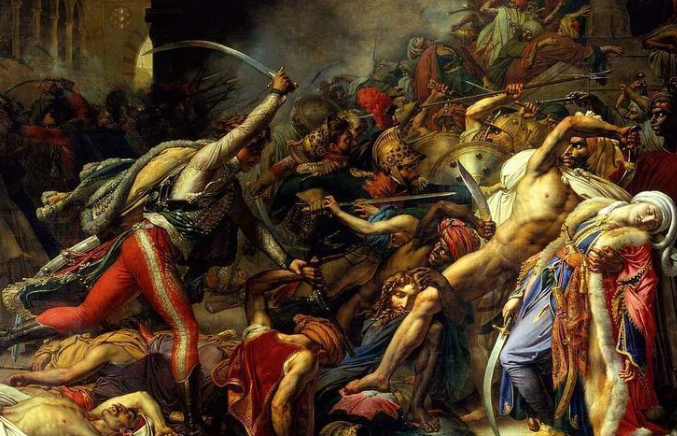
While the wars for the Holy Land dominated the popular imagination, the concept of crusading was also applied to other regions, most notably the Baltic. The Northern Crusades were a series of campaigns, sanctioned by the papacy from the 12th century onwards, aimed at conquering and converting the remaining pagan peoples of northeastern Europe. These included the Prussians, Lithuanians, Livonians, and Estonians. This frontier was a stark contrast to the Levant—a land of dense forests, marshes, and harsh winters, inhabited by resilient tribal societies.
Papal Sanction for a New Holy War
The justification for the Northern Crusades was similar to that for the wars in the East: to expand the borders of Christendom and eliminate a perceived threat. Popes issued bulls that granted crusaders in the Baltic the same spiritual indulgences as those fighting in the Holy Land. This legitimized the campaigns of German and Scandinavian lords, as well as the newly formed military orders, who saw the Baltic as a region ripe for both religious conversion and territorial expansion. The conflict was framed as a righteous struggle against paganism, though it was inextricably linked with German eastward expansion known as the Ostsiedlung.

Rise of the Teutonic Knights: A Military-Monastic Order
Central to the story of the Baltic Crusade is the Order of Brothers of the German House of Saint Mary in Jerusalem, commonly known as the Teutonic Knights. This military-monastic order became the primary engine of conquest and Christianization in the region, establishing a unique and powerful state built on a foundation of religious war.
Origins and an Invitation to Prussia
The Teutonic Order was founded in the Holy Land in the 1190s to aid German pilgrims. After being expelled from Hungary, the Order was in search of a new mission. In 1226, Duke Konrad I of Masovia (a Polish duchy) invited the Knights to help him subdue the pagan Old Prussians who were launching disruptive raids on his territory. The Grand Master of the Order, Hermann von Salza, secured a papal bull and an Imperial Golden Bull, which granted the Knights sovereignty over any lands they conquered from the Prussians. This legal framework gave them carte blanche to not only defeat the pagans but to build their own state in the process.
The Doctrine of Conquest and Conversion
The Teutonic Knights operated on a clear and brutal ideology: the pagans of the Baltic had to be converted to Christianity, by force if necessary. Their strategy was not one of swift victory but of slow, methodical subjugation. They advanced into Prussian territory, building a network of imposing brick castles (Ordensburgen) to secure their gains and serve as administrative centers and military bases. From these strongholds, they launched relentless campaigns, systematically crushing tribal resistance and imposing their rule. Conversion was often a condition of survival for the conquered peoples.

The Baltic Crusade in Action: Conquest and Colonization
The Teutonic Knights’ campaign was a masterclass in medieval siege warfare, logistical organization, and state-building. Over several decades, they transformed the tribal lands of Prussia into a highly organized monastic state, a process that involved both military conquest and large-scale colonization.
Building a State Through Fortification
The Knights’ castles were the backbone of their power. These fortresses, most famously the monumental Marienburg Castle (Malbork), were marvels of Gothic brick architecture and military engineering. They allowed small garrisons of knights and sergeants to control large territories, project power, and provide refuge during pagan uprisings. This network of castles enabled the Knights to systematically pacify the region, one stronghold at a time.
Military Campaigns and German Colonization
The warfare was brutal and attritional. The Knights, often reinforced by guest crusaders from across Europe seeking adventure and spiritual merit, waged annual campaigns (reisen) into Prussia and later Lithuania. The pagan tribes fought back fiercely, but their disunity made them vulnerable to the Knights’ organized military machine. Following conquest, the Order encouraged mass immigration of German peasants, artisans, and merchants. This policy, the Ostsiedlung, was crucial. It repopulated lands devastated by war, established a German-speaking, Christian populace loyal to the Order, and built a robust agricultural and commercial economy that funded the Knights’ perpetual war effort.

Contrasting Theaters: Jerusalem vs. the Baltic
While both the First Crusade and the Baltic Crusade were fought under the same religious banner, they differed significantly in their objectives, methods, and outcomes. Understanding these differences is key to appreciating the full scope of the crusading movement.
Motivations and Long-Term Goals
The First Crusade was primarily a war of re-conquest and liberation. Its goal was to reclaim specific holy sites, chief among them Jerusalem, and establish a Christian presence to protect pilgrims. The Baltic Crusade, however, was a war of outright conquest and colonization. The objective was not just to convert pagans but to absorb their lands and create an entirely new Christian state, ruled by the Teutonic Order and populated by German settlers. The establishment of the Monastic State of the Teutonic Knights was a unique outcome with no direct parallel in the Levant.
Nature of Warfare and the Enemy
In the Holy Land, Crusaders faced sophisticated, organized states like the Seljuk Sultanate and the Fatimid Caliphate, with large armies and fortified cities. The warfare involved large-scale pitched battles and complex sieges. In the Baltic, the Knights fought against disparate pagan tribes in a challenging landscape of forests and swamps. The conflict was characterized by guerrilla warfare, raids, and the slow, methodical construction of castles to control territory. The long-term success of the Knights lay in their superior organization and logistics rather than a single decisive victory.

The Enduring Legacy of the Crusades
The Crusades, in both the Middle East and the Baltic, left deep and lasting legacies that continue to influence the world today. Their impact was felt across religious, cultural, and political spheres, fundamentally altering the regions they touched.
Religious and Cultural Consequences
In the Middle East, the Crusades created a long-lasting legacy of mistrust and conflict between Christianity and Islam. While they also facilitated some cultural and technological exchange, the memory of the violence, particularly the sack of Jerusalem, has endured. In the Baltic, the crusades were successful in their primary religious aim: the region was permanently Christianized. However, this was achieved through the destruction of indigenous pagan cultures and the imposition of a new German-dominated social and political order. The Old Prussian language and culture, for example, were driven to extinction.
Political and Territorial Transformations
The Crusader States in the Levant were ultimately a temporary phenomenon, with the last Christian stronghold, Acre, falling in 1291. Their existence, however, had a profound impact on the politics of the region for two centuries. In contrast, the Teutonic Knights’ crusade resulted in a permanent political transformation. The state they founded in Prussia became a major European power and laid the groundwork for the later Kingdom of Prussia, a state that would go on to play a central role in the unification of Germany. The borders and demographic makeup of modern-day Poland, Lithuania, and the Kaliningrad Oblast are a direct consequence of the events set in motion during the Northern Crusades.
Frequently Asked Questions (FAQ)
- What was the primary motivation for the First Crusade?
- The primary motivation was religious: Pope Urban II’s call to liberate Jerusalem and other holy sites from Muslim rule. He offered a plenary indulgence (the forgiveness of all sins) to those who participated, which was a powerful incentive. However, secondary motivations included the desire for land, wealth, social status, and adventure, especially for landless knights.
- How did the Teutonic Knights differ from other crusading orders like the Templars?
- While both were military-monastic orders, their primary theaters of operation and ultimate goals diverged. The Knights Templar were focused almost exclusively on defending the Holy Land. The Teutonic Knights, after their early years in the Levant, redirected their efforts to the Baltic region. Their unique achievement was not just conquering territory but successfully establishing a sovereign, long-lasting monastic state in Prussia, something no other major crusading order accomplished.
- Were the Northern Crusades considered as legitimate as those in the Holy Land?
- Yes, from an official religious standpoint, they were. The Papacy issued multiple bulls that explicitly granted participants in the Baltic campaigns the same spiritual indulgences and crusader status as those fighting in the Middle East. This gave the actions of the Teutonic Knights and other crusaders in the north the full sanction and authority of the Church.
- What was the ultimate fate of the Crusader States established after the First Crusade?
- The Crusader States were difficult to defend due to their small Christian populations and long supply lines. Over two centuries, they were gradually reconquered by Muslim powers, most notably by Saladin, who recaptured Jerusalem in 1187. The final Crusader stronghold on the mainland, the city of Acre, fell in 1291, effectively ending the Christian political presence in the Levant.
- What led to the decline of the Teutonic Knights’ power?
- The decline of the Teutonic Order was caused by several factors. Their original mission became obsolete after the official Christianization of Lithuania in 1386. This removed their primary justification for holy war. Subsequently, they entered into a protracted conflict with the newly powerful Polish-Lithuanian Commonwealth, culminating in their devastating defeat at the Battle of Grunwald in 1410. This military catastrophe, combined with internal strife and economic problems, marked the beginning of their decline, and their state was eventually secularized and absorbed by other powers.