The 21st-century global landscape is characterized by a complex web of interconnected yet distinct security challenges. From long-simmering ethno-nationalist insurgencies targeting superpower economic projects to sudden, high-stakes political crises within established democracies, understanding the drivers of modern instability is more critical than ever. This guide provides an in-depth analysis of two seemingly disparate but equally significant geopolitical flashpoints: the persistent attacks by the Balochistan Liberation Army on Chinese interests in Pakistan and the shocking, albeit brief, declaration of martial law in South Korea. By dissecting these case studies, we can uncover the underlying currents of historical grievance, economic ambition, and political power struggles that shape our world.
The BLA Insurgency vs. Chinese Interests in Pakistan
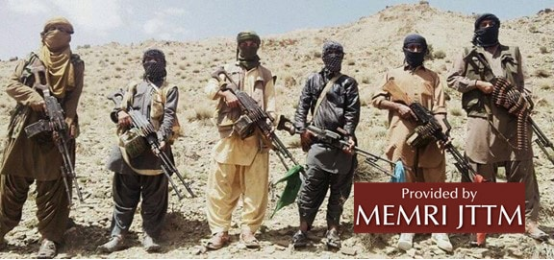
In the rugged landscapes of Pakistan’s largest province, a decades-old conflict has found a new and globally significant target: China’s vast economic and strategic investments. The Balochistan Liberation Army (BLA), an ethno-nationalist separatist group, has increasingly focused its attacks on projects and personnel associated with the China-Pakistan Economic Corridor (CPEC), a cornerstone of Beijing’s Belt and Road Initiative (BRI). This conflict is not merely a local insurgency; it is a direct challenge to a multi-billion-dollar geopolitical project.
Roots of the Baloch Conflict: A History of Grievance
The Baloch insurgency is deeply rooted in a history of perceived marginalization and economic exploitation by the Pakistani state. Since Balochistan’s controversial accession to Pakistan in 1948, many Baloch nationalists have argued that the resource-rich province has been systematically plundered, with its vast reserves of natural gas, copper, and gold benefiting the central government while the local population remains impoverished. This long-standing grievance fuels the BLA’s narrative, which frames the Pakistani state and its foreign partners, now primarily China, as colonizing forces. The BLA’s ultimate goal is the establishment of an independent “Greater Balochistan,” and they view any large-scale development project not controlled by them as an entrenchment of Pakistani control.
CPEC: China’s Economic Lifeline and a Local Flashpoint
The China-Pakistan Economic Corridor represents a massive investment by Beijing, aimed at creating a network of roads, railways, and pipelines to connect western China to the Arabian Sea. The jewel in CPEC’s crown is the deep-sea Gwadar Port in Balochistan, which offers China a crucial strategic shortcut for its energy imports and trade, bypassing the congested Strait of Malacca. For the BLA, however, CPEC is the ultimate symbol of exploitation. They argue the project will lead to a demographic shift with an influx of outsiders, further marginalize the Baloch people, and facilitate the extraction of resources with no local benefit. Consequently, every CPEC-related road, pipeline, and convoy has become a potential target.
Anatomy of BLA Attacks: Tactics and Targets
The BLA has demonstrated a sophisticated and brutal capacity to strike high-value targets. Their tactics have evolved from low-level ambushes to complex, coordinated assaults on heavily fortified locations. Key targets have included:
- Chinese Engineers and Workers: Numerous attacks have been launched against buses carrying Chinese personnel, construction sites, and residential compounds.
- Strategic Infrastructure: The BLA has targeted key infrastructure projects, including attacks on luxury hotels like the Pearl-Continental in Gwadar, which hosts Chinese investors.
- Chinese Diplomatic Missions: In a bold move, the group attacked the Chinese consulate in Karachi, signaling their intent to internationalize the conflict and directly confront Beijing.
The objective of these attacks is twofold: to inflict economic pain by raising the cost and risk of CPEC projects, and to generate international headlines, forcing China to pressure Pakistan for a political solution that might favor Baloch interests.

South Korea’s Political Shockwave: The Martial Law Crisis
On the night of December 3, 2023, South Korea, a vibrant democracy and a key U.S. ally, was plunged into chaos. In a move that stunned the nation and the world, President Yoon Suk-yeol declared “extraordinary martial law.” The event, though lasting only a few hours, exposed deep political fractures and resurrected the ghosts of the country’s authoritarian past, triggering a constitutional crisis of the highest order.
The Declaration: President Yoon Suk-yeol’s Unprecedented Move
In a late-night televised address, President Yoon announced his decision, citing the need to defend the nation’s liberal democratic order from what he described as “pro-North Korea state-subverting forces.” He accused the opposition-dominated National Assembly of paralyzing the government and sympathizing with Pyongyang, thereby threatening national security. Under the decree, all political activities, strikes, and expressions of opposition to martial law were banned, and the military was empowered to arrest and detain citizens without warrants. This drastic action was immediately seen by opponents as a thinly veiled attempt to neutralize a hostile legislature and consolidate power.
Constitutional Clash: The National Assembly’s Swift Rebuke
The response from the National Assembly was swift and decisive. In a remarkable display of unity, opposition and even some ruling party lawmakers convened for an emergency session. They physically blocked the President’s supporters from preventing the session from starting. Within hours, they held a vote to lift the martial law decree. The result was a resounding and unanimous 190-0 vote in favor of overturning the President’s order. According to the South Korean constitution, the National Assembly has the power to demand the lifting of martial law with a majority vote, a crucial democratic check on executive power that proved its worth in this crisis.
The Aftermath: Impeachment Threats and Political Paralysis
While the martial law was lifted, the political fallout has been immense. The president’s actions were widely condemned as an assault on democracy. The opposition Democratic Party immediately initiated impeachment proceedings, accusing President Yoon of acting like a “dictator” and committing an act of insurrection. The crisis has left his administration politically crippled, facing abysmal approval ratings and a legislature determined to hold him accountable. The event has created a deep sense of uncertainty and political paralysis, raising questions about the stability of governance in a nation critical to East Asian security.

Comparative Analysis: Drivers of Modern Instability
Though unfolding in different contexts, the crises in Pakistan and South Korea offer valuable insights into the multifaceted nature of modern geopolitical instability. By comparing them, we can identify common themes and distinct drivers that challenge national and international security.
Economic Interests vs. Internal Politics
The Balochistan conflict is a clear example of how large-scale foreign economic investment can exacerbate existing local grievances. The BLA’s insurgency is directly fueled by the perception that CPEC is a form of economic colonialism. In contrast, the South Korean crisis was purely an internal political power struggle. It was not driven by external economic pressures but by a president’s attempt to overcome legislative gridlock and neutralize political opponents through authoritarian means. This highlights two distinct paths to instability: one ignited by external economic projects and another by the internal decay of democratic norms.
The Role of Nationalism and Ideology
Both conflicts are heavily steeped in ideology. The BLA operates on a platform of ethno-nationalism, seeking self-determination and sovereignty for the Baloch people. Their identity and historical narrative are central to their fight. In South Korea, President Yoon invoked a different kind of ideology: a hardline, anti-communist stance. He framed his political opponents as “pro-North Korea forces” to justify his actions, weaponizing national security rhetoric for political gain. This demonstrates how both ethnic identity and political ideology can be powerful mobilizing forces for conflict and crisis.

Navigating the Future: Security and Diplomacy in a Volatile World
The events in Pakistan and South Korea serve as stark reminders of the fragility of political and economic order. Addressing these challenges requires a nuanced understanding of their root causes and a commitment to robust, forward-looking strategies that prioritize both security and institutional integrity.
Mitigating Risks for Foreign Investments in Conflict Zones
The CPEC case offers a critical lesson for global powers like China. Pouring billions into infrastructure without adequately addressing local political and economic grievances is a recipe for perpetual conflict. A more sustainable approach requires:
- Inclusive Development: Ensuring that local communities are genuine stakeholders and beneficiaries of major projects, with guarantees for jobs, revenue sharing, and environmental protection.
- Political Dialogue: Engaging with, rather than just suppressing, dissident groups to understand their grievances and seek political resolutions.
- Enhanced Security Analysis: Moving beyond simply deploying guards and building fences to a deeper understanding of the socio-political landscape to anticipate and mitigate threats.
Strengthening Democratic Institutions
The South Korean crisis, while alarming, was also a powerful demonstration of democratic resilience. The ability of the National Assembly to unite and constitutionally overturn an executive overreach is a testament to the strength of its institutions. The key takeaway is the non-negotiable importance of checks and balances. A free press that reports events in real-time, an independent judiciary, and a politically engaged citizenry are the ultimate firewalls against authoritarian backsliding. For democracies worldwide, the lesson is to continuously invest in and protect these core pillars.
Frequently Asked Questions (FAQ)
- Q1: What is the Balochistan Liberation Army (BLA) and what are its main goals?
- The BLA is an ethno-nationalist militant separatist organization operating in Pakistan’s Balochistan province. Its primary goal is to achieve independence for Balochistan from Pakistan. It claims that the Pakistani state has historically exploited the region’s vast natural resources while neglecting the local Baloch population. The group uses armed struggle to target Pakistani state and military interests, as well as foreign projects like CPEC, which it views as a tool of occupation.
- Q2: Why are Chinese interests in Pakistan a primary target for the BLA?
- Chinese interests, particularly those related to the China-Pakistan Economic Corridor (CPEC), are a primary target because the BLA sees the project as the most significant modern symbol of what they call Pakistani and foreign exploitation. They believe CPEC will further entrench Pakistani control, extract resources without benefiting the local population, and potentially alter the region’s demographics. By attacking Chinese personnel and projects, the BLA aims to make CPEC too costly and dangerous to continue, thereby undermining the Pakistani state’s economic agenda and gaining international attention.
- Q3: Was the declaration of martial law in South Korea legal?
- While the South Korean constitution grants the president the power to declare martial law in times of war or grave national emergency, President Yoon’s justification was widely seen as illegitimate and a gross abuse of power. The constitution also provides a critical check: the National Assembly can override the declaration with a majority vote. The assembly’s immediate and unanimous vote to lift the decree effectively rendered it void and affirmed that the president’s actions lacked the necessary legal and political legitimacy in the eyes of the legislature.
- Q4: What are the potential consequences for President Yoon Suk-yeol after the martial law crisis?
- President Yoon Suk-yeol faces severe political consequences. The most immediate is the impeachment motion filed by the opposition, which, if successful, could lead to his removal from office. Even if he survives impeachment, his presidency is likely to be severely weakened, with rock-bottom approval ratings and a hostile legislature that will block his agenda. He may become a “lame-duck” president, unable to govern effectively for the remainder of his term, and could potentially face criminal investigation after leaving office.
- Q5: How do these two events reflect broader global geopolitical trends?
- These two events reflect two major global trends. The BLA insurgency highlights the growing challenge to large-scale infrastructure projects led by global powers, where local resistance can disrupt major geopolitical strategies like China’s Belt and Road Initiative. The South Korean crisis is part of a trend of democratic backsliding and executive overreach seen in various countries, where leaders test the limits of constitutional power. Both cases demonstrate a rise in volatility and the clash between local and national identities, economic ambitions, and democratic principles.