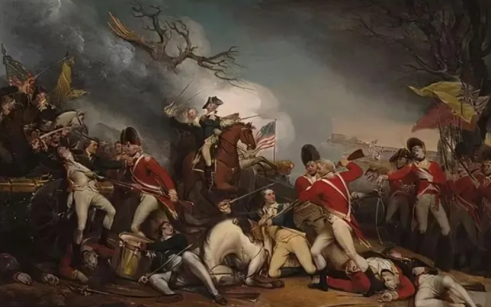
The American Revolution (1775-1783) was more than a series of battles; it was a profound ideological and political upheaval that resulted in the birth of the United States of America. This pivotal period in world history saw thirteen British colonies challenge the might of a global empire, armed with radical ideas about liberty, self-governance, and individual rights. This guide delves into the origins of the conflict, the critical events that fanned the flames of rebellion, the war itself, and the enduring legacy that continues to shape the world today.
The Seeds of Discontent: Pre-Revolutionary Tensions
The road to revolution was not sudden but a gradual escalation of tension over several decades. The core of the dispute lay in the British government’s attempts to exert greater control over the colonies and levy taxes to pay for the empire’s debts, particularly those incurred during the French and Indian War (1754-1763).
The Aftermath of the French and Indian War
While a victory for the British Empire, the French and Indian War was incredibly costly. To manage the new territories and pay off war debt, the British Parliament began imposing new taxes on the American colonies. This marked a significant shift in policy. Previously, the colonies had enjoyed a period of “salutary neglect,” largely governing and taxing themselves. The new, direct intervention from London was seen as a violation of their established rights.
“No Taxation Without Representation”
This became the rallying cry of the revolution. Colonists argued that as they had no elected representatives in the British Parliament, the government had no right to tax them. They viewed these taxes not as fair contributions to the empire but as an act of oppression. Key acts that fueled this sentiment include:
- The Sugar Act (1764): Modified the existing Molasses Act, but with stricter enforcement, harming the colonial shipping economy.
- The Stamp Act (1765): The first direct tax on the colonists, requiring a stamp on all paper goods, from legal documents to playing cards. This incited widespread, organized protest.
- The Townshend Acts (1767): Taxed imported goods like glass, lead, paint, and tea. This led to boycotts of British goods.

The Spark Ignites: Key Events Leading to War
Protests against British policies grew from intellectual debates and peaceful boycotts to violent confrontations. These events galvanized colonial opinion and pushed both sides closer to armed conflict, demonstrating that the ideological divide was becoming unbridgeable.
The Boston Massacre (1770)
A street brawl between American colonists and a lone British soldier escalated into a chaotic scene where British troops fired into a mob, killing five colonists. Figures like Paul Revere and Samuel Adams skillfully used this event as propaganda, portraying it as a brutal slaughter of innocent citizens and fueling anti-British sentiment across the colonies.
The Boston Tea Party (1773)
In protest of the Tea Act, which granted the British East India Company a monopoly on tea sales in the colonies, members of the Sons of Liberty, disguised as Mohawk Indians, boarded three British ships in Boston Harbor and dumped 342 chests of tea into the water. This act of defiance was a direct challenge to British authority and property.
The Intolerable Acts (1774)
Britain’s response to the Boston Tea Party was swift and punitive. Parliament passed a series of measures known as the Coercive Acts (or Intolerable Acts in America). These acts closed the Port of Boston, restricted local town meetings, and expanded the Quartering Act, which required colonists to house British soldiers. Rather than crushing the rebellion, these acts unified the colonies in opposition, leading to the formation of the First Continental Congress.

The War for Independence: Major Campaigns and Battles
The ideological conflict finally erupted into open warfare in 1775. The Continental Army, led by General George Washington, faced the world’s most formidable military force. The war was long and arduous, marked by devastating losses and improbable victories that ultimately secured American independence.
Lexington and Concord (1775)
The “shot heard ’round the world” was fired on April 19, 1775. British troops marched from Boston to seize colonial military supplies in Concord. Warned by riders like Paul Revere, colonial militiamen confronted the British. The skirmishes at Lexington and Concord marked the beginning of the American Revolutionary War.
The Turning Point at Saratoga (1777)
The Battles of Saratoga were a decisive victory for the Americans. The surrender of British General John Burgoyne’s army convinced France that the colonists had a credible chance of winning. This led to the Franco-American Alliance of 1778, which provided the Americans with crucial financial, military, and naval support that was instrumental in winning the war.
The Final Surrender at Yorktown (1781)
The war effectively ended with the Siege of Yorktown. A combined force of American and French troops, led by Washington and the Comte de Rochambeau, trapped a large British army under General Cornwallis. The French fleet, commanded by Admiral de Grasse, blocked any British escape or reinforcement by sea. Cornwallis’s surrender on October 19, 1781, broke the British will to continue the fight.
Architects of a Nation: Key Figures of the Revolution
The success of the American Revolution was driven by a remarkable cast of individuals whose leadership, intellect, and courage shaped the new nation. Their contributions spanned the battlefield, the diplomatic table, and the realm of political philosophy.
Military Leadership: George Washington
As Commander-in-Chief of the Continental Army, Washington’s perseverance was the glue that held the American cause together. He endured defeats, harsh winters like the one at Valley Forge, and political intrigue, but his strategic leadership and unwavering resolve inspired his troops and the nation.
Ideological Founders: Thomas Jefferson & Thomas Paine
Thomas Jefferson was the principal author of the Declaration of Independence, a document that eloquently articulated the philosophical basis for revolution based on natural rights. Thomas Paine’s pamphlet, *Common Sense*, was a publishing phenomenon that used clear, powerful language to persuade ordinary colonists to reject monarchy and embrace independence.
Diplomatic Genius: Benjamin Franklin
A world-renowned scientist and statesman, Benjamin Franklin’s diplomatic efforts in Paris were crucial. He skillfully navigated French court politics to secure the military alliance that turned the tide of the war. His wisdom and prestige also lent credibility to the American cause on the international stage.
Expert Analysis: A Comparison of Revolutionary Strategies
Understanding the outcome of the war requires analyzing the fundamentally different strategies and objectives of the British and Continental forces. The British sought to crush a rebellion and restore order, while the Americans fought for survival and the preservation of their cause.
| Strategic Element | British Army (Redcoats) | Continental Army & Militias |
|---|---|---|
| Primary Objective | Pacify the colonies, destroy the Continental Army, and re-establish royal authority. | Survive, prolong the war, wear down British resolve, and win foreign allies. |
| Tactics | Fought conventional, European-style battles in open fields with disciplined formations. | Utilized a mix of conventional tactics and guerrilla warfare, leveraging local knowledge of the terrain. |
| Strengths | Well-trained, well-equipped professional army; powerful navy; strong central government and economy. | Fighting on home ground; strong motivation (fighting for liberty); leadership of Washington; foreign aid. |
| Weaknesses | Long supply lines across the Atlantic; unfamiliarity with the terrain; underestimation of colonial resolve. | Poorly supplied and equipped; lack of consistent funding; short-term enlistments; internal political divisions. |
Frequently Asked Questions (FAQ)
- Was the American Revolution just about taxes?
- No. While taxes were the initial flashpoint, the Revolution was fundamentally about deeper principles of self-governance, political representation, and individual liberty. Colonists felt their rights as Englishmen were being violated by a distant government that did not have their interests at heart.
- Did all American colonists support the Revolution?
- No, colonial society was deeply divided. Historians estimate that about 40-45% of the white population were Patriots (supporters of independence), 15-20% were Loyalists (loyal to Britain), and the rest remained neutral or shifted allegiance based on local events.
- How important was foreign help to the American victory?
- It was critically important. The military and financial alliance with France after the Battle of Saratoga provided the Continental Army with professional soldiers, a powerful navy, and essential funds and supplies. Support from Spain and the Netherlands also helped by distracting British resources elsewhere.
- What happened to the Loyalists after the war?
- Many Loyalists faced persecution and property confiscation. An estimated 60,000 to 80,000 Loyalists fled the newly formed United States. The majority went to other parts of the British Empire, primarily Canada, where they became known as United Empire Loyalists.
- Did the Revolution immediately create the United States as we know it?
- Not exactly. The war’s end in 1783 led to the United States being governed under the Articles of Confederation, a weak central government structure. The flaws in this system became apparent, leading to the Constitutional Convention of 1787, which created the U.S. Constitution and the stronger federal government that exists today.