The Great Migration: How Industry Reshaped Cities
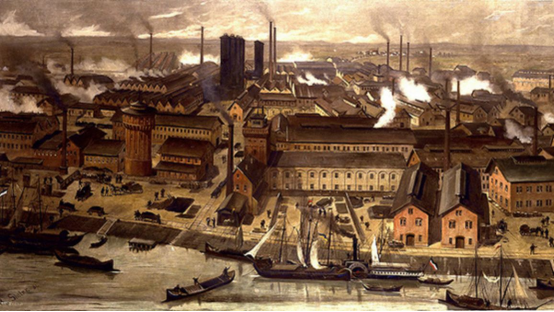
The Industrial Revolution acted as a massive gravitational force, pulling populations from agrarian landscapes into burgeoning urban centers. This transformation was not merely a change in geography but a fundamental shift in the human experience. As factories replaced cottage industries, the necessity of proximity to power sources—such as coal fields and steam-driven machinery—dictated the rapid expansion of cities that were previously mere market towns.
The Economic Drivers of Urbanization
The transition to factory-based production created an unprecedented demand for labor. Unlike traditional farming, which was spread across vast territories, industrial output required centralized labor pools.
- Centralization of Production: Steam engines and water frames required massive infrastructure, leading to the creation of the modern factory system.
- The Decline of Rural Autonomy: Enclosure acts and the mechanization of agriculture displaced thousands of rural workers, leaving them with little choice but to migrate.
- Infrastructure Development: The construction of railways and canals facilitated the movement of goods and people, effectively shrinking the distance between rural origins and urban destinations.

The Emergence of the Industrial Working Class
As migration accelerated, a distinct socioeconomic group emerged: the industrial working class. This class was defined by its relationship to the means of production—specifically, the exchange of labor for wages within an industrial setting. This marked a departure from the artisanal methods of the past, where craftsmen held a proprietary interest in their products.
Defining the Working Class Experience
The daily life of the new working class was governed by the clock rather than the sun. This shift in temporal regulation was a radical departure from historical labor norms.
| Factor | Pre-Industrial | Industrial |
|---|---|---|
| Work Pace | Task-oriented (seasonal) | Time-oriented (clock-based) |
| Environment | Home/Field | Factory/Workshop |
| Social Structure | Communal/Village | Urban/Class-based |
The psychological impact of this transition was profound, as workers adapted to the rigid discipline of factory life, leading to the early foundations of labor unions and collective bargaining.

Urban Living Conditions and Social Challenges
The rapid influx of people into industrial hubs overwhelmed existing infrastructure, creating severe social and health challenges. Cities expanded without planning, resulting in the formation of dense, overcrowded tenements that lacked basic sanitation and ventilation.
The Impact of Rapid Density
While industry thrived, the human cost was significant. The lack of public health regulations meant that infectious diseases spread rapidly, and the lack of housing regulation led to the development of slums. These environments became the breeding ground for the social reform movements of the 19th century, as living conditions became a focal point for political discourse.

Long-Term Consequences for Modern Society
The demographic shifts and social formations of the Industrial Revolution provide the blueprint for the modern world. The transition from rural to urban living is a process that continues to influence global economic development today.
Legacy of the Industrial Migration
The patterns established during this era—mass migration, the importance of labor organization, and the challenges of urban planning—remain relevant. Modern cities are essentially the descendants of those first industrial centers, having evolved through decades of policy and infrastructure upgrades designed to mitigate the very issues that arose during the initial urban explosion.
Frequently Asked Questions (FAQ)
- Q1: What was the primary driver of mass migration during the Industrial Revolution?
- The primary driver was the need for centralized labor. The shift from cottage industries to large-scale factory production required a concentrated workforce located near power sources and transport hubs.
- Q2: How did the Industrial Revolution change the nature of labor?
- It shifted labor from being task-oriented and seasonal to being time-oriented and clock-regulated. This standardized the workday and created a clear distinction between the employer and the employee.
- Q3: Why did cities grow so rapidly during this period?
- Cities grew due to a combination of rural displacement—caused by agricultural mechanization and enclosure acts—and the allure of employment opportunities in burgeoning industrial sectors.
- Q4: What were the long-term effects on the working class?
- The long-term effects included the development of class consciousness, the rise of organized labor movements, and eventually, the implementation of labor laws and public health reforms that defined the modern social safety net.
