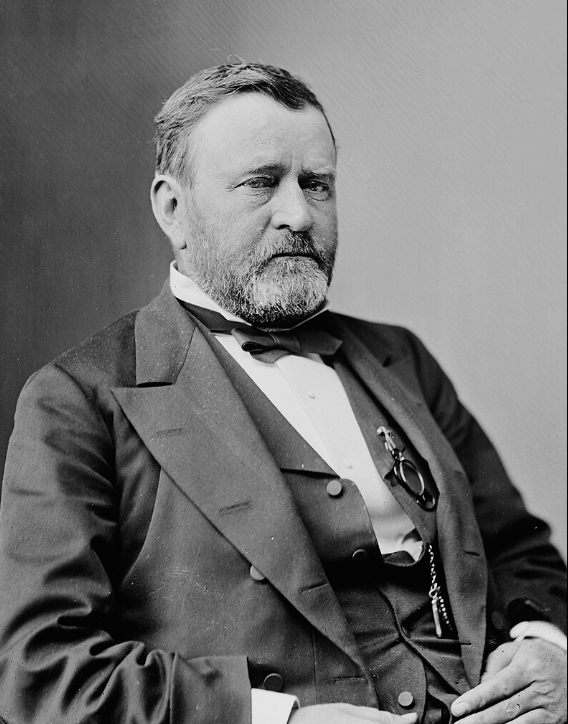
Few figures in American history can truly connect the dots between war and politics, but Ulysses S. Grant stands out. He was both a pillar of the Union Army during the Civil War and a leader who later rose to become president. However, his life was not a straightforward heroic tale, but rather a turbulent one filled with many unexpected twists and turns. Today, we’ll begin our journey from the dust of the battlefield to examine Grant’s path to the presidency.
An “inconspicuous” start
Grant’s early years at West Point weren’t particularly impressive. He was even more renowned for his horsemanship than his academics. After graduation, he distinguished himself in the Mexican-American War, but life after the war was difficult. Unstable income and heavy family responsibilities led to his downfall, even resorting to selling firewood to make ends meet. It’s fair to say that few could have imagined in his youth that he would one day become a pivotal figure in American history.
This period of lows made Grant very down-to-earth. He did not have the arrogance of a general, but instead seemed more like an ordinary person. This temperament later won the trust of the soldiers during the war.
Rise during the Civil War
When the Civil War broke out, Grant wasn’t immediately recognized as a star general. Initially, he was merely a volunteer commander. But he quickly impressed everyone with a series of victories. In particular, his famous “Unconditional Surrender” at the Battle of Fort Donelson cemented his reputation, earning “US Grant” the abbreviation of “Unconditional Surrender Grant.”
Grant’s military style was distinctive: no frills, no delay; he faced the enemy head-on, crushing them with tenacity and attrition. Unlike McClellan, who was indecisive, he also lacked the overreliance on perfect planning that characterized other generals. Grant’s logic was simple: force, firepower, and enduring fighting spirit.
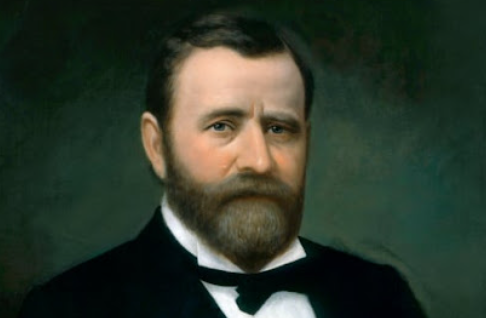
The Decisive Move: Vicksburg and Lee
Grant’s true test came at the Battle of Vicksburg. Control of the Mississippi River was crucial to the outcome of the war, and Grant’s capture of Vicksburg effectively split the Confederate Army in two. This was not only a military victory but also a devastating psychological blow.
President Lincoln later promoted Grant to commander-in-chief of the Union Army. In the final stages, Grant personally led the battle against Robert E. Lee, the South’s top general. The battle dragged on in the muddy battlefields of Virginia, resulting in heavy casualties. But Grant persevered, knowing that if he continued to pressure the South, it would inevitably collapse.
In 1865, Lee surrendered at Appomattox, bringing the American Civil War to an end. Grant became a national hero.
From the battlefield to the political stage
After the war, Grant became increasingly prominent in the public eye. His military prowess and steadiness made him an ideal candidate for the Republican Party. In 1868, he was successfully elected the 18th President of the United States.
But Grant’s transition from general to president wasn’t as easy as one might imagine. While he commanded troops on the battlefield, he faced the complexities of partisanship, corruption, and the challenges of rebuilding the South in the political arena. Grant was a simple, straightforward man with a poor command of words, a weakness in the political world.
During his presidency, the United States remained unified and legal progress was made for black civil rights. However, his administration was criticized for numerous corruption scandals. Many even said that Grant was not as effective as he was as a general.
Lonely old age and immortal legacy
Grant’s retirement wasn’t easy. His investments failed, and his family was financially strained. But before his death, he committed himself to a major undertaking: writing a memoir. Amidst his illness, he persevered and completed “Memoirs of Grant.” This book not only provided financial security for his family but also became a vital resource for Civil War research. Mark Twain even called it “one of the greatest American memoirs.”
Grant’s life is like a drama, with great contrasts: no one was optimistic about him when he was young, but he became famous in one battle in his middle age and became a general who changed history; later he became president, but he was politically controversial.
Why is Grant worth remembering?
Some say Grant was “the general closest to being an ordinary man.” He lacked a distinguished aristocratic background, was not adept at polishing his words, and knew nothing of the complexities of political maneuvering. Yet, precisely because of this, his resilience and authenticity make his story so moving.
He was the warrior who walked out of the dust, not afraid of failure or doubt; he was the one who gritted his teeth and persevered at the critical moment, and exchanged his unwavering determination for the unification of the country; he was also the one who wrote down his true experiences in words at the end of his life, so that future generations can feel the warmth of those turbulent years through the words.
Summarize
From the dust of battlefields to the presidential podium, Grant’s life is one of the most legendary transformations in American history. He was both a general who saved the nation and a president who stumbled; he was both a controversial politician and an author who left his mark in writing.
Perhaps, this is the greatest revelation Grant gives us: life does not have to be perfect, but as long as you can stand up at the most critical moment, you will be immortal.
